
Sometimes the hardest part of prayer is what happens after we say amen.
We bring a concern to God. We ask for His help. We genuinely want to trust Him. Then we return to our day, and before long, we’re rehearsing the conversation, researching the possibilities, or imagining every outcome.
The burden we placed in His hands somehow feels heavy in ours again.
I know that pattern. With teenagers making decisions about their futures, health concerns within our family, and aging parents, there is plenty to occupy my thoughts. Often, the things I struggle most to surrender involve the people I love most deeply.
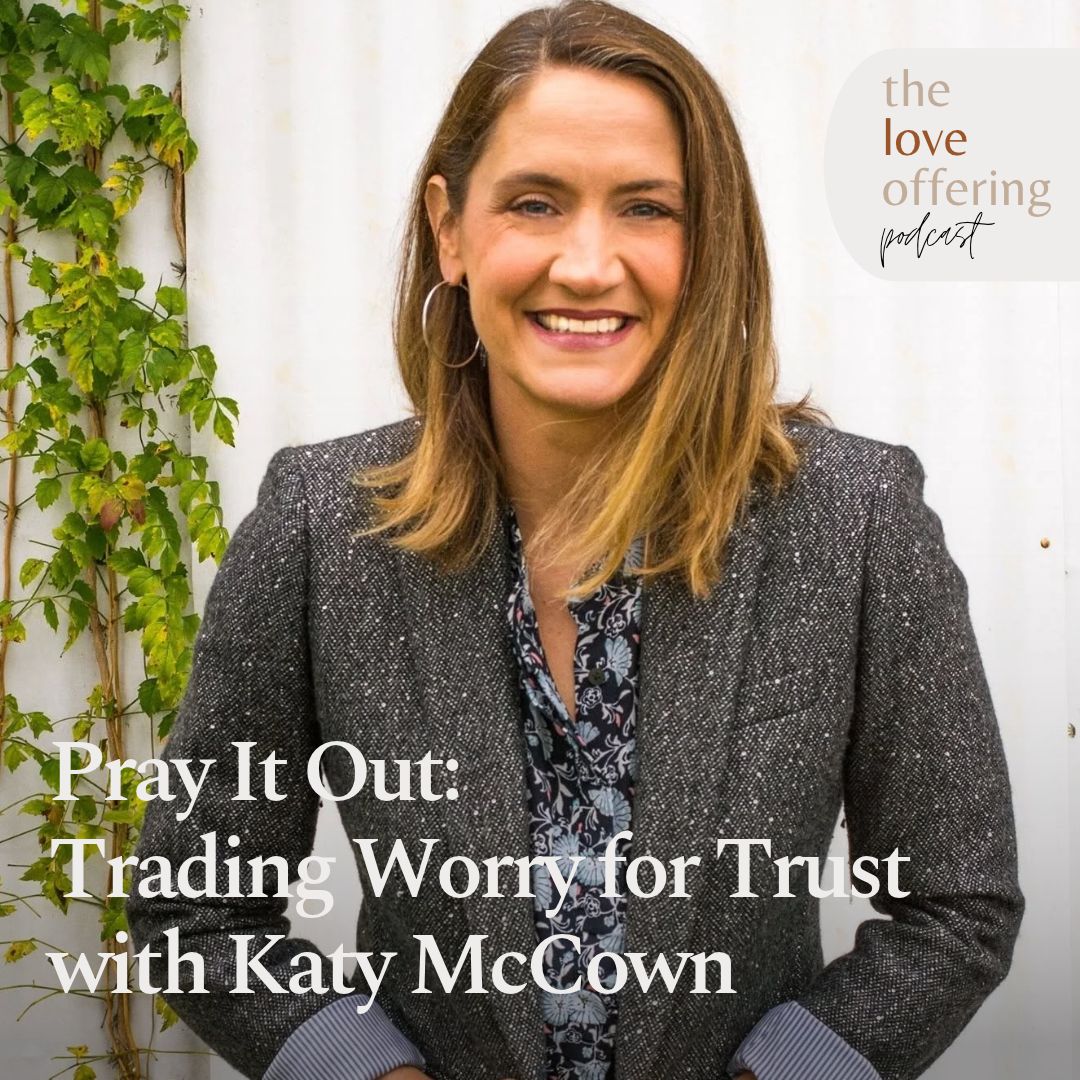
That’s why my conversation with author and Bible teacher Katy McCown felt so personal. Her devotional, Pray It Out: 40 Days of Casting Your Cares on Jesus, invites us to practice bringing those concerns to God throughout our everyday lives.
Let the worry remind you to pray
The phrase “pray it out” began during a car ride with one of Katy’s children.
As she listened to a difficult situation, she considered several responses. They could try to figure it out. She could get involved and work it out. They could talk it out or wait it out.
Instead, she suggested they pray it out.
For their family, that meant allowing each recurring concern to become a reminder to pray. Whenever a worried thought or a “what if” surfaced, they would bring the situation to God again.
I love how practical that is. We don’t have to wait until the house is quiet or we’ve found the perfect words. We can speak to God in the car, while folding laundry, or before answering a difficult message.
A simple prayer can begin right where we are: “Father, this is on my heart again. Please help me trust You with it.”
Remember whose hands are holding your concern
Katy explained that praying it out involves trust. We can tell God about a situation while continuing to grip our preferred solution.
I recognized myself in that observation. Sometimes I come to prayer with both my concern and a detailed explanation of how I think God should resolve it.
Our Father welcomes our honest requests. We can tell Him what we hope for and what frightens us. As we do, we can also ask Him to help us receive His wisdom and follow His direction.
First Peter 5:7 connects surrender with God’s care for us. We are invited to cast our anxiety on Him because He cares.
That truth matters when the concern involves someone precious to us. We can entrust the people we love to a Father whose love and wisdom exceed our own.
When you pick it back up, bring it back again
One of the gentlest moments in our conversation came when Katy talked about our tendency to reclaim our burdens.
She reminded us that God understands.
When we notice we’re carrying something again, we can lay it down again. Over time, we may begin to recognize the pattern sooner. We may catch ourselves reaching for a burden and remember that we’ve already entrusted it to Him.
There is room to grow here.
A returning worry can become another opportunity to turn toward God. We can practice that response patiently, asking Him to deepen our trust as we go.
Begin with what is true about God
Katy also encouraged us to consider where we begin when we pray.
When our attention stays fixed on our circumstances, uncertainty can fill our field of vision. We may begin drawing conclusions about God’s care from what we can currently see.
Remembering His character helps us approach those circumstances differently.
He is faithful. He is loving. He is wise. He remains present when the answer is unclear.
Before working through every possible outcome, we can pause and remember who is hearing our prayer. A familiar passage of Scripture, a written reminder of His faithfulness, or a few words of thanksgiving can help turn our attention toward Him.
The concern may remain unresolved, but we can bring it to Him with a growing awareness of His care.
You can begin before you know what to say
Perhaps you want to pray but feel unsure how.
Katy offered such freeing encouragement: prayer can be raw and honest. Some days, words flow easily. Other days, we may need to write in a journal, pray a psalm, or begin with a prayer someone else has written.
Those words can help us recognize and express what is already stirring in our hearts.
You can begin with one sentence.
“Lord, I’m afraid.”
“Please give me wisdom.”
“I don’t know what to do.”
Our Father knows the heart behind the words. We can come to Him as we are.
Keep turning toward Him while you wait
Waiting becomes especially difficult when we’ve prayed about the same concern for a long time.
Katy acknowledged that tenderness. She reminded us that we are not the only ones waiting, even when it seems everyone else is receiving an answer.
She also encouraged us to shift our attention toward the One we’re asking. What do we know about Him? What might He be inviting us to do today? Where can we notice evidence of His care while we wait?
These questions give us a faithful way to engage the present day, even while we hold an unanswered request.
Today, consider the concern that keeps returning to your mind. Each time it surfaces, let it remind you that you can speak to your Father again.
He welcomes you, and He cares about what you’re carrying.
Listen to my conversation with Katy McCown on The Love Offering Podcast, and explore her devotional, Pray It Out: 40 Days of Casting Your Cares on Jesus.
Father, You know the concerns we keep picking back up. Help us recognize when we’re carrying them and turn toward You again. Remind us of Your faithful character, guide our next steps, and strengthen our trust while we wait. In Jesus’ name, amen.



CONNECT WITH KATY
Website and Pray It Out devotional: https://katymccown.com
Instagram: https://www.instagram.com/katymccown/
CONNECT WITH RACHAEL
Website, books, and free Love Always devotional: https://rachaelkadams.com
Instagram: https://www.instagram.com/rachaeladamsauthor/
Facebook: https://www.facebook.com/rachaeladamsauthor/
Find more encouraging podcasts at https://www.lifeaudio.com
Subscribe and share this episode with a friend who could use encouragement today.