What if the darkest seasons of your life are not evidence that God has abandoned you, but the very soil where He is quietly growing something good?
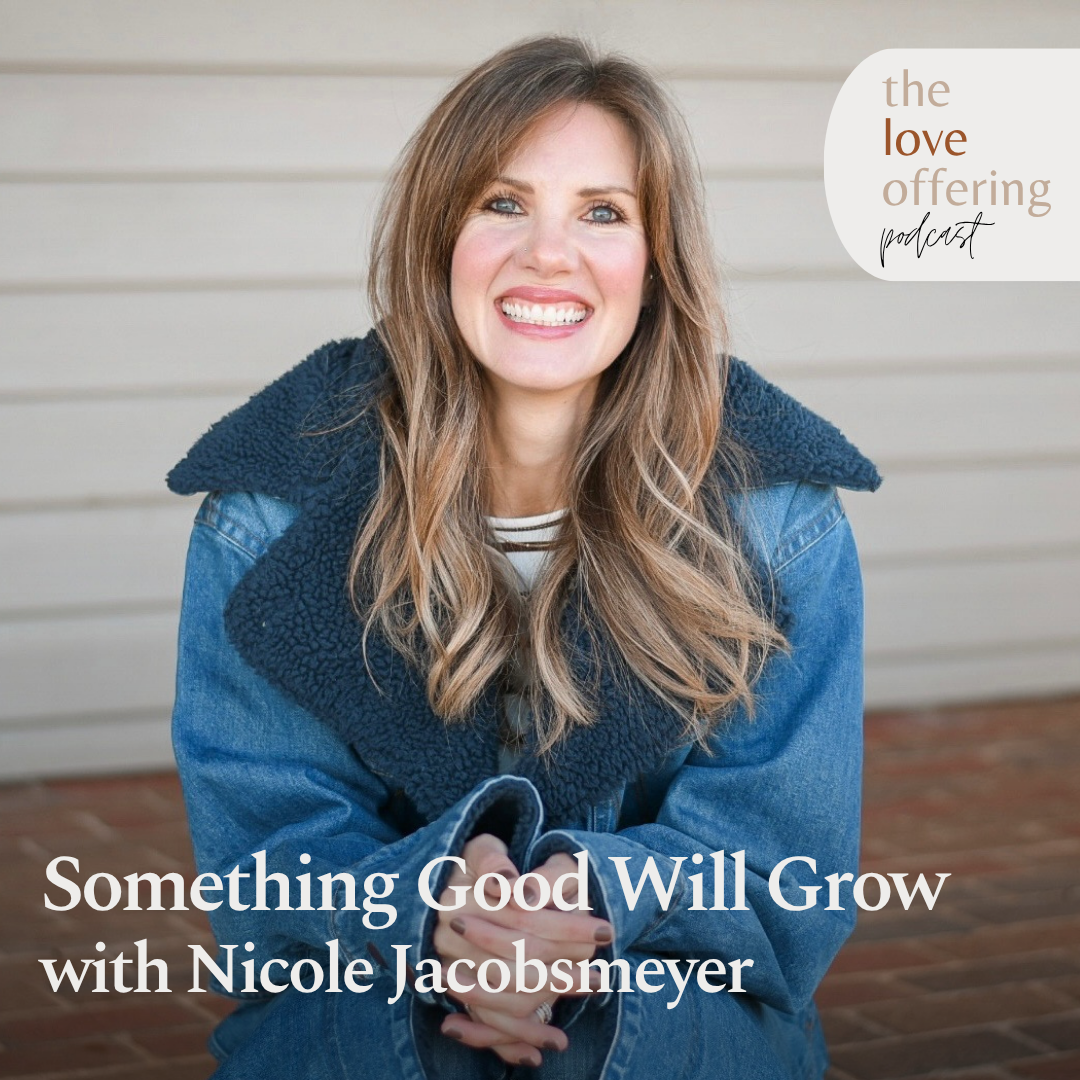
My dear friend Nicole Jacobsmeyer knows what it is like to endure seasons that feel like more than she can handle. Cancer, miscarriage, clinical depression, rejection, abuse, and insecurity have all been part of her story. Yet through each painful experience, Nicole has discovered that God’s presence and goodness can still be found—even when we cannot understand what He is doing.
When Nicole first joined me on The Love Offering Podcast four years ago, we were both releasing books and did not know one another. That conversation began a friendship that has become such a gift to me. Since then, I have had a front-row seat to some of the ways God has worked in her life and family.
In those four years, Nicole’s life has changed significantly. After a cancer-recurrence scare forced her to step away from writing and speaking, her family moved from the suburbs to a nearly thirty-acre farm in a town of only six hundred people. They began homeschooling and embraced a quieter homesteading life.
Nicole believed her writing and speaking season might be over. But in the stillness of the farm, God met her in ways she had not expected. Her scan came back clear, and eventually Moody Publishers invited her to write again.
Her new book, Something Good Will Grow, was born from the suffering she has endured and the hope she has discovered in Christ.
Flowers That Bloom in the Dark
At the beginning of one particularly difficult year, Nicole sensed that “bloom” would be her word for the year. Naturally, she imagined a season filled with abundance, answered prayers, and visible blessings. Instead, the year unfolded much differently than she expected.
As her circumstances grew harder, Nicole felt prompted to research flowers that bloom at night. What she discovered gave her an entirely new picture of how God works in our hidden and painful seasons.
Night-blooming flowers open in the darkness when most people are asleep. No crowd gathers to applaud them, yet many of these flowers are especially fragrant and bright. Their light-colored petals reflect the moon and seem to glow throughout the garden.
Nicole realized that these flowers offer a beautiful picture of the Christian life.
Sometimes we feel planted in cold, dark soil while everyone around us appears to be blooming in the sunshine. Other people’s prayers seem to be answered. Their families look happy, their health appears strong, and their dreams seem to be unfolding beautifully.
Meanwhile, we feel buried.
We wonder if God sees us. We question whether our prayers matter and whether anything beautiful could possibly come from our pain. But beneath the surface, God may be cultivating deeper roots, teaching us obedience, strengthening our faith, and forming Christlike character within us.
We may be blooming for an audience of One.
Our hidden faithfulness matters to God. The forgiveness no one else sees, the quiet acts of obedience, the choice to continue trusting, and the small ways we serve others while carrying our own pain can all become a fragrant offering to Him.
Redefining What It Means to Be Blessed
We often think of blessings as good health, comfortable circumstances, happy relationships, financial provision, or answered prayers. These are certainly gifts from God, and we should receive them with gratitude. But Nicole reminds us that biblical blessing is not limited to what makes life easier.
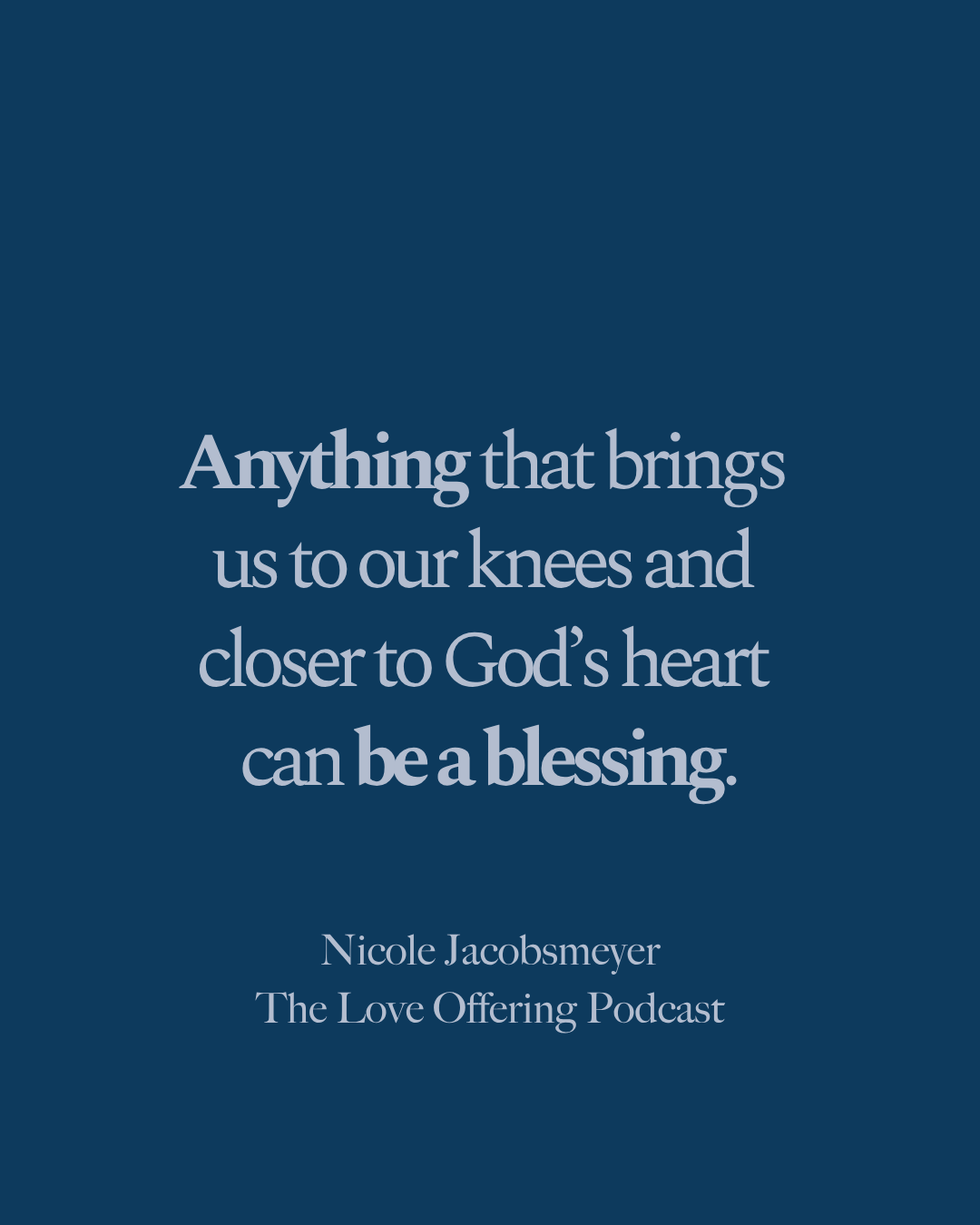
Sometimes the circumstances that bring us to our knees also bring us nearest to God’s heart.
Anything God uses to draw us closer to Him and make us more like Christ can ultimately become a blessing—even if we never would have chosen it for ourselves.
Romans 5:3–5 tells us that suffering produces perseverance, character, and hope. This does not mean the painful thing itself was good. It does not minimize our loss or ask us to pretend we are not hurting. Rather, it assures us that suffering placed in God’s hands does not have to be wasted.
God can forge perseverance in us when we want to quit. He can grow compassion in us because we understand what it feels like to hurt. He can teach us forgiveness, humility, dependence, and hope.
The blessing may not be the removal of our difficult circumstances. Sometimes the blessing is the person we become as God carries us through them.
Bringing Our Questions Honestly Before God
Pain often gives rise to difficult questions.
Why did God allow this? Why has He not answered? Why does He seem to be helping someone else while I continue to wait? Does He still love me? Can I really trust Him?
We may feel ashamed of those questions or worry that our doubts mean our faith is failing. But God already knows what is in our hearts. We do not need to hide our anger, confusion, disappointment, or grief from Him.
God invites us to come boldly before His throne. He is not threatened by our questions, and He does not withdraw from us when we struggle to understand.
Nicole encourages us to wrestle with the Lord instead of running away from Him. We can tell Him exactly how we feel, open His Word, and allow His character to steady us when our circumstances do not make sense.
Honesty with God is not the opposite of faith. Sometimes honesty is one of the deepest expressions of faith because it keeps us in conversation with Him.
Trusting God While We Wait
Waiting can make God feel distant, especially when we have prayed faithfully and nothing appears to change. We want an answer, a clear direction, or some assurance that relief is coming. But sometimes the answer for today seems to be silence.
During these seasons, remembering God’s character becomes essential.
He is sovereign. He is loving. He is faithful. He is good.
God has not forgotten you, nor is He too busy caring for someone else to notice your pain. He is not withholding an answer until you perform well enough or prove your faithfulness. His timing may be different from yours, but His heart toward you has not changed.
Nicole encourages us to keep a record of God’s faithfulness. Write down what you are waiting for, whether in a journal or a simple note on your phone. Record how you are feeling and what you are asking God to do. Then return to those words later and add the ways He provided, answered, redirected, strengthened, or carried you.
Looking back reminds us that no season lasts forever. The God who was faithful then will remain faithful now.
Taking Small Steps Through Depression and Pain
Healing is rarely a straight, steady climb. We may make progress one day and feel as though we have taken several steps backward the next. This can be especially true when walking through depression, grief, trauma, or emotional exhaustion.
Nicole is careful to acknowledge that she is not a mental health professional and that depression may require support from a physician, counselor, or therapist. Seeking help is not a sign of spiritual weakness. God often cares for us through trained professionals, trustworthy friends, medication, rest, and the support of our community.
From her personal experience with clinical depression, Nicole also understands the value of taking one small step at a time.
Perhaps today’s step is getting out of bed and taking a shower. Tomorrow it may be making breakfast for your children. The next day, it may be taking a walk, baking something, tending a garden, painting, opening your Bible, or reaching out to a friend.
These steps may seem ordinary, but they matter.
We do not have to rush our healing or condemn ourselves for having a difficult day. God’s grace is sufficient for each step forward—and for the days when we need to stop and rest.
Loving People Without Offering Easy Answers
Suffering has given Nicole greater compassion for other people’s pain. She understands what it feels like to be broken, confused, and unable to see what God is doing. But she also knows the abundant life and lasting hope available through Christ.
Loving someone through suffering requires both grace and hope.
We should not rush people through their grief or offer shallow statements about how everything will work out. We cannot promise a particular outcome when we do not know what God’s plan will be.
Instead, we can follow the example Jesus gave us when Lazarus died.
Mary and Martha could not understand why Jesus had waited to come. They knew He had the power to heal their brother, yet Lazarus died before Jesus arrived. Their hearts were broken, and their questions were honest: “Lord, if you had been here…”
Jesus knew resurrection was coming, but He did not dismiss their sorrow or tell them to cheer up. He entered their grief and wept with them.
What a beautiful picture of love.
Jesus met Mary and Martha in their pain before revealing what He was going to do. In the same way, we can sit beside someone in the darkness. We can acknowledge the weight of her loss, listen to her questions, and remind her that she does not have to carry her pain alone.
There will be a time to encourage her to move forward, but first, we can offer the ministry of our presence.
Hope When the Outcome Is Uncertain
The message of Something Good Will Grow is not a promise that every circumstance will resolve exactly as we hope. It is not a call to ignore our pain, manufacture happiness, or tie a neat bow around a heartbreaking story.
Our healing may not come according to our preferred timeline. The answer to our prayer may look different from what we expected. Some losses will remain with us until heaven.
But our hope is not dependent on receiving the outcome we want. Our hope is anchored in the unchanging character of God.
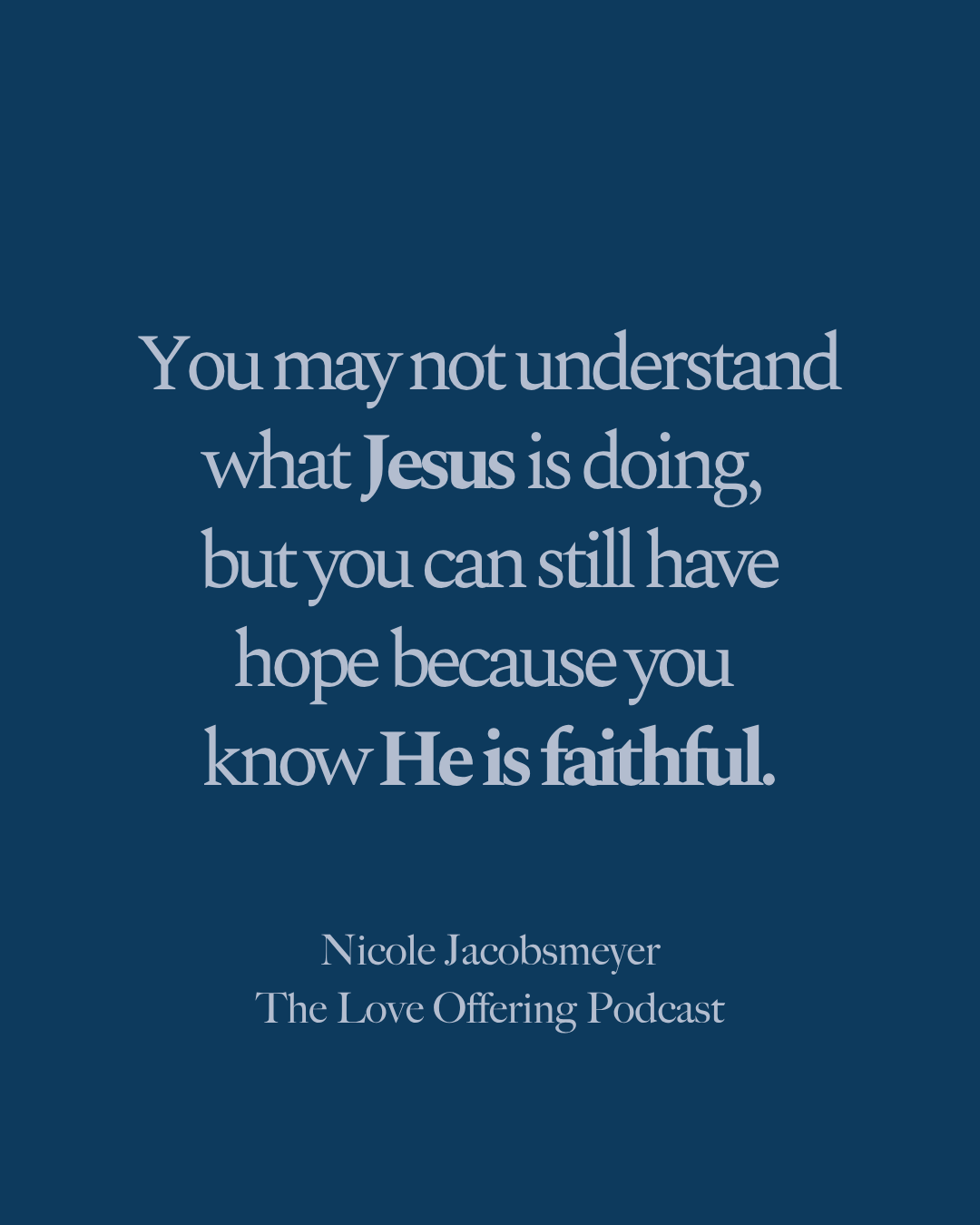
We can trust His heart even when we cannot trace His hand.
If you are suffering today, you do not have to force a smile or pretend you understand. You can bring your questions, anger, grief, and disappointment honestly before God. You can receive help from the people He places around you. You can give yourself grace and take the next small step.
You may still feel buried beneath circumstances you never would have chosen, but buried is not the same as forgotten.
God sees you in the darkness. He is strengthening your roots, sustaining your faith, and holding you close. You may not see the growth yet, but you can trust that your suffering is not meaningless in His hands.
Something good may already be growing beneath the surface.
Connect with Nicole Jacobsmeyer
- Website: NicoleJacobsmeyer.com
- Instagram: @nicolejacobsmeyer
- Facebook: Nicole R. Jacobsmeyer
- Book: Something Good Will Grow
- Newsletter: Visit Nicole’s website to subscribe to her Front Porch Letters.
Connect with Rachael Adams
- Website: RachaelKAdams.com
- Instagram: @rachaeladamsauthor
- Facebook: @rachaeladamsauthor
- Podcast: The Love Offering Podcast
- Contact: Connect with Rachael