
Have you ever felt the weight of insecurity—wondering if you’re enough, measuring yourself against others, or carrying the burden of impossible expectations? I know I have.
That’s why I was so grateful to sit down with Sharon Hodde Miller for this week’s episode of The Love Offering Podcast. Sharon is the author of Free of Me and her newest devotional, Gazing at God. Both books offer a refreshing, hope-filled message: true freedom doesn’t come from fixing ourselves but from fixing our eyes on Him.
Sharon invites us to embark on a grace-filled journey toward freedom from self-centeredness. In her 40-day devotional, she gently guides readers to:
- identify the wounds, assumptions, and scripts that keep us stuck in self-focus
· recognize our true identity in Christ
· break the bondage of insecurity so we can freely love God and others
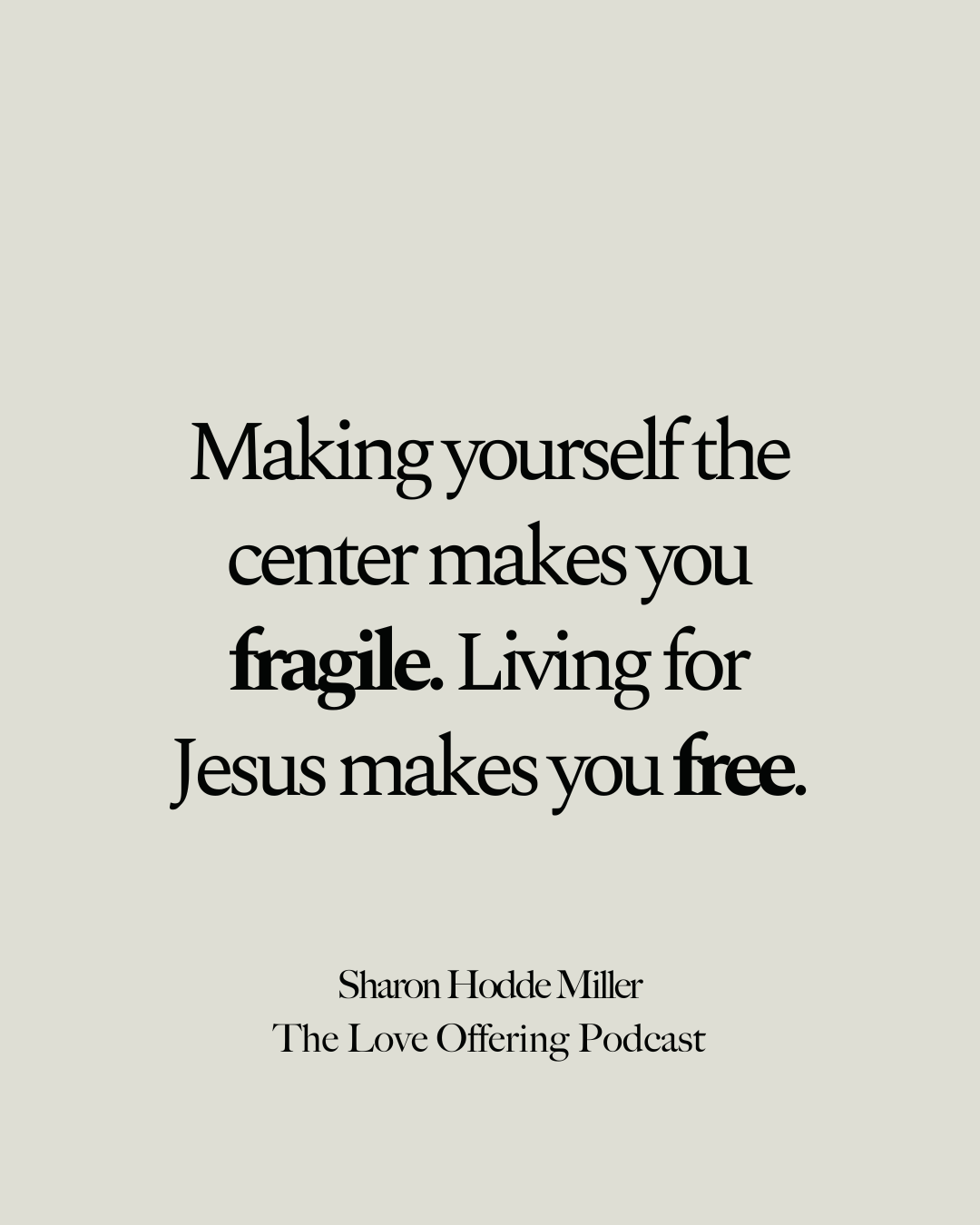
As Sharon writes, “We are never more fragile than when we make ourselves the center of our story.” The good news is that our story doesn’t begin or end with us—it begins and ends with God.
If you’ve been weighed down by insecurity or caught in the cycle of striving and self-doubt, I encourage you to listen to this week’s conversation. Sharon’s wisdom will help you exchange the exhausting work of self-focus for the joy of gazing at God.
I pray this episode helps you lift your eyes, find rest, and walk in the freedom that comes from knowing your Creator deeply loves you.
Summary
In this episode of the Love Offering Podcast, host Rachael Adams welcomes Sharon Hodde Miller, a pastor and author, to discuss her new devotional, ‘Gazing at God.’ The conversation explores themes of self-preoccupation, insecurity, and the importance of focusing on God rather than oneself. Sharon shares insights from her previous book, ‘Free of Me,’ and emphasizes the need for healing from emotional wounds that lead to self-focus. The discussion also explores parenting, church leadership, and the journey of discovering one’s true self in relation to God’s purpose. Ultimately, the episode encourages listeners to shift their gaze from self to God, fostering a deeper love for Him and others.
Takeaways
The journey of freedom from self is ongoing.
Self-preoccupation often stems from emotional wounds.
Healing is necessary to shift focus from self to God.
Insecurity can provide valuable insights about ourselves.
The purpose of a family extends beyond the family unit.
Self-denial is about not idolizing the self, not self-neglect.
Loving God and others leads to personal freedom.
We need to retune our souls to the gospel continually.
Making ourselves the center makes us fragile.
Our true self reflects God’s image in a unique way.
Chapters
00:00 Introduction to Love Offering Podcast
00:57 Meet Sharon Hodde Miller
03:50 Exploring Self-Focus and Healing
10:28 The Fragility of Self-Centeredness
15:14 The Journey of Gaze: From Self to God
22:49 Understanding Our True Self
28:19 The Command to Love: A Path to Freedom
32:25 Parenting and the Bigger Mission
34:26 Closing Thoughts and Prayer
Transcript (AI Generated)
Rachael Adams (00:02.494)
Welcome to the Love Offering Podcast. I’m your host, Rachel Adams, author of “Everyday Prayers for Love,” where we learn to love God, others, and even ourselves. Each week, we delve into meaningful conversations about how to live out the greatest commandment: loving God with all our heart, soul, mind, and strength, and loving our neighbors as ourselves. Whether through inspiring stories, practical tips, or biblical truths, I hope to encourage you to love boldly, live faithfully, and reflect God’s love in your everyday life.
Today, I’m excited to welcome Sharon Hodde Miller to the show. Sharon leads Bright City Church in Durham, North Carolina, with her husband, Ike. She is a PhD graduate with a passion for teaching, particularly in the areas of women and calling, and is a nationally sought-after speaker and author of Free of Me and Nice. Sharon is here today to talk about her newest devotional, Gazing at God, a 40-day journey to greater freedom from self.
This book invites us to identify the wounds, assumptions, and scripts that keep us focused on ourselves so we can break free from the bondage of self-focus and learn the joy of freely concentrating on God. Well, hello Sharon, and welcome to the Love Offering Podcast. I’m so happy to have you.
Sharon (01:17.543)
I am so honored to be with you.
Rachael Adams (01:20.256)
So, does it feel weird to focus on talking about you and what you’ve created, as we’re discussing concentrating on God? So, I’d like to hear more about you before we delve into your books. So yeah, tell us about yourself.
Sharon (01:32.51)
That’s so funny. You know, you are the only person who has ever asked me that question. So way to go. But that’s actually such a great question, because part of the reason I wrote Gazing at God is that it’s a follow-up to Free of Me. And part of the reason I wrote it was that I realized for many people, I had cast a vision of freedom from self and being free of me. However, I learned over the years since I released that book, especially by observing people in my church who would often make things about themselves that were not about them. I realized that one main reason people were doing that was that they would be running things through a filter of self, which was actually because of pain. Like, usually, there was some sort of wound that was pulling their focus inward.
And that was, in many ways, the inspiration for gazing at God, because I realized I could tell people all day long that there is freedom and that focusing on God instead of oneself is the key. But if you are not healing, what is pulling your focus inward? It’s a fool’s errand. And so all that to say, a lot of gazing at God, I think people will be surprised, even though it’s called gazing at God. It’s this journey of freedom from self. People will be surprised by how much time I give to understanding the self, affirming the goodness of the self. And so to know that those two things are not at odds with one another, that’s a very long answer to your question.
Rachael Adams (03:02.602)
That’s a perfect answer, but I’d like to hear more about yourself. So tell us a bit about what life looks like in Durham at Bright City Church and with your family.
Sharon (03:11.788)
Yeah, so I am a mom. I have three kids, my oldest just turned 13. So I am officially the mom of a teenager, which is wild. And then I have a 10-year-old; we have two boys, and our youngest, a 7-year-old, is a girl. And so we were in a very sweet phase right now, where we’re out of the toddler infant phase. That’s just so physically intense. However, we’re not yet in the emotionally intense teen years. They still think we’re cool and want to hang out with us, thinking we’re funny and laughing at all our jokes. And so I’m really enjoying this season. And then my husband and I led Bright City together, which we launched. It’s coming up on seven years now. It’s about seven years old.
Rachael Adams (03:58.155)
Hmm. Well, that’s wonderful. So I am in the emotionally and spiritually stressful time of the teenage years. My son just got his driver’s license, and my daughter’s a freshman in high school. And so I can, but it’s still wonderful, just as it really is. But the time with them is getting shorter and shorter, and it makes me so sad. So I just enjoy every ounce of time I can spend with them, my goodness.
Rachael Adams (04:27.254)
So, okay, you’ve written before on themes of self-preoccupation and Free of Me and Nice. So, how does Gazing at God really build on those ideas? Why did you feel the need to write like a devotional as well?
Sharon (04:37.186)
To clarify for anyone unfamiliar with Free of Me. That book was actually released when I was pregnant with my daughter. And so I released that book about eight years ago. Now, it’s crazy to think back on, like at the launch party, I had this big belly, very sweet. However, the inspiration for that book was about 10 years ago, when I was in ministry. I was writing, although I wasn’t publishing books yet; however, I was writing a lot. I was traveling and speaking, and I loved it. I loved teaching the Bible. Like, I really love the Bible. I love teaching the Bible. All of that has just always been very meaningful to me personally. However, at some point, the best way to describe this is that scripture employs the metaphor of running a race, which refers to the race of faith. And at some point, I was running this race, but I started looking at the people who were running next to me and comparing myself to them. Or I was looking at the women who were a couple of paces ahead of me, and I needed their acknowledgement or affirmation. And if I didn’t compare well, or if I didn’t get that affirmation or that acknowledgement, I was shattered. I would become really insecure. And I couldn’t figure out like, what was going on, know, this of all things like ministry is about Jesus. And so why was this comparison just taking all the joy out of it? Why was I so insecure? And so I decided to research it. That’s like I have my PhD. I love to learn. And so I said, I’m going to study this thing.
Sharon (06:30.838)
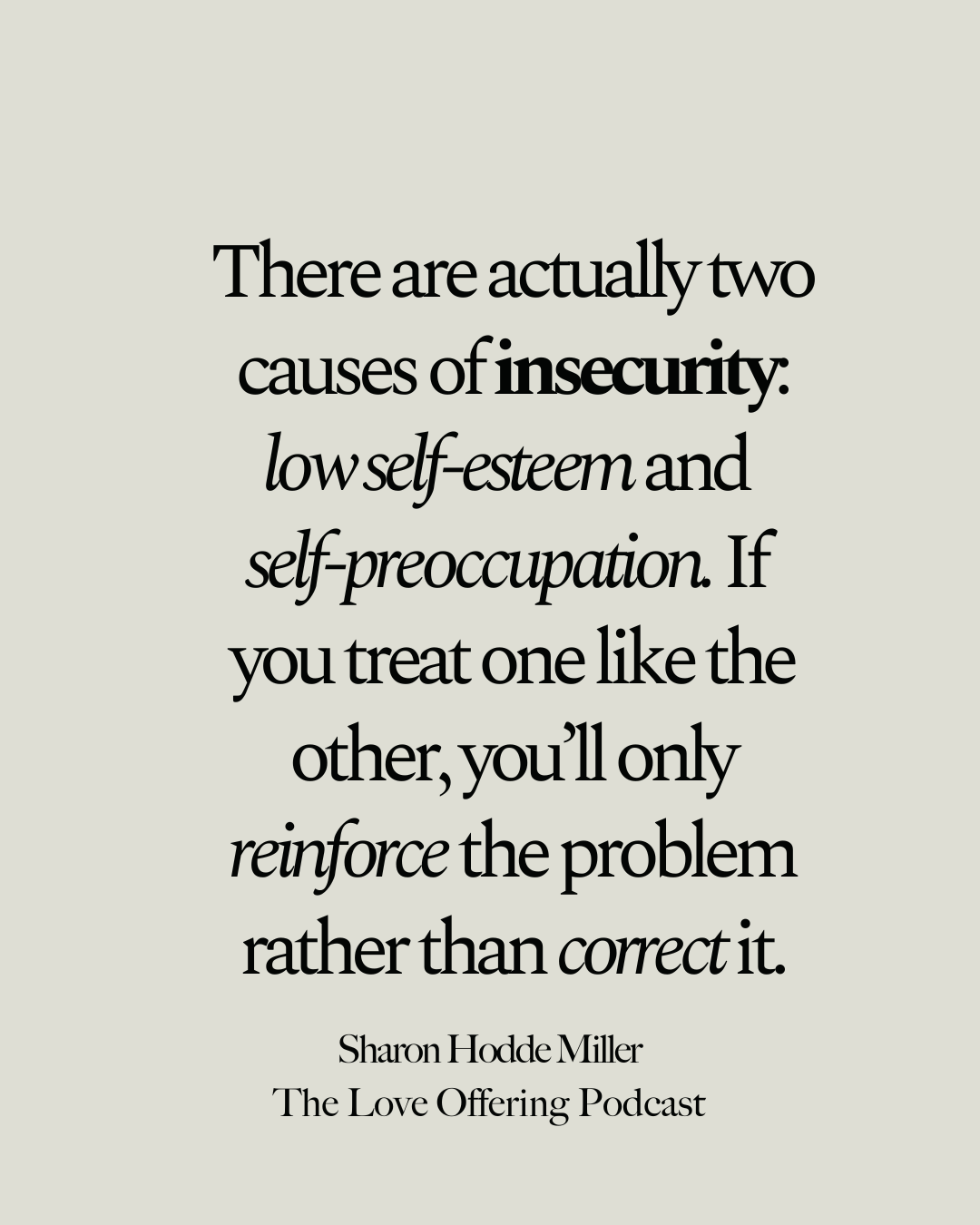
And so I start reading books about insecurity, blogs about insecurity, and articles. And I start reading like, what does the Bible say about me? You know, speaking those truths over myself. And at the end of, I don’t know, six months or so of doing that, I realized that none of it had helped, that it had not touched whatever was causing the insecurity in me. Many people can relate to this, having struggled with insecurity but never been able to make significant progress in overcoming it. And that was very much my experience. And so I realized I wasn’t treating it like what was really going on. And so I backed up and started over, reapproaching the problem. And long story short, I write more about it in Free of Me, but what I discovered is that there are actually two causes of insecurity, but our culture really only equips us to address one. And that one is low self-esteem. And I would define low self-esteem as seeing yourself incorrectly, seeing yourself in a way that isn’t biblical, that is not the way that God sees you. And if you are struggling with low self-esteem because of wounds, because of lies that have been spoken over you, then the answer to that is absolutely the truth of God’s word. However, there is a second cause of insecurity that we rarely discuss, and that is self-preoccupation. When you make things about you that are not about you, so that’s your marriage, your parenting, your friendships, your job, even things that you’re doing at church. When you make them about you, they then become a referendum on your worth. And if those things are going well, then you feel great about yourself. But as soon as those things are not going well, you have nothing to stand on. You feel insecure because you are standing on something insecure. And that is what I realized was happening: I had taken something that was never meant to be about me and made it about me. This was a referendum on me. And so, every time I didn’t compare well, every time I wasn’t acknowledged, I became suddenly very insecure. Noticing that difference is really critical because if the reason for your insecurity is self-preoccupation. Still, you’re treating it as you would treat low self-esteem; you just need to think more highly of yourself. I just need to affirm myself more, to know and speak the truth over myself, even the truth of Scripture. It is only reinforcing the problem rather than correcting it. So that is what Free of Me was about.
However, as I mentioned, I realized at some point along the way, after the book was released, that I was seeing people struggle with self-preoccupation because of their own wounds. And we know this intuitively, how pain forces our focus inward. If I were to sprain my ankle right now, I would give all my attention to that ankle. I would limp, I would prop it up, I would go to the doctor, I would attend to it, I would make sure I’m doing everything. I put ice on it, heat on it, whatever it needs. That is appropriate until the wound is healed, and a similar principle is at work emotionally: if there is an emotional wound, it will necessarily pull your focus inward. However, where our culture and scripture differ is that our culture has rightly emphasized, especially in the context of self-help and self-esteem, the importance of paying attention to what’s going on inside. We need to heal that. That is absolutely right. Where culture has gone wrong is basically said, and that in itself is the end of the story, like that is your salvation. As long as you know how special you are, as long as you know how great you are, who you are, being whole in yourself, finding your true self, all of that, that is all you need to thrive, to succeed in life, to be free. And scripture would differ and say, no, no,
Sharon (10:58.038)
All of that matters, but that’s not why you were created. That’s not your purpose. Your purpose is just like the name of your podcast or the point of your podcast: to love God and love others. That personal healing is just a step on the way to that journey. And so, gazing at God is really taking people on that whole journey, where we start by attending to what’s going on inside of you. Like, have you noticed this? Have you seen the me-centered language you’re using? Have you noticed these pain points that constantly pull your vision inward? We need to heal that, but then that’s not the end of the story. That’s not the end of the journey because God created us for more. And so gazing at God is kind of that full art.
Rachael Adams (11:44.791)
The listener knows this, but I struggle with insecurity and inadequacy and low self-esteem and all of those things. That’s fascinating to me. Cause you’re right. I’ve read all the books, too, but I haven’t read’ Free Me’, and so obviously I need to, because I do think that they’re a struggle with both of those. The swings of the pendulum, I guess, so to speak. Years ago, my husband would say, Rachel, if you could only see yourself through my eyes, it would change your world. And then I have come to realize that if we could only see ourselves the way God sees us, and then to add to that, if we could see ourselves rightly in relationship to the Lord and take our eyes off ourselves so much more and put them on God.
Sharon (12:32.024)
Yeah, well, because one of the things this was a game changer for me, because as I mentioned, I started by reading, opening up God’s Word and asking, okay, what does God think about me? What does he say about me and making sure?
I need to believe all of those things. And for some women, that is the great battle. They are constantly battling shame. They are continually battling lies that were spoken over them by their family of origin. And that can be a lifelong battle. But what was really fascinating to me was that in the Bible, when people who are wrestling with insecurity come to God asking the question, What does God actually say to them?
Because when you look at someone like Moses or Jeremiah or Gideon, these are all men who God called to something, and they all express insecurity. They all express this feeling of inadequacy, of I am not enough. And it’s incredible to notice that God’s response to them is not, ‘Moses, you’re awesome.’ He doesn’t say, You are so special. He doesn’t say, actually, Moses,
Like all the people in Israel that I could have chosen, you’re the only one who was raised in a palace, who was groomed to be a leader. You are the best choice. God does not say any of those things when Moses says, Don’t speak well. Instead, God says, Moses, who gave human beings their mouths? Do you know who teaches them how to talk? Is it not I, the Lord?
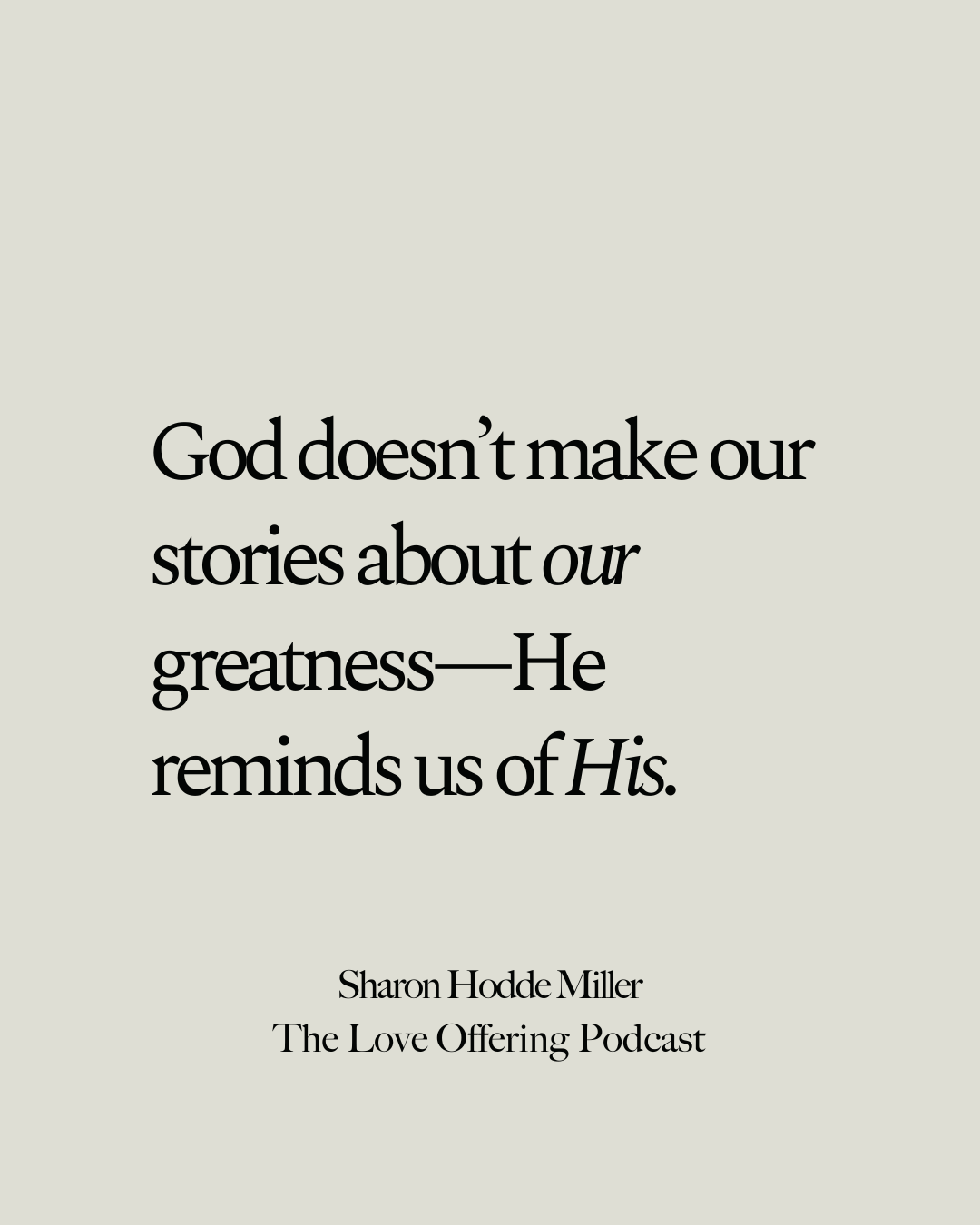
And so, what he’s doing is remarkable, and I love how Jen Wilkin, in her book Women of the Word, talks about this moment where God changes the subject from Moses’s inability to God’s ability. And that is freedom for us, especially as moms, where we want to be the heroes of our family. We want to be the perfect mom, but we recognize that we cannot bear up under that weight, and we feel it deep in our souls and that there is a lot of freedom and realizing, you know what, I don’t have to be the hero. I don’t have to be the center. I don’t have to be the perfect parent because my kids already have an ideal parent, and my job is only to point to him. And so now I can be imperfect and have failures, because those are opportunities where I can go to my child, apologize, and say, ‘You will never fail me.’ Do you know who will never lose his temper, who will never let you down? And that is Jesus. And I wanna make sure I point you to him. That is a much lighter way of living than having to bear the weight of your whole family or whatever it is on your shoulders.
Rachael Adams (15:17.266)
Yeah, absolutely. And I’m, it’s interesting how you bring up that Jen Wilkin, the woman of the word. I read that last year, and that specific part of her book really resonated with me as well, particularly about Moses. For Mother’s Day last year, I got a pendant with their favorite verse for all the women in my life. And so that was actually my verse, which was out of Exodus when he’s talking, when God is talking to
Moses, but he’s like, you know, it doesn’t matter what you feel like you have, I can do it, and so that is my pendant that I wear. It has that verse, and so that’s especially special to me, and so thank you for mentioning that and being a sweet reminder for me personally, but we’re actually gonna take a brief break. I look forward to continuing our conversation today. Still, we need to hear a word from today’s sponsor. When we come back, we’ll discuss why focusing on ourselves can leave us vulnerable.
Rachael Adams (16:28.458)
Welcome back. I’m talking with Sharon Hodde Miller about her devotional Gazing at God, and in your book, you write that we are never more fragile than when we make ourselves the center of our story. Can you unpack that for us?
Sharon (16:44.362)
Mm-hmm. Yeah, that goes back to what I was saying before that when we make things about us that are not about us, it becomes this, this heavy yoke that we now have to carry. It becomes this, this burden, this referendum on ourselves. I’ve already given an example of how this plays out for parents: when you think you are the hero of your family, when you think this all hinges on you, it puts you in a position to constantly feel like a failure. And I know many mothers who struggle with that as well. I have struggled with that every time I lose my temper with my children, I feel like a failure. But another way this has played out is that this example may not resonate with everyone, but hopefully, it still has some relevance. My husband and I lead a church together, and one of the experiences that comes with leading a church is that sometimes people are disappointed in you or disagree with you, and they leave your church. And if my goal is to win people over to me, then that will be constantly devastating. It is also going to be exhausting because it means I’m continually going to be trying to figure out how to
Please, people, how do I appease people? And there have been seasons, especially when we’re leading in 2020, when that was quite literally impossible, because people just had so many different perspectives. It just didn’t matter how we led, how much we sought scripture, theology, whatever; we were going to let people down, and people were going to walk out of our lives. And I had to grapple with the question of, am I at the end of the day? Did we create this church to win people to us or to win people to Jesus? Because if the goal is to win people to Jesus, then people can leave our church. But if they’re still good with Jesus, then that is still a win. I actually haven’t failed. And we see that confidence and freedom in Paul, as expressed in Philippians, despite his imprisonment.
There are other rival Christians who are capitalizing on the fact that he is in prison. So they’re not empathizing with him. They’re mocking him. They’re kicking him when he’s down. But he says, ‘You know, are they still preaching Jesus?’ Because if they’re still preaching Jesus, then praise God. And that is a very light way to live. That is a free way to live. It is the opposite of insecurity, where you’re constantly trying to make sure you’re good with everyone, everyone likes you, but if it’s not about you, if it is about Jesus, if everything you do, it doesn’t matter what you think of me, what do you think of Jesus? That is the easy yoke that we have been called to. And so that’s what I mean when I say making yourself the sinner makes you fragile, because the opposite, living for Jesus, is free.
Rachael Adams (20:06.688)
So, in this journey of gazing at God and becoming free of me, is it possible that we’re going to be on this journey until we see Jesus face to face in heaven? This is not like a one-and-done; I’ve got this figured out, and it’s always going to be a little bit of a temptation or a pullback to self. Because at the end of the day, we’re selfish. Self-focused human beings. I don’t know. I hate to be a doomsday person, but I’m trying to get with that question.
Sharon (20:41.536)
No, you’re 100 % right. So one of the metaphors that I use in Free of Me, and then I mentioned it again in Gazing at God, is a musical instrument. If you play a musical instrument, you have to retune that instrument constantly. It doesn’t matter. My mom has an antique Steinway piano. It’s like the nicest piano you could imagine. It’s like a piece of art, really. And that thing, even though it’s made out of amazing materials, it was crafted and assembled by a genius; it still has to be tuned because if you let it sit, it will drift out of tune. And the human soul is like that as well. This is actually an ancient concept that has been passed down to us. There’s a theologian named St. Augustine, who discusses how the human soul tends to drift inward. This is almost as long as there’s any sin in us; our human soul is bent, and it will start to bend in on itself.
And in the same way that a musical instrument has to be retuned constantly, there is a sense in which we also have to retune our souls to the gospel, which we have to pull ourselves back out towards Jesus. There’s gonna be times where we realize, I have really turned inward, like in this season, and other times, maybe less so. And so, no, you’re not being cynical or doomsday. All 2000 years of Christians would agree with you that this is absolutely a struggle. However, what I hope to do with both of these books is not to provide a silver bullet that promises this will fix it, and now you won’t struggle with it anymore. But instead of giving you tools to recognize when it is happening and then to give you a path forward, because one thing that our culture doesn’t do very well is to teach us how to grow when you notice insecurity in yourself, because we say if you feel insecure, you need to fight it like you’re just believing lies. You need to fight it. But I think that especially the stories of Moses and these other prophets remind us that sometimes insecurity is actually giving us really valuable information about ourselves, which is to say, we’ve lost the plot that we have started to think I am the hero of this story, that this is about me, that I’ve got to pull this off. I am the one who holds everything together. Or it’s sometimes giving us information that I am standing on something insecure. I’ve used this language earlier when we were talking, but it gives us information that I am standing on something insecure. And sometimes that is like standing on my own, essentially, my own power. However, if you’re feeling insecure, it’s likely because you’re standing on something unstable. After all, the rock of Jesus doesn’t shake. And so that’s always helpful information for us to ask: Is God illuminating something for me to see about myself that I really need to know? And we won’t be able to learn that if our only response to insecurity is to affirm it away with truth. Sometimes that’s what you need to do, but not always.
Rachael Adams (23:59.863)
Yeah. So, we can’t affirm it away, and we can’t continue to focus on self-improvement because then we’re just focusing more and more on ourselves. But what I’m hearing you say is an awareness of how we’re feeling. And you mentioned that it’s not a silver bullet, but I am also mindful that you do have some tools, so that we can practically shift our gaze from ourselves to God. So tell us about some of those things?
Sharon (24:27.438)
Yeah, yeah, it’s not a silver bullet, but this has been the second greatest liberation of my life, second only to meeting Jesus. And it really served me. I released this book right before we planted a church, and I can’t think of a better lesson to learn before church planting, because it is so tricky and the path of church planting is fraught with failure, mistakes, and things going wrong. And you look like you don’t know what you’re doing because there’s just a lot that you can’t control. And what it looks like to other people very often is incompetence or you’re not doing a good job. And in that moment where you are humiliated, when you are humbled, you have the opportunity to either try and fight that and make yourself big and put out an image on social media where it looks like everything is glossed over, or to give people the answer that you think that they want to hear, or to blame it on somebody else, know, all that image management. You can do that. It is a terrible way to live. Or you can receive the gift of humility, which is always a gift that allows you to release anything you are holding onto that is about you, and to remind yourself, ‘I didn’t get into this. I didn’t plant a church to win people to myself. I planted a church so that people would encounter Jesus, and I need to be reminded of that more than anyone else. And thankfully, life is full of those reminders. Whether you’re a church planter or a mom, there are so many reminders to kind of course correct your own soul and ask, ” Who am I doing any of this for? Is it to win people to me? Is it to manage my image so that people think highly of me, or is it to point people to Jesus? Humiliation and humility are always opportunities to remember that very freeing truth.
Rachael Adams (26:43.656)
Yeah, yeah. What’s our motive? Is it to glorify ourselves or to glorify him? Well, let’s take another brief break to hear a word from today’s sponsor. And when we come back, we will discuss how knowing our true selves enables us to focus on God.
Rachael Adams (27:00.978)
Welcome back. I’m speaking with Sharon Hodde Miller about her devotional, Gazing at God, and part of this 40-day journey is learning to recognize our true selves. So what does that mean from a biblical perspective?
Sharon (27:13.966)
So, part of the journey of this devotional is making sure that there’s a lot of bad teaching and bad theology surrounding the concept of self-denial. Self-denial itself is a biblical concept, something that Jesus teaches. However, it is often taught as self-neglect or self-rejection. And this is unbiblical, and it is bad theology. And so it was crucial for me to begin by asserting that this, the self, is good, the self is made in the image of God, that all of us as image bearers of God reflect him uniquely. And so, it’s actually good stewardship to discern how God made you.
What did he put in you that he didn’t put in anyone else? How did he design you to reflect him in a way that no one else does? Not because now you can sit and think about how special you are, but because he created you for the good of the world and the glory of God. And so, if you never take the time to know who you are or to take care of who you are, you will not be able to step into that purpose. So, self-denial is ultimately about not idolizing the self, which our culture does and says prioritizes, regarding the self and its self-actualization as the highest good. And so a healthy biblical notion of self-denial would say no, that that’s its own kind of spiritual sickness.
But the opposite that I see Christians make, also needs to be corrected, this kind of… It is okay for me, as a mother, to kind of lay myself down, my health, my sleep — you know, whatever it is. I’m just going to lay it all down for my children and neglect myself entirely. And I want to remind you that if that is you and that is your temptation, remember that your kids already have the Savior; you are not Him. And so, we need to take care of ourselves and steward ourselves well. And so that required being a part of this devotional.
Rachael Adams (29:47.531)
Yeah. Well, it’s one of the greatest commandments that we often discuss on the show. Love the Lord God with all of your heart, mind, soul, and strength, and love your neighbor as yourself. So, there is a piece to seeing ourselves rightly. One of the questions I’ve been asking all my guests this season is, ‘Is there a biblical concept of love that you think applies to this topic?’ I think when we gaze at God, we’re able to love better, love ourselves more deeply, and serve others more effectively.
Sharon (30:15.468)
Right. Yes, I loved it when you mentioned at the opening about loving God and love others; that’s something you really delve into in this podcast. That was one of the big revelations for me in this entire journey, because for so long I had thought of the commands in Scripture, and many Christians do the same. I thought of those commands as the basics of Christianity. Know, like this is just what a good Christian does. It is well known that a good Christian loves God and loves their fellow human beings.
However, what this journey helped me realize is that God doesn’t impose arbitrary rules; everything He does is done out of love. And that goes for his commands as well. And so this command to love God and to love others, what it really is, is for our own freedom. It is for our own rescue. That’s something I talk to my kids about constantly, because, you know, it starts early: the idea that the way to flourish, the way to freedom, the way to the life I want is to put myself first. And God just did not design it that way. That is when we put ourselves first; it creates a spiritual withering, and insecurity is just one symptom of that. And so when Jesus commands us to love God and to love others, he’s saying, because this will set you free. And so that is an entirely different way that this entire journey reframed those commands for me.
Rachael Adams (31:54.615)
I’m wondering if you’ll humor me for just a moment, as we’re parenting our children, because I’m tempted, as a mom, to make the world revolve around my children. As parents, we do it. And so, how do we, how do you think we shape our children, the next generation, especially in the social media culture where it’s like, ‘Oh, I’m going to take pictures’? I’m going to take selfies, showing them all the things we help with, so they don’t just gaze at themselves and compare, and instead engage in some of the things we’re now doing, which can be so stuck in these processes.
Sharon (32:26.19)
Yeah. This is something I actually wrote about in Free of Me. I talked about family, how this idea reshapes our perspective on family, because in American culture, the family is often very insular. Like, when you get married and have kids, you think, ‘My whole existence is to make this unit of people the best that it can be.’ And for us to have the most fun possible and make the most memories we can. And when we examine the scriptures’ notion of family, we see that the family always exists for a purpose that is greater than itself. And so, my question for any parent listening is: What is the purpose of your family? Like, what is your family’s mission? That could be a constructive conversation to have. And that is the language we use a lot in our family, especially since we lead a church together. I also travel occasionally, and with my kids, I’m not away all the time. I’m gone for a developmentally appropriate amount of time, so I’m not just absent. But when I leave, they still don’t like it. And when I tell them, you know, I’m going to be gone for the next two nights, but I’m going to be gone because I’m serving Jesus. And that is discipling them into this mission that is about more than them. And so it’s very clear to my children that we love them unconditionally, but we do not orbit around them. We orbit around Jesus.
Rachael Adams (33:59.723)
Hmm. That’s so good. And it’s something that I personally have struggled with. I missed one of my son’s ball games, and I try not to miss anything. I felt a great deal of guilt and regret about it. And so I texted my son, and he responded, Mom, it’s okay. I understand that you’re calling. And cause I was gone because I was at a speaking, I was at another church, and so it was just, I can’t convey how much that meant to me as his mom that he recognized what the mission was and that it was bigger than just him. And of course I had to try to make everything that I can, but sometimes I miss too. And it’s so hard to balance both, but when they understand what the mission is and that it’s bigger than them. So that I had one of those epiphany moments, and he did too. And it was significant for us. So, I want to hear Sharon tell us something you are living right now.
Sharon (34:52.116)
I am loving. This may sound unspiritual after everything we just discussed. I have it in my purse, okay. Have you heard of this kind of hand sanitizer?
Rachael Adams (35:06.42)
Okay, I’ve seen it. It’s Touchland. For those who can’t see, please explain it to us. But I’ve never used it.
Sharon (35:13.728)
I first discovered this product when someone gifted it to me after I spoke at an event. The scent is reminiscent of citrus, and it sprays as a light mist onto your hand. It’s a hand sanitizer. However, the scent I received is called Lily of the Valley. It smells amazing. You know, hand sanitizer has a terrible smell. Generally, every time I spray this, I’m just like I am in a valley right now; I’m running through one. And I’m just speaking to my kids. I was speaking in Orlando, so I took my middle child with me, and we went to Disney. And so you know, every time we got off a ride, I would say, ‘Let me see your hands,’ and I would spray it, and neither one of us got sick. And so I’m telling you this stuff works. That also smells really good. So that’s what I’m loving right now.
Rachael Adams (36:04.158)
OK, and Lily of the Valley, that’s biblical,
Sharon (36:06.924)
I know, well, I was thinking too, like from Song of Songs, this is meant to be, because my name is in that verse. Like I’m the Rose of Sharon, the Lily of the Valley, so this is intended to be.
Rachael Adams (36:14.998)
Okay, it is. Okay, let’s try it. I have seen it, and so we’re gonna include that in. Yes, yeah, we need to get an affiliate link for you for that.
Sharon (36:23.074)
Try it and email me to share your thoughts. Or tag me on Instagram. We really do.
Rachael Adams (36:29.974)
I know. Okay, so we’ll include that in the show notes. So, tell us. I obviously want to stay connected with you. I need to get your book. I’m your avatar, Sharon. I hope you know that you’re writing for me. So I need to read Free of Me, and everybody needs to pick up a copy of Gazing at God. Please let us know how we can stay in touch with you.
Sharon (36:50.432)
I am most active on Instagram, where you can find me under the username @SharonHMiller.
Rachael Adams (36:55.796)
Okay, well, thank you. You have helped shift my perspective a little bit today, and I pray the same for everyone listening.
Sharon (37:03.895)
and fun.
Rachael Adams (37:06.026)
Thank you, actually. So would you pray for us as we close, as we try to keep our gaze more on God?
Sharon (37:14.498)
I would be honored to. Loving Father, I pray for every person who can hear my voice right now, for their individual story, what is happening in their lives, and what’s going on in their hearts, which You know intimately. And I pray that if anyone is feeling shame or condemnation from this conversation, you would make it very clear that it is not your voice, that it is not how you speak to your kids, and that shame is only the voice of the enemy. That if we are struggling with self-focus, you do not wag your finger, you do not stare over us with a furrowed brow, you just gently invite us to raise our gaze because we were created for so much more. We would feel the gentleness and the tenderness of that invitation and the freedom that awaits. We thank you for your son, the lightness and the joy of living for him instead of ourselves. And it’s in his name that we pray, amen.
Rachael Adams (38:23.674)
Amen. Thank you, Sharon. And as you were praying, I just kept thinking that yes, we’re going to want to gaze on God, but I also had the assurance to know that He’s gazing at us, that His eyes are on us, and He loves every single one of us so much. And I’m so thankful for that truth. Yeah. Well, thank you so much.
Sharon (38:34.52)
Yes. Mm-hmm. Mm-hmm. Exactly. Me too. You’re so welcome.
Rachael Adams (38:44.138)
Thank you for listening to the Love Offering Podcast. I hope today’s conversation encouraged and inspired you to love God, love others, and even love yourself a little more. If you enjoyed this episode, please share it with a friend and leave a review. It helps others find the show and spreads the message of love even further. To connect with me, please visit my website at rachelkadams.com. While you’re there, be sure to download the Love Offering Calendar, a free resource filled with simple daily ways to love those around you. Don’t forget to pick up a copy of my book, Everyday Prayers for Love, and Sharon’s new devotional, Gazing at God, as well as her book, Free of Me. A special thank you to Life Audio for supporting this podcast and making it possible. To find more great podcasts, visit LifeAudio.com. Thanks again for joining us today. Until next time, let’s make our lives an offering of love.