Does your home feel like a peaceful place where you can rest, connect, and welcome others? Or does it sometimes feel visually noisy, unfinished, or overwhelming?
Maybe you’ve purchased a picture but are afraid to put a hole in the wall. Perhaps you’ve delayed choosing curtains or a rug because you’re worried you’ll make the wrong decision. Or maybe you want to invite someone over, but you keep telling yourself you’ll do it after the clutter is gone and the unfinished projects are complete.
I can relate.
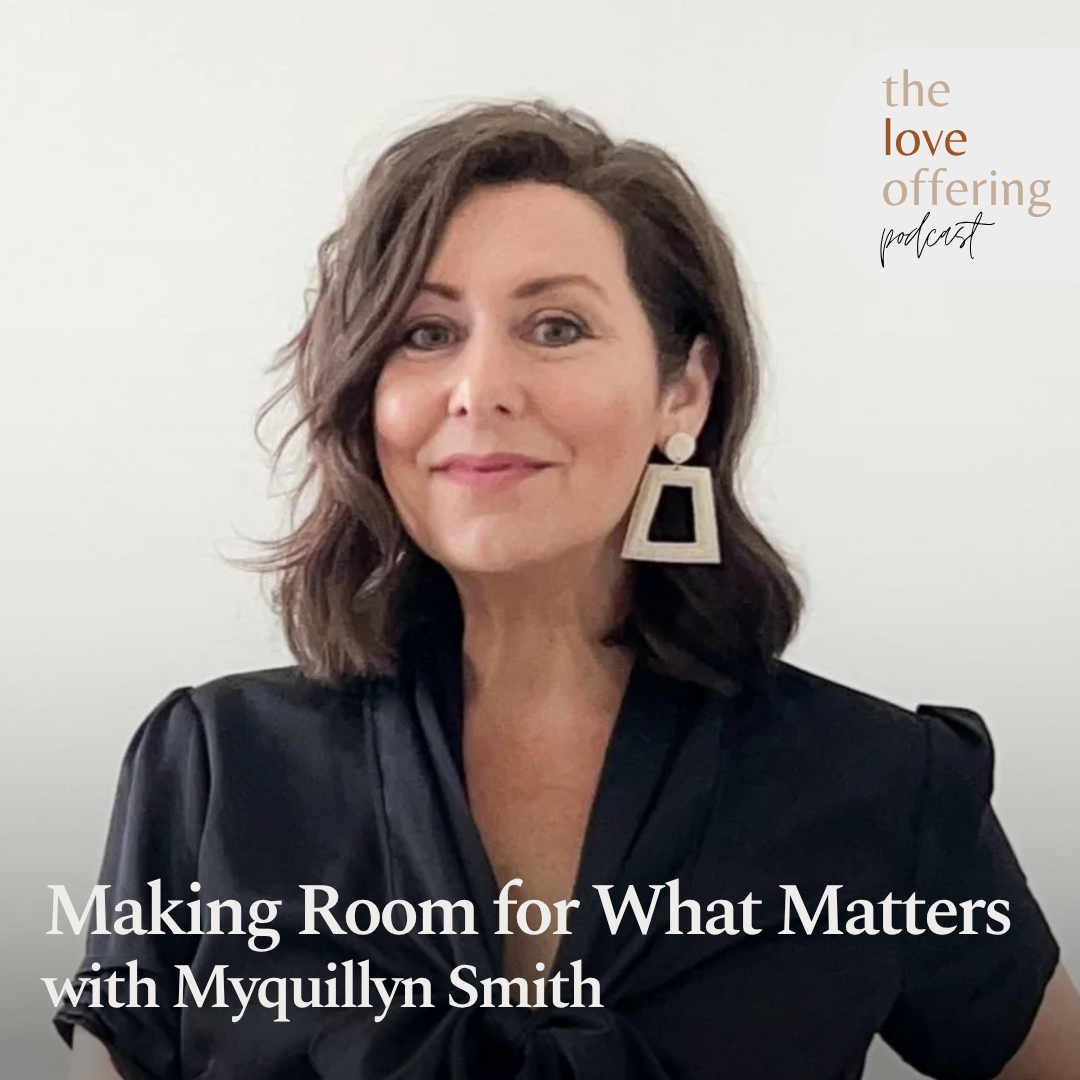
When bestselling author and home-design expert Myquillyn Smith previously joined me on The Love Offering Podcast, she encouraged me to put a few holes in my walls. Two years later, I had to confess that I still hadn’t made much progress.
My hesitation wasn’t because I didn’t care about my home. It was because I was afraid of making the wrong choice.
Myquillyn encouraged me to begin with one small step: make one hole, hang one lightweight piece of artwork, and let that progress build my confidence.
“A hole is not a mistake,” she reminded me.
How often does our fear of getting something wrong keep us from beginning? We don’t have to see the finished result before taking the next faithful step. Sometimes we learn what works by giving ourselves permission to try.
Quieting the Visual Noise
Myquillyn’s book House Hushing was inspired by her family’s move into an old Victorian home. Its detailed woodwork, bay windows, open shelving, and distinctive architecture gave the house a strong personality before she moved in a single piece of furniture.
When she added her own rugs, pillows, collections, and accessories, the combined effect felt visually overwhelming. The house and its contents were competing for attention.
To feel comfortable there, Myquillyn needed to turn down the visual volume.
House hushing isn’t about becoming a minimalist or removing everything beautiful and personal. It is a temporary practice that allows us to experience a room with less visual noise before deciding what deserves to remain.
Myquillyn calls it “decluttering backward.”
Rather than holding each item and immediately deciding whether to keep, donate, or discard it, we begin by temporarily removing the small, visible objects from a room. After spending time in the quieter space, we can thoughtfully decide what should return.
This approach removes the pressure of making numerous immediate decisions. It also helps us recognize which belongings contribute to the room and which ones may be keeping us from enjoying it.
Beginning with One Surface
If quieting an entire room feels overwhelming, Myquillyn recommends beginning with one visible surface: a coffee table, kitchen island, bathroom counter, or table beside the door.
Clear it completely and live with it that way for a few days.
Myquillyn keeps her own kitchen island and coffee table clear so they are ready to serve. The coffee table can hold a puzzle or pizza box, and the island is ready for groceries or meal preparation. Nothing must be moved before those surfaces can fulfill their purposes.
She observed that more often leads to more. Once we leave one item on the counter, mail, dishes, bags, and other belongings quickly gather around it. Thankfully, the reverse is also true: less can lead to less.
This practical wisdom prompted me to consider how our physical surroundings affect the way we live and love. Our homes cannot produce spiritual peace—that peace comes from Christ—but they can either support or distract us from attentive, purposeful living.
A cleared table may provide a place to open our Bibles. A quieter living room may help us listen more closely to our families. An available kitchen island may make preparing a meal for someone feel more manageable.
Creating physical space can help us become more available for the people and purposes that matter most.
Releasing Belongings Without Guilt
Letting go can be difficult when our belongings represent money, memories, or relationships. We may feel guilty releasing something because it was expensive, inherited, or given to us by someone we love.
House hushing gives us time to experience a room without an item before making a final decision. Once we realize that the room functions better without it, we may feel more confident about releasing it.
We don’t have to carelessly discard meaningful possessions. We can offer an heirloom to another family member, ask the giver whether they would like something returned, take a photograph to preserve the memory, sell the item, or donate it so someone else can use it.
As followers of Christ, we recognize that everything we have ultimately belongs to God. Faithful stewardship does not necessarily mean keeping everything we have ever received. Sometimes it means holding our possessions loosely enough to let them serve someone else.
What Makes a Home Soulful?
Myquillyn describes a soulful home as one that tells the story of the people who live there. Unlike a model home designed to appeal to everyone, a soulful home reveals something personal.
It might contain family photographs, worn floors, children’s artwork, inherited furniture, favorite books, travel mementos, or evidence of current hobbies. These details tell the story of where a family has been, what matters to them now, and what they hope for in the future.
This doesn’t mean every meaningful item needs to be displayed. A carefully chosen collection often tells a story more clearly than a room filled with competing objects.
For those of us who follow Jesus, our homes can also quietly tell the story of God’s faithfulness. A well-loved Bible, a Scripture displayed on the wall, a table where prayers have been prayed, or an heirloom passed through generations can remind us of His presence throughout our family’s story.
Connection, Not Perfection
One of the most meaningful parts of our conversation was Myquillyn’s encouragement to practice hospitality before our homes feel perfect.
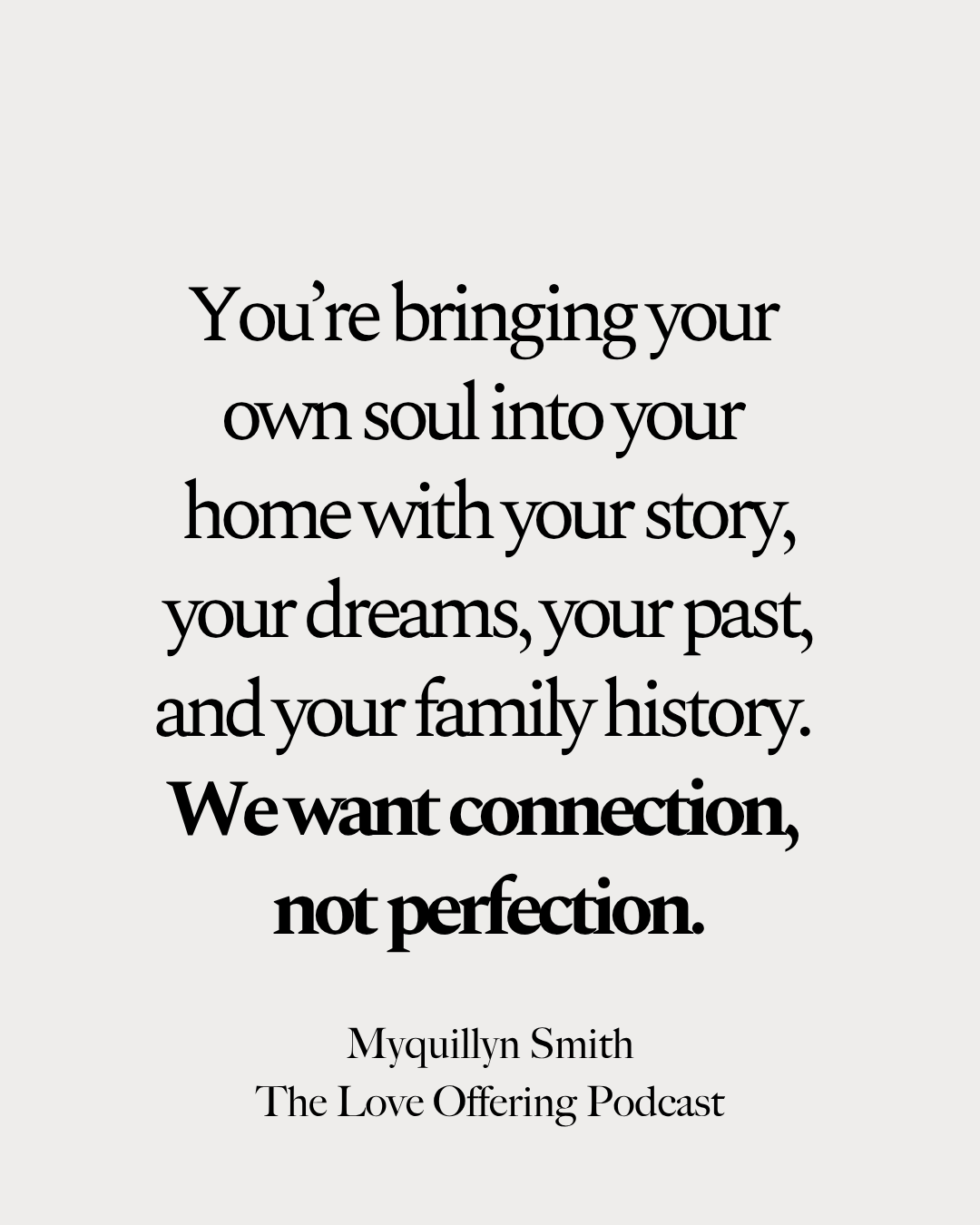
She reminded us that our favorite memories in other people’s homes rarely have much to do with expensive furnishings, spotless counters, or beautiful décor. We remember whether the people welcomed us, listened to us, laughed with us, and helped us feel comfortable.
A playlist, a simple drink, and an available place to sit may be enough. In fact, an imperfect home may help guests relax because they realize they are welcome to come as they are.
“We want connection, not perfection,” Myquillyn said.
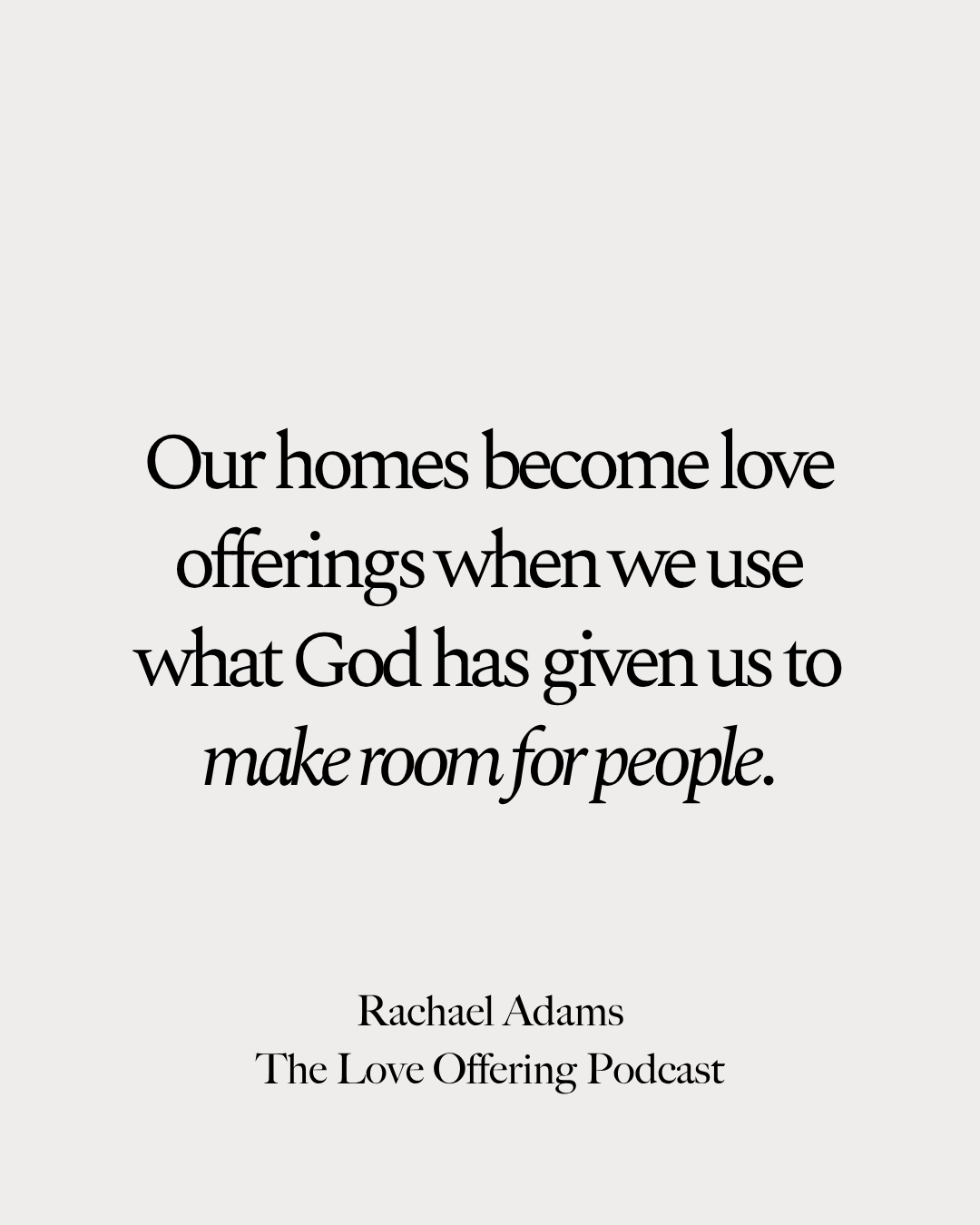
That practical truth beautifully complements the biblical invitation to “practice hospitality” in Romans 12:13. Hospitality is not entertaining meant to impress others. It is making room in our lives for people.
We do not need a large home, elaborate meal, or finished room to offer that kind of welcome. We simply need a willingness to open our doors and share what God has given us.
A Home That Becomes a Love Offering
Myquillyn’s practical wisdom helps us consider how our surroundings can better serve our lives. Our faith then helps us consider whom those lives are meant to serve.
A peaceful home is not the ultimate source of our peace. Jesus is. A beautiful home is not the ultimate purpose. Loving God and loving people is.
But when thoughtfully arranged and held with open hands, our homes can become places where that love is lived out. They can offer rest to our families, comfort to weary friends, belonging to neighbors, and space for honest conversations.
Our homes do not have to be perfect to be used by God.
So clear one surface. Hang one picture. Prepare something simple. Invite someone in.
Let your home reflect the people who live there, support the life God has given you, and make room for someone to experience His love.

Learn more about Myquillyn Smith:
Website: https://thenester.com/
Follow Myquillyn on Instagram: https://www.instagram.com/thenester/
Find House Hushing wherever books are sold.
Join the Cozy Community or take The Academy of Home Masterclass.
Connect with Rachael:
Website: https://rachaelkadams.com/
Instagram: https://www.instagram.com/rachaeladamsauthor/
The Love Offering Podcast: https://rachaelkadams.com/the-love-offering-podcast/
Listen to the episode: The Love Offering – Rachael Adams – Christian Podcast