Do you ever feel like life has become louder, faster, and more demanding than your heart was meant to carry?
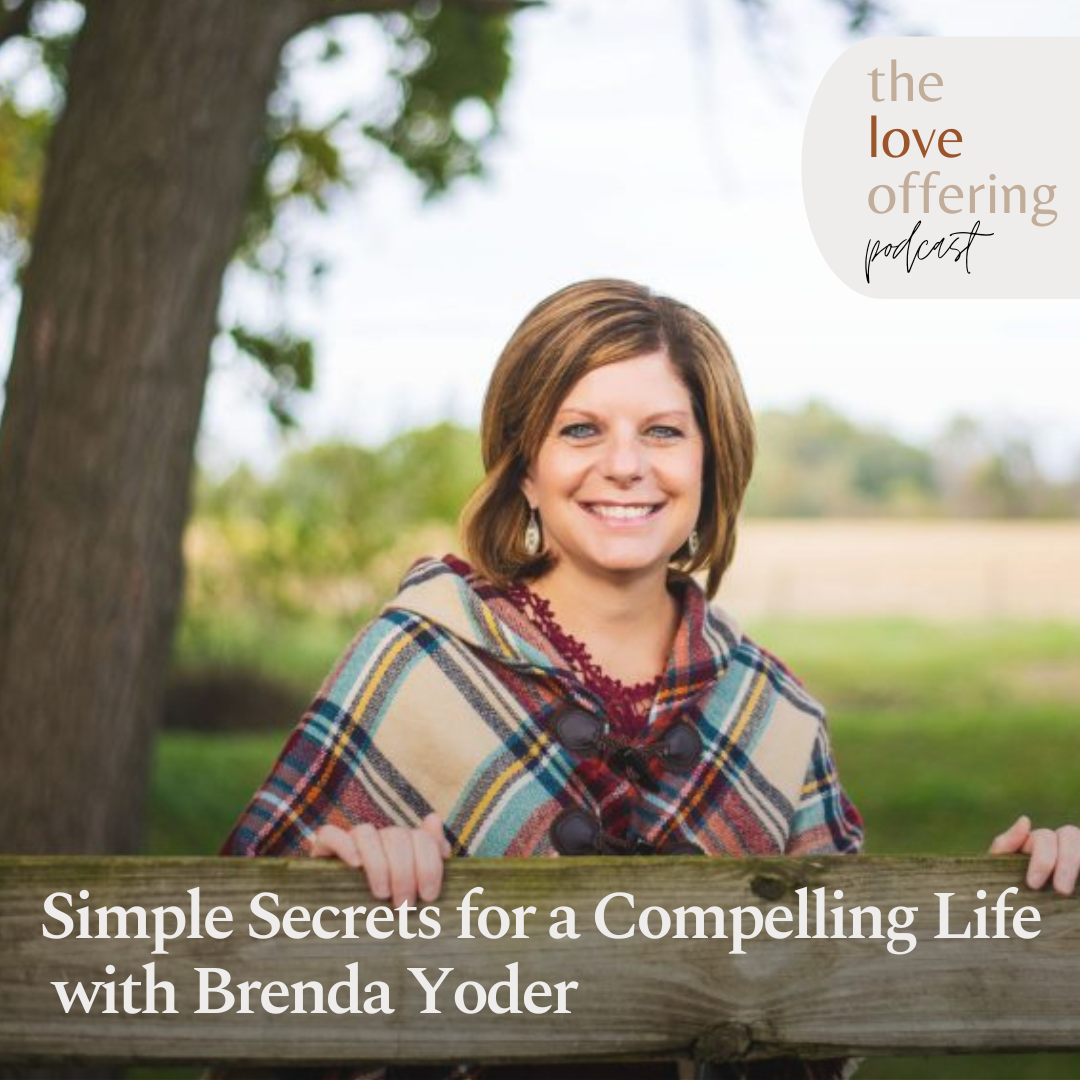
In this week’s episode of The Love Offering Podcast, I’m joined by counselor, author, and farm-living mama Brenda Yoder to talk about her new book, Uncomplicated: Simple Secrets for a Compelling Life. This conversation is a gentle invitation to slow down, breathe deep, and rediscover the wisdom that once shaped steady, grounded lives.
Brenda draws from the practices of our grandmothers and the rhythms of Amish and Mennonite communities to share practical, life-giving lessons for today’s busy women. We talk about what it looks like to resist the pull of constant chaos and instead cultivate a calm presence, authentic faith, and a steady voice of reason—right where you are.
In our conversation, you’ll hear:
- Why simpler doesn’t mean easier—but it often means better
- How timeless practices can bring peace to modern life
- What past generations can teach us about faith, work, family, and rest
- Small, practical shifts you can make to live with more intention
No matter your season of life or where you call home, this episode offers encouragement and wisdom for anyone longing for a more grounded, meaningful way of living.
You can listen to the episode now wherever you get your podcasts. I pray this conversation meets you right where you are and reminds you that a simpler life is still possible—and deeply compelling.
CHAPTERS / TIMESTAMPS
00:00 – Welcome + quick intro
00:41 – Brenda’s upbringing in Shipshewana, Indiana and life in Amish/Mennonite country
03:02 – Why Brenda wrote Uncomplicated (and how anyone can apply it)
03:31 – What a “compelling life” means—and why “uncomplicating” is different than “simple living”
06:39 – Lessons from past generations: slower rhythms, grounded values, calm-mindedness
09:17 – A dairy farm lesson: daily responsibility, stability, and interdependence
11:12 – Practical ways to apply these ideas (even if you don’t live on a farm)
11:40 – The 10 values in Uncomplicated (including contentment, prudence, stewardship, and more)
13:54 – Choice overload, “rabbit holes,” and how narrowing options reduces stress
15:20 – The hardest value to live out: contentment (and what the pandemic revealed)
18:49 – Biblical examples: the Proverbs 31 woman through a lifetime lens
23:26 – Counseling insights: anxiety, loss of problem-solving skills, and the “middle way”
26:21 – 1 Corinthians 10:13 and taking the “next best step”
28:18 – Is this a before-and-after journey? Brenda on lifestyle, priorities, and discernment
33:39 – What Brenda hopes women gain: vibrancy without surrendering to cultural pressure
36:15 – A biblical concept of love: interdependence and the Trinity
37:23 – What Brenda is loving right now (and how her work impacts future generations)
38:14 – Where to connect with Brenda
39:01 – Values clarification, seasons, and “right-sizing” your life
41:00 – Closing prayer from Brenda

Transcript (AI Generated)
Rachael Adams (00:23.65)
Well, hello Brenda, and welcome to the Love Offering Podcast. I’m so happy to have you.
Brenda Yoder (00:28.357)
Thanks so much for having me. I’m so excited to be here.
Rachael Adams (00:31.928)
So you just told me an interesting fact about your hometown. I would love to hear more about just your upbringing and the place that you call home.
Brenda Yoder (00:41.787)
Sure. So I am from Shipshawana, Indiana, which has been voted the number one tourist destination in the Midwest in 2024. It is a very small town and an Amish and Mennonite community. And I live on a farm outside of town, about four miles outside of town. I married a little, not a little, I married a Mennonite farm boy, a dairy farmer. So I was a town girl. I grew up in town, married a local man, moved out to the family farm with him, and we raised our kids here. He’s one of four boys, and we were dairy farmers for about the first half of our marriage. He grew up on the dairy farm. We’re both educators, and our little town probably brings in several hundred thousand people here every year. But we still have a culture and a lifestyle that is uncomplicated. Growing up here, you can take for granted what you have. Going away to a large university, coming back and living here, and raising our family here. I always thought real life happened elsewhere. You know, kind of like, I can’t really achieve things, or what we have here is always kind of not quite what other people experience. And so I’ve always kind of thought that that compelling life was found in other communities. And it took the pandemic for me to realize, you know, there’s a reason why hundreds of thousands and actually millions of people come to our small town each year. We’re actually having a light parade tomorrow or this Saturday. And there will probably be 30 to 50,000 people who come in for the light parade because we have something here that does not change over time. Even though we adapt to technology and current trends and all that, there are rhythms and a lifestyle and a groundedness that are still embedded here, and I realized throughout the pandemic that most people across the country long for them. And I wrote it in an uncomplicated way so people can know how to implement these things in their lives without becoming Amish or a homesteader, whether you live in the inner city, an urban area, a suburban area, or a rural area.
Rachael Adams (03:31.498)
Yeah, I’m excited about today’s conversation because you’re right, life is just so busy, and we have overcomplicated what maybe God intended to be simpler, what actually is required of us, and maybe some of the natural rhythms that we are healthier to live in. And so I love that, no matter where we live or what location God has us in, we can institute some of the practices and rhythms you talk about. So your bookis uncomplicated. The title suggests secrets for a compelling life. So how would you define a compelling life, and why do you believe simplicity is the key to achieving it?
Brenda Yoder (04:11.131)
Well, think compelling is something that draws us, right? When we think about something that’s compelling, we think of something that intrigues us; it’s what we want. There’s a vibrancy there. It is something that invites us and makes us want to thrive. There’s something about compelling that’s thriving. I’m gonna challenge you a little bit. So your question was what about kind of simple living? And uncomplicated is not so much about simple living. It really is about simplifying the lives we live. And there’s a difference there because when we think about simple living, that’s what I think about when I think about the Amish, like simplicity in what we purchase, how we live, almost a set of partners. Whereas complicating our lives is really walking into the reality that life is complicated, but it’s how we approach life with our values clarified that filters what we will and won’t do.
Brenda Yoder (05:18.585)
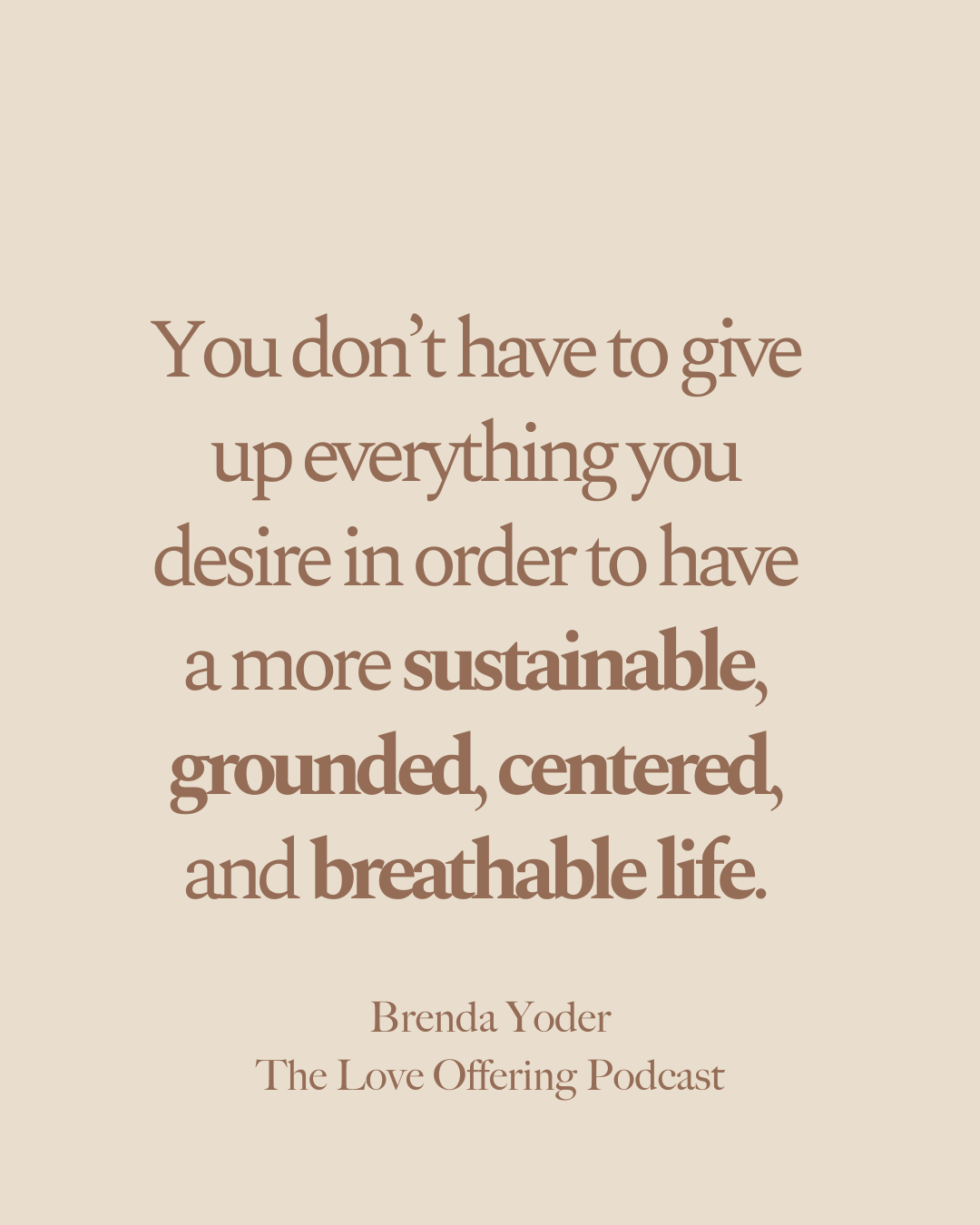
The importance of complicating our lives and having a compelling life is that we tend to think that the two can’t coincide. We think you can’t have a simpler, uncomplicated life and still be in the know, in modern culture, or using technology. We tend to separate the two. You either have to be all in, super busy, super hyper, engaged in everything, or we have to completely disengage and have a lifestyle that really doesn’t seem realistic, or that isn’t really one that we would have, because while it looks good on Instagram, I’m somehow going to miss something if I live that life. And Uncomplicated really is about the imitation of the lives that most people have lived throughout time. It’s timeless, this kind of middle way, realizing that we don’t have to completely succumb to everything that society, culture, and technology offer us, but we also don’t have to give up everything we really desire to have a more sustainable, grounded, centered, breathable life.
Rachael Adams (06:38.68)
So you mentioned drawing on the wisdom of generations past and the Amish lifestyle. So what lessons from these sources do you find most relevant for modern women?
Brenda Yoder (06:51.715)
I think kind of one would be a more middle way, like the middle way of thinking, middle way of balanced, and a mindset and behavior, and even a walking out of centeredness that is a little bit slower paced one that doesn’t have to become easily upset or overwhelmed with, you know, things that shipwreck your life with an unplanned plan. I don’t know if that makes sense or not, but, you know, I think sometimes we think that having a balanced life means that everything is always in sync and that we always have control of everything. And really, it’s about being very grounded in your values and your principles so that everything that you are doing, thinking, being about raising kids, working, all of those things are always kind of through your core values. And that takes an assessment that is always kind of moving and changing because what, how we apply biblical principles perhaps in our 30s, is going to look a little bit different in our late 40s or our 60s. Our values are constantly refined each season. And there’s also this element of what I call in the book equanimity and forbearance.
So equanimity and forbearance are old-fashioned words for a calm, even-mindedness in difficult situations. And I think that’s one of the core messages in Uncomplicated is that I think as women in the 21st century, we have let go of what our grandmothers, our great grandmothers lived out in harder times when they had less luxuries, they had less leisure time, they had more work to do just to have food on the table and raise our kids. Life was hard. And yet they weren’t shipwrecked every time something disrupted their life or their plan. And so I draw on one example I’ve learned as a dairy farmer’s wife: cows have to be milked twice a day, every day. There’s no getting around it doesn’t matter if you don’t feel good, doesn’t matter if you’re sick, it doesn’t matter if your mom just died the day before. Every morning you get up, go out, and milk the cows. And there’s something about a daily rhythm that is predictable, that is also something outside of you, where you’re caring for someone, something, a cow, but you’re also doing something productive. Milking a cow is going to the store shelves in just a few days. It’s this interdependence and responsibility to something outside of ourselves that even draws us to get up every day and be responsible. And those rhythms and needs were so much a part of life in the past. And I think as part of that presence in the Amish life that it just draws us back to how God created us as humans to be interdependent with our nature, with our families, with our communities. And it’s kind of the underlying stability that used to be in past generations, but it’s really gone by the wayside with self-serving values, with do-it-now instant gratification, all of those things that have really taken over modern culture.
Rachael Adams (11:12.056)
So for those of us who don’t live on a dairy farm, like I’m thinking about my daily rhythm. It’s like, okay, I’ve got to get up, and I’m going to make my kids’ lunches for school. You know, that’s kind of my rhythm of taking care of my own family. And so, as we incorporate simplicity into our daily lives, especially amid the modern demands of family, life, careers, and technology, how can we practically incorporate more of these practices?
Brenda Yoder (11:40.527)
Well, I think it depends on which ones you’re looking at. So let me just share real quick, kind of the 10 values, mindsets, and behaviors that I have in Uncomplicated because they can be very simple, because the first one is contentment. So part of incorporating contentment into your daily rhythm, in a life outside a farm, is realizing that, if today were the only day you had, would you be satisfied with what you’re doing? Like, are we constantly looking for the next? Are we constantly looking for what’s just outside of our reach? So that would be one simple way, what are simple practices you can put into your life today that would, that would nurture contentment, gratitude journal, even while you’re driving on the way to drop your kids off at school, talking as a family about what is one thing today that we’re grateful for? What is one thing today that if it were all we did, we would really be happy? know, have those conversations with your kids. The other nine values include practicality, prudence, fidelity, resourcefulness, equanimity and forbearance, stewardship, interdependence, being grounded and humble, and then foresight, which is heritage and legacy. If that’s not 10, I may have missed one in there. But one of my favorite ones, probably within that, is practicality in thinking about needs versus wants. What is a need that we have, and how can we get it met in the way that is best for our season, for our lifestyle, whether it has to do with finances, whether it has to do with time, or whether it has to do with the amount of resources we have to either expend or to save? Thinking about what’s just the simplest way to get this need met, and just keep it at that. I just think. You know, every time I go to a big box store, like when I go to Walmart or if I go to Meyer to go buy groceries, you walk in there, and I know for a lot of people, maybe Costco, you know, I just need Cheerios. That’s all I need. But we walk in there, what do we see? There are probably 150 Cheerios, and eight types. So part of, you know, these practical, simple ways with a lot of things is just to narrow down our choices. You know, even when we go online to research something, I want to figure this out. How many times do we get caught in the Pinterest, Instagram, or Amazon rabbit hole of finding so many choices that we become overwhelmed, and we don’t order the thing we thought we were going to order after all, or we do so much research that there’s always a bottomless pit. And so my encouragement would be, how can we lessen, uncomplicate some of those things as far as choices, as far as just say, I’m going to look at three websites to research this, and I’m going to leave it at that. And you do those things, and you come to the best educated decision. Boy, that’s a really big open-ended question for a lot of these different things, Rachel. So I’m going to bring it back to you to see if there’s anything there that piques your interest and you want to know a little bit more about.
Rachael Adams (15:19.596)
Yeah, no, I want to know about all of them because they all pique my interest. Is there one that you find that’s most difficult for you to live out?
Brenda Yoder (15:29.037)
I would probably say contentment because I think the others are just more practical. Resourcefulness, pretty practical, or at least practical for me, being a farmer’s wife. I think that I’ve had to learn some things growing up in town. I didn’t have those skills coming into marriage, but I learned them really quickly because you have to. But I do think contentment is one of those values, mindsets, and behaviors that’s biblical. It was the first human struggle. Eve, there was Eve. She had everything she needed, including a relationship with God, where he walked and talked with her in the garden. And what did she do? She said, you’ve given me everything, but I want that over there. And so I think, for women especially, contentment is this sense that there’s always something better that is going to satisfy us more, just beyond our reach. And I chose that as the very first chapter in Uncomplicated because I think during the pandemic, when everything was shut down, and I was sitting on my front porch, and I was having this conversation with God about what are we going to do until things become normal again? And it was almost as if he spoke to me through nature because it was an early spring, it was in March, and the daffodils were coming up. And there was an email someone sent me that asked, if today is the only day you have, if life is as good as it gets, what is my response to that? And I realized that what if this pandemic shutdown thing never got any better? Could I be satisfied and content with what God had given me? And it’s then that I really realized what he had given me. I always thought that being raised in a small town, living on a farm in Amish country, in nowhere, Indiana, that life was always more vibrant and exciting than someplace else. And it was through this process that he showed me, just like he probably does for any of u,s that no matter where we are, this is the life he’s given us. And if this were only the life he gave us for where we are today.
Brenda Yoder (17:56.675)
And honestly, I’ve had several friends who have passed away in the last year, unexpectedly, in early midlife. If today were all we had, how could I be fully satisfied? It doesn’t mean that I’m overly joy, you know, joyful about hard circumstances, or that you don’t ever strive for things that you want to achieve, but it really is this element we always keep in tandem of full contentment and joy with where we are, with that ongoing, compelling motivation to still reach our goals and to dream and to pursue, but also at the same time, still be very full of the life that God’s given us today.
Rachael Adams (18:49.134)
Do you see any biblical examples of these 10 rhythms that you have identified to un-complicate life? Do you know of any examples or anyone who lived them out well biblically?
Brenda Yoder (19:04.603)
Well, I’m going to throw a wrench into everything because, well, I’m going to say a couple of things. Yes, for each of the 10, there are biblical examples and principles. I’m going to say that the Proverbs 31 woman is the one who walks them out. But we tend to think of the Proverbs 31 woman as being one person in one day at one point of her lifetime when really she examples these things over her lifetime because at the end of Proverbs 31, talks about her children will rise up and call her blessed, you know, and that her husband is receiving praise at the gates of the city because of her lifestyle. And I don’t know about you, but my kids are all at an age now where they might rise up and call me blessed, since they’re all adults. They’re not gonna do that when they’re teenagers, let alone when they’re younger. This is a woman. Like my mother-in-law, who was a farmer’s wife, I watched her crop her lifespan, and she died earlier than she should have in her mid-60s. But she lived it out. I watched her every day day in and day out She didn’t get up every morning at four o’clock and do all those things that the Proverbs 31 woman did but she did all of those things over her lifetime and I think that is the piece is that prudence is not, prudence is a very highly esteemed virtue that was one of the four virtues most valued in the Catholic Church and even in ancient societies because it is thinking, it’s thinking and pausing. If I do this, this is what will happen. And as 21st-century women, we are not very wise; we don’t think much about cause and effect. If I do this, this is what will happen. And is this the best choice? We don’t filter most of our choices through that lens. The Proverbs 31 woman did. She didn’t do these things because she was a busy woman. She didn’t do them to rack up the achievement of being in the hustle, the hustle culture. She had, she had to be responsible to make sure everything, not just in her household, but everything she did was a faithful walking out of what God had called her to in her season. And so as a manager, as a businesswoman, a mom, a wife, a gardener, a woman who loved God, she was very prudent. She was very resourceful. She was a good steward. She knew the importance of interdependence because people depended on her for much of their safety and livelihood. She knew when to stop. She knew when to go. So I guess that’s the example I would encourage people to go back to, but look through the lens of the skills that really are the important human skills we often lose when we let whatever is most demanding and more shiny and glittery entice us to think we need to have. And just a reminder that in the Garden of Eden, that serpent was a shiny animal. It was sparkly. And that’s what drew Eve’s attention to the enemy. It was not that he presented himself as ugly, a snake. No, he was something shiny and inviting. And when we let what is shiny and inviting and quick and sparkly and here and now invite us or entice us away from what God has really called us to do in our season, then we get in trouble.
Rachael Adams (23:25.922)
Yeah, yeah, he was pleasing to the eye, and I think so much of what draws us is pleasing to the eye, and it can be, it can be confusing. And I know you’re also a counselor, so just interested in the people that you counsel. What are some of the common challenges? I guess what is the most common challenge you experience when dealing with them? And then, how do you encourage and guide them to lead a simpler life?
Brenda Yoder (23:57.839)
Yeah, think one again, this is another piece that drove me to really write uncomplicated was something I started noticing even before the pandemic. But I started realizing that in the counseling office, people lacked common sense and basic problem-solving skills. And it was really alarming to me because it was something that you would expect working with people in crisis, people who you were working with in trauma. And that was not the case with what I was working with at that time. And even as I was speaking, as I would know, when you’re a therapist, and you speak at retreats, or things like that, a lot of people come up and share their stories. They’ll ask for advice. And I started realizing that, as a culture, we were lacking basic problem-solving skills. And we were also lacking the middle way in terms of balanced thinking and balanced approaches to solving problems that come up in life, because people were thinking either fatalistically or idealistically. And it wasn’t just one generation. I think that the other piece is that it wasn’t just younger women who were thinking that way; it was women across the board. And I think that’s kind of when I realized that we need to get back to the basics of humanity. We need to get back to the basics of these basic common skills, such as problem-solving. We need to not overcomplicate things. And then just also anxiety. There’s so much anxiety because we’re so afraid we’re gonna make the wrong answer. We’re so afraid of what might happen, and the example that I give is this principle that cows have to be milked. There was one time in my early marriage when one of our neighbors’ milking facilities was damaged in a tornado. And we had, they had to figure out how to milk 140 cows. We had a facility where we were milking our 140 cows, about a mile down the road. And my brother-in-law has just said, well, they can, you know, they can milk them here. We’ll figure it out.
Brenda Yoder (26:21.305)
They didn’t come up with a 10-point plan before they started hauling those cows down to our barn. had to be shipped, like, within hours. They had to be loaded up and carried over there. And that was a principle that really struck me early on in my young adult life is no matter what obstacles face us, there’s always a way out. And First Corinthians 10:13 gives us the example that no matter what comes our way, God always provides a way out. And we have really forgotten this human problem solving skill that God has created our brains with, that no matter what we experience, He, meaning God, gives us the resources to be able to, even if we need to, decide the best next step doesn’t mean we’re gonna have everything planned out, but it means that for the best next step, this is what we’re gonna do. And once we get our footing there, we can figure out the next best steps. And I think the number one encouragement that I give my clients and people I work with, and I work with students now, so I’m a K through four elementary school counselor, also have time. So I help little problem solve every day in very difficult situations because they don’t have control over what’s happening at their home. But I love encouraging people that we do have the resources to make very wise, sound decisions, even when we don’t feel like we do, because it’s not about us. It’s about the capacity God has given us, with Him, to really find the best answers to our problems.
Rachael Adams (28:17.754)
So, do you think that you have always lived in this way? And I’m just interested, you know, as you’ve written this book, and as you’ve explored all of these different rhythms that you’ve talked about, is this something that you’ve tried to add more into your life? And I just would love to see like it was there before and after, you know, like, okay, I’ve identified these and this is what I’m going to really work towards? Or do you feel like you’ve always really embodied these traits?
Brenda Yoder (28:45.484)
So I think that’s maybe part of the thing I really want to share with people: I had someone ask me once, like, ‘ Are these lessons? ‘ Are these like mindsets? Are they behaviors? I was like, no, like this is just how we live. Yeah, it’s a lifestyle. It’s a lifestyle where we don’t have all things figured out. But what you live is your priorities. And I think that’s the bottom line.
Brenda Yoder (29:10.459)
These 10 things that I sifted through and thought about, are the things that, what are 10 things that kind of need to be reintroduced to culture that were commonly lived down past generations, that are also still commonly lived out among Amish, among those who live on farms, and that people come to and say, I wish I knew how to do that. And I started by just doing some research on what people who grew up on farms or live a farming lifestyle say they’re grateful for. And many of them actually transferred into what the World Health Organization identified as basic human life skills. And that’s really what it comes down to: our lifestyles are all different around the world and around the country. But basic human life skills have not changed. And I think when you live on a farm, you’re forced to still keep these life skills that don’t change like shifting sands because you do the same things day in and day out, no matter what is happening outside in the world, even in your personal life. You still have to get up and do certain things, just like raising kids. So, as we were raising our four kids, they are all three years apart. We didn’t homeschool. We don’t really live. We don’t live what now would be considered a homestead lifestyle. We were farmers. It’s just what we did. Our kids were all in high school sports. They were in college sports. I’ve been a professional woman for over 20 years. My husband worked and managed a farm, plus taught public school; our kids went to public school, so we didn’t shelter them. So I’ve been a career woma,n and we haven’t changed anything. It’s just that you’re always having to really filter what’s most important and really live that out because maybe we’ve been a little bit more resistant to some of the fads that come your way, you know, that kind of maybe can get you sidetracked from your values because there’s not much capacity for fads because we kind of test them. Is this really going to be helpful for me to put into my life? Then it’s going to be more of a lifestyle choice versus I’m just going to do it because that’s what’s popular now, that’s what everyone’s doing. I think, in the lifestyle we’ve had, we’ve had more of a farming lifestyle. don’t take new things on into your life until you’ve vetted them for a little bit and kind of watch them and see again kind of that prudence is this is this new thing that’s coming our way is it really helpful and if it is okay so then I’m gonna open the door and make that investment or as a mom that’s kind of what i watched for especially as an educator i used to teach high school high school. But even before I was a therapist, when I would see things coming down the pike, technology, fads, different things, I was teaching high schoolers before my own kids were in high school. So I just kind of learned to vet things a little bit. I think that’s very biblical. I think God tells us to, you know, to watch first before we do. And I think also just filtering things through biblical principles, and those biblical principles really are what I raised my kids through, who lived, all four of them lived in different cultures regarding technology. So when my oldest was in high school, cell phones were first coming out; they were more of a luxury. When my last one left high school, everyone had a smartphone in their hand.
And so we adapted to the new technology that was here to stay, but we also filtered what that looked like in our family through the biblical principles we held.
Rachael Adams (33:38.944)
Yeah, God has given us discernment and wisdom, and he will guide and counsel us to make good choices and give us the discipline we need to set boundaries. And it’s really there are boundaries for our good and for our benefit. And so, as women listen to this podcast and read your book, what do you hope for them as they develop this more uncomplicated lifestyle? What do you hope for them? And what is, I guess, the fruit of living that way?
Brenda Yoder (34:12.731)
Yeah, I hope that they know they can live a vibrant life without selling their soul to what the world says they have to do. I mean, I think that maybe that’s kind of harsh, but I think with technology and all that it distracts us from, there is a big movement even in the secular world with John Height and his new book called The Anxious Generation is fighting for humanity and for childhood and fighting for the way that God has created us to be as human beings. And that we know, I want women to know they can have a balanced life. They don’t have to give up everything in order to have what they want. I think that’s the bottom line. I have witnessed women in my culture, whether they’re Amish, Mennonite, or not any of those things, but I’ve witnessed women live vibrant, exciting lives where they are influential to so many people, and they don’t bend every whim that comes along, but they’re also not hiding under a doormat and living a sheltered, drab sad life.
Rachael Adams (35:45.43)
Yeah, well, I think that makes a lot of sense, and I think today’s conversation will cause everybody to be introspective and to really kind of take inventory of what their life looks like, how they’re spending their time, and some of our own lifestyle rhythms. And so I think that it’s been really valuable. As we come to a close, one of the questions I’ve been asking all my guests is: Is there a biblical concept of love that you think applies to this topic today?
Brenda Yoder (36:14.937)
Well, the biblical concept of love, think I’m going to share is interdependence, which is one of the chapters. But I look at the Trinity when I think about interdependence. God loves us so much that he desires a reciprocal relationship with us, and that community and reciprocity are so important, and God models that for us. He loves us so much that He desires us to be in fellowship and communion with Him, not just Him giving to us. And so His example of modeling interdependence through the Holy Spirit, through the father, through the son, is just what he desires for our relationship with him and also our relationship then with others, which makes us more other-centered rather than self-centered.
Rachael Adams (37:22.676)
Absolutely. Well, Brenda, is there something that you are loving right now?
Brenda Yoder (37:27.747)
I am loving my job. My job is an elementary school counselor. I work in a K-4 building. I absolutely love it this year. It is difficult, but I don’t know what is different about this year; I love what I’m doing. And that’s a gift right now.
Rachael Adams (37:47.372)
Yeah, the number of lives you can touch on a daily basis. I mean, it’s just staggering. I’m sure the different stories you hear and the people you’re able to help affect future generations. So I think that is certainly something to be valued and grateful for. I know I want to stay connected with you. I’m sure listeners want to stay connected with you. So tell us how we can best do that.
Brenda Yoder (38:14.063)
Sure, they can do that through my website, brendayotor.com, and my newsletter. They can also join me on Instagram at brendayotorspeaks. I’m also on Facebook at brendayotorspeaker. And then I co-host the Midlife Moms podcast with my friend Amelia Rhodes. They can find us there, too.
Rachael Adams (38:33.994)
That’s a really good example of you being a busy woman. You’re writing, you’re podcasting, you’re a mother, you’re a farmer, you’re a teacher, you’re a counselor, you wear many hats, and so I think to your point circling back to the beginning of our conversation, just because life is uncomplicated doesn’t mean that it’s simple or not busy. It’s just, it almost feels like it’s a perspective, a mindset shift that then shapes maybe the pace at which you live your life, because you’re still very busy and accomplishing a lot in a day. I’d love for you to speak on that.
Brenda Yoder (39:04.187)
Yeah, I think it’s more of two things. One is values clarification. Like, what values are driving what you’re doing right now? And then the other one is just a constant, well, of course, connection with the Lord, but knowing that every season is different. So, for example, I’m a grandma, and my adult kids all live out of the area, so I travel more. So I’m speaking less, and I’m traveling more to visit my kids. I do not want to be gone if they say we’re gonna come home this weekend. That is my number one priority. So I actually said no to about three speaking invitations in the last week for next year because we have a wedding next year. My only daughter’s getting married next year. I have two new grandkids who are coming, and they’re my number one priority. So I think it’s that in your season of life, just know life is not a race. And so if you’re in the season of raising kids, that is so full. But it also means you can put things in place and take small steps toward the big things you may want to do. That’s why the compelling part of living a complicated life is so important: it’s not a laid-back life, but one where you are constantly assessing. Sometimes that’s weekly, sometimes that’s every quarter, sometimes that’s every year. But I call it right-sizing your life: cutting out of the life things you used to do that don’t fit your current season, and then putting in what you really want your season of life to be about.
Rachael Adams (40:57.134)
That’s a great distinction and a great way to end. And so I just thank you so much for being my guest today, and I would be honored if you would pray for us as we close.
Brenda Yoder (41:06.393)
Okay, Father, I thank you so much for Rachel. I thank you for her community and for every woman who is here listening. just ask, Lord, that you would help her to sharpen the voice of you in her ear to be able to know what she should be about in her life in this current season and that she knows that she is influencing those around her where you’ve placed her right now. I just pray that you would help her know that a full life is not necessarily a busy life, but one where she is doing what you have called her to, to her capacity. But then also feeling content and satisfied to know that today is not a no to tomorrow, but about living her best life, grounded in your truths and values, for her in this season. Lord, just ask that you would equip each one of us to know who you are and what we should be about, and that you would help us to rest in that space. And that resting is not giving up, it’s not sleeping, but it’s being content and satisfied with who you are and what you’ve given us in this season. I pray this in Jesus’ name.
Brenda Yoder (42:45.957)
Thanks for having me.
Connect with Brenda:
Connect with Rachael:
Download your Free Love Always Devotional:
https://rachaelkadams.com/free/