
Have you ever found yourself holding on to hurt, disappointment, or resentment from something (or someone) in your past? Maybe you’ve been wounded by others’ words or actions, or perhaps you’re simply tired of feeling weighed down by offense.
This week on The Love Offering Podcast, I’m talking with Alexandra Hoover, author of You Can Let Go: Don’t Let Past Hurts Steal Your Current and Future Joy. Together, we’re exploring how to:
- Let go of pain and disappointment that’s holding you back
- Live from a place of radical acceptance in Christ
- Walk boldly in the abundance God offers
Alexandra reminds us that while we can’t always control how others act, we can choose how we respond. She helps us uncover the roots of our insecurities and wounded pride so we can find our true identity—not in how people treat us—but in who Jesus says we are.
If you’re ready to make peace with your past, live free from offense, and embrace emotional and spiritual freedom, this episode will encourage and empower you.
🎧 Listen to our conversation here
With love,
Rachael
Summary
In this episode of the Love Offering Podcast, host Rachael Adams welcomes back Alexandra Hoover to discuss her new book, ‘You Can Let Go.’ The conversation explores themes of forgiveness, healing from past wounds, and the importance of understanding our identity in Christ. Alexandra shares her personal journey of overcoming hurt and resentment, emphasizing the need for daily forgiveness and radical acceptance. The discussion also touches on how our past shapes us but does not define us, and the impact of healing on our relationships with others. Listeners are encouraged to trust in God’s healing power and to live from a place of love and acceptance.
Takeaways
Forgiveness is a daily choice and a lifelong journey.
Living in hurt and resentment can steal our God-given joy.
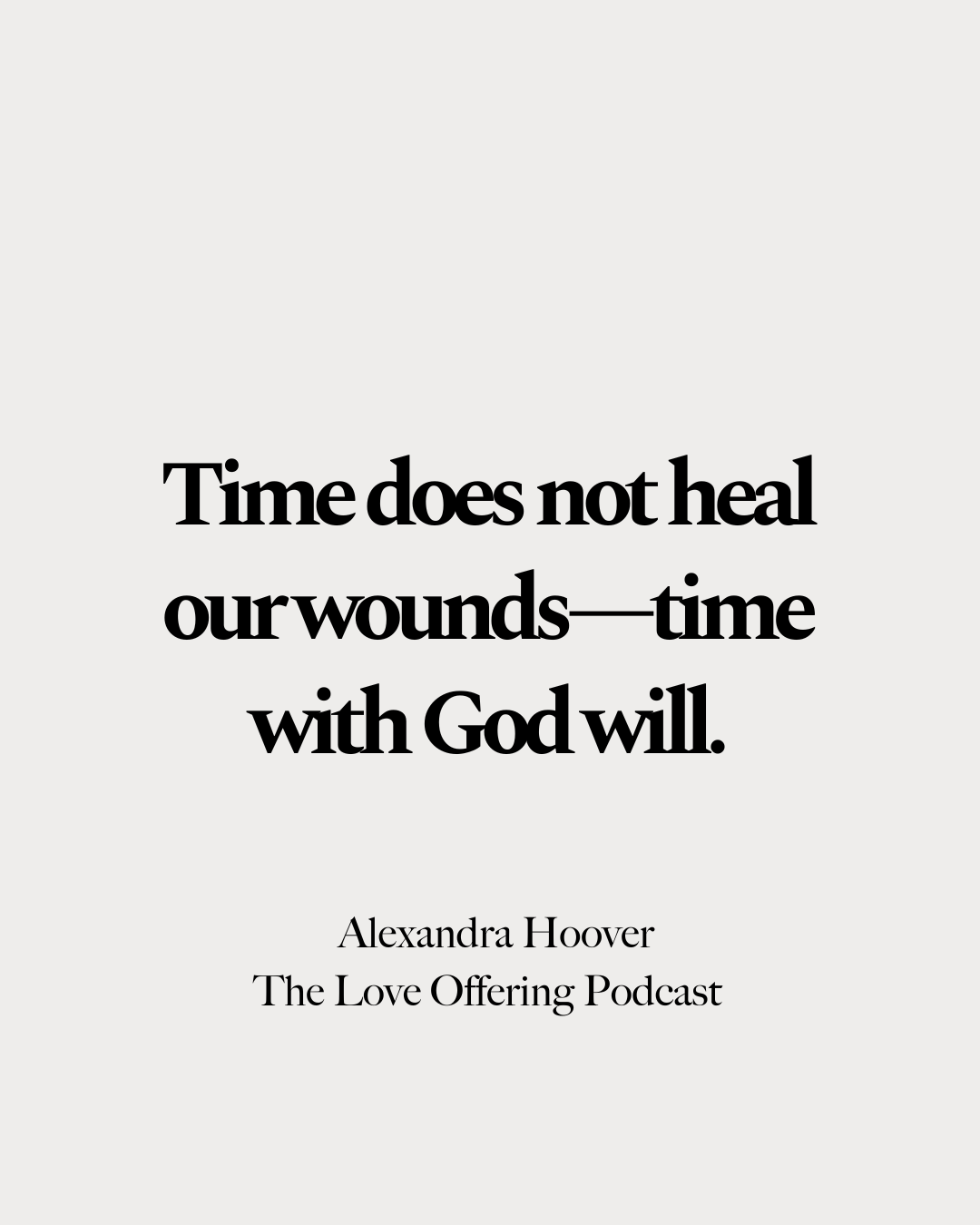
Time does not heal our wounds; time with God does.
Our past shapes us, but it does not define us.
Healed people heal people.
We love because He loved us first.
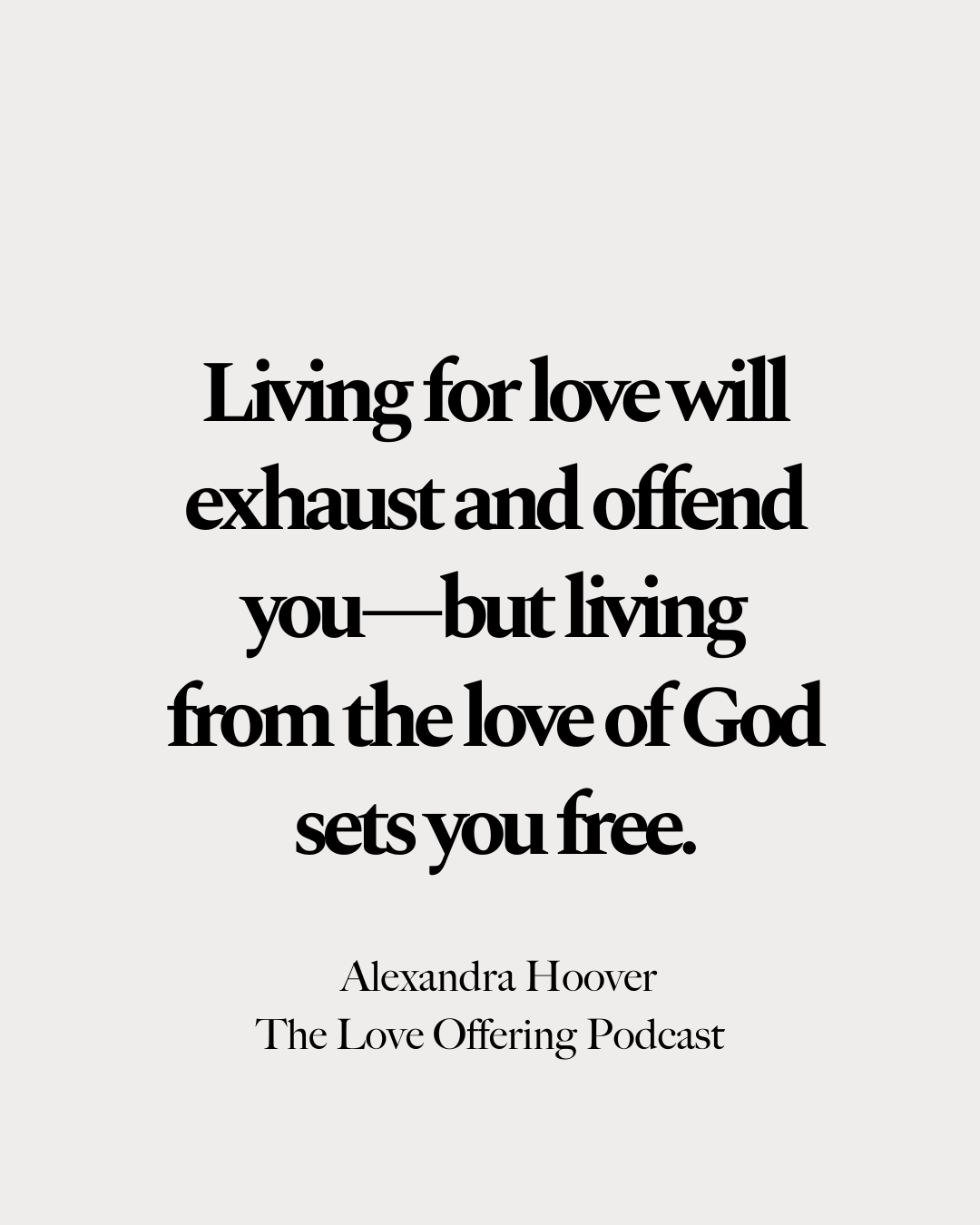
Living from love is different from living for love.
Trust that God is repairing something in you.
We are all just people, sons and daughters of God.
Forgiveness is not just about healing from past wounds, but also preparing for future pain.
Chapters
00:00 Introduction to Love Offering Podcast
00:55 Welcoming Alexandra Hoover
01:49 The Journey of Hurt and Healing
03:47 Living in Hurt and Resentment
09:23 The Daily Practice of Forgiveness
11:31 Radical Acceptance in Christ
16:25 Shaping Our Future from the Past
22:24 Impact on Relationships
26:58 Encouragement for the Burdened Woman
Transcript ( AI Generated)
Rachael Adams (00:01.89)
Welcome to the Love Offering Podcast. I’m your host, Rachel Adams, author of Everyday Prayers for Love, learning to love God, others, and even yourself. Each week, we dive into meaningful conversations about how to live out the greatest commandment, loving God with all of our heart, soul, mind, and strength, and loving our neighbors as ourselves. Whether through inspiring stories, practical tips, or biblical truths, I hope to encourage you to love boldly, live faithfully, and reflect God’s love in your everyday life.
Today, I’m excited to welcome back Alexandra Hoover to the show. Alexandra is a wife, mother, Bible teacher, ministry leader, and bestselling author who has a heart for helping people walk in the freedom and abundance of God’s love. She’s here today to talk about her newest book, You Can Let Go, Make Peace With Your Past, Break Free From Offense, and Move Forward With God. In it, Alexandra helps us release the pain and disappointment that’s been holding us back and shows us how to live from a place of radical acceptance in Christ. Alexandra, welcome back to the Love Offering Podcast. I’m so happy to have you again.
Rachael Adams (01:08.888)
So since we last talked, you’ve had a big move. A lot’s changed in the last several years. So I would love for you to introduce yourself to us for those who don’t know you yet. And for those who need a crash course in all things, Alexandra.
Alexandra Hoover (01:11.838)
Rachel, it’s so good to be with you, my friend. Thanks for having me.
Alexandra Hoover (01:32.912)
Yeah, so I’m Alexandra Hoover. I live in Charleston, South Carolina. were in Charlotte for most of our lives. We’ve got three beautiful kids. Leila is 13, Kingston is 12, and Sophia is 9. I work in a local church ministry. I write books. I teach the Bible. It’s, you know, but parenting and being a wife really, truly is the greatest joy of my life. And I mean that with my whole heart.
Rachael Adams (01:50.656)
Mm, me too. Well said. So, this latest book —I’m so excited to talk about it. It’s titled “You Can Let Go,” and it was born out of your own journey of hurt, healing, and freedom. So, share a little bit about the inspiration —the backstory of this new message.
Alexandra Hoover (02:15.644)
Yeah, thanks for asking. What’s so interesting about You Can Let Go? I love telling this part of the story: when the Lord began to reveal this new message, so timely and so necessary for women—and really for everyone—but mainly because the book is written for women, it was a book about rejection. And so it started with this wrestle between me and God —man, I think women are living perpetually rejected. Feel like there is a deep wound, a lack of understanding of our identity in Christ. And so I was kind of wrestling with God through that. Even like some of the first few pages of the book, when I had sent it to my literary agent, I was like, I think this is it. But let me keep chewing on it with the Lord and let him sift me in it. Well, a few weeks went by, and what the Lord began to reveal to me, which is so much of what we talk about in the book, friend, is that this rejection was a symptom of something much more profound. And truly, it wasn’t just rejection that I was dealing with. There were several symptoms, several things, really fruit that I was bearing from offense. And that the root cause of the things that I was wrestling with for so many years of my life was the hurt that I had allowed to become offense in my life. That then became this spider web of little traps that I was living in. So rejection was just one thing the Lord had said, like, hey, yeah, you’re right. We do have to talk about that. But we can cut rejection off and not address the root issue, and it’s just gonna come right back. And so he took me down this incredible journey of learning so much about the trap of offense that we see in scripture, and truly how the enemy.
Rachael Adams (04:02.626)
Well, I can’t wait to hear more about this journey and this topic, but we’re going to take a brief break to listen to a word from today’s sponsor. And when we come back, we will talk about —sorry —we’ll talk about why living in hurt and resentment can steal our God-given joy.
Alexandra Hoover (04:03.818)
It sets us up to live a life of constant offense if we’re not careful.
Alexandra Hoover (04:22.974)
Now you’re good.
Rachael Adams (04:24.258)
Welcome back. I’m talking with Alexandra Hoover about her new book, You Can Let Go. And in it, you write that living in hurt and resentment can still our God-given joy. So why do so many of us struggle to let go of our pain and disappointment?
Alexandra Hoover (04:45.17)
Yeah, that’s so good. Think, I really want to start with this. Think it’s so important that we admit that we struggle with resentment, bitterness, and disappointment. I believe it can feel shallow, and maybe even shameful, to say, “I’m resentful, I’m bitter,” especially when it comes to unanswered prayers. It’s easier sometimes to say, well, you let this person me down. But when we feel like God has let us down, too. It’s really interesting there, right? To be able to reconcile that. So we talk about both in the book because they’re both very important things to work through. But it’s so hard for us to let that go, because we weren’t designed to live with resentment and bitterness. When the Lord created us, our hearts were designed to be loved by Him and to glorify Him. And so the fall, right? This world that we live in really goes against the very fiber of who we are. And the reality is, when people hurt us, it hurts. And so, that’s the simplest way I could put it, and I’ve loved being able to say that, the hurt hurts. So of course we’re going to be, we’re going to be tempted to live bitter and resentful if we don’t allow ourselves to say, God, this thing in my life really wounded me. I need you to help me heal. And once we do that, we’ll begin to see a freedom wash over us like never before.
Rachael Adams (06:07.263)
So you talked about how being offended often uncovers those deeper roots, like wounded pride, insecurity, and misplaced trust. So unpack that for us.
Alexandra Hoover (06:27.401)
Sure, very light topic. Sure, yeah, I’ll unpack it for us. I want to approach this compassionately because, for the friends who are listening, most of us are either walking through a hurt or getting ready to walk through some sort of disappointment or letdown in our lives. It hurts us when we do that, and it’s painful. But what I think happens, Rachel, is that we truly have not understood — or don’t even really know — that there is a choice between taking our hurt to the Lord and then picking it up as an offense. And I do think that there is a difference that we see where the Lord says, like, let me carry the burdens you were never meant to take. And when we don’t allow the Lord to really bring that burden for us, our pain, the things that have happened to us, the things that have been said to us or spoken over us, it becomes our identity. It becomes who we are. And we’re so wrapped up in it, which is why I think these symptoms — like insecurity, rejection, low self-worth, self-criticism, pride, jealousy, anger —keep coming up in our lives. We kind of go unattended because we say to ourselves Well, I’ve given that to God. Yet we are perpetually living offended, rejected, and insecure, and so all I have to say is that I think it’s so hard for us because we’re not addressing this issue, which is that there is healing that wants to happen. God wants to heal these things, but unless we are Honest with our Jesus and say to him, Father, help me walk through these wounds. The wounds will just stay as open, gaping wounds and won’t ever really heal into scars that we can tell our stories from.
Rachael Adams (08:19.694)
Yeah. If you humor me a little bit in this, if we don’t let go, then there, we are going to miss out on so much. You know, we, we, our hearts get so hardened, and we, we don’t open ourselves up to new experiences and new relationships, and we can stay so stuck. And so much is at stake here. Um, if we don’t let go, what can transpire, and what might we miss? Does that evoke any thought in you?
Alexandra Hoover (08:56.713)
And evoke so many thoughts. We talk so much about that in the book, Rachel, that there is a huge cost to not letting go. There is a considerable cost to walking and living in, and I’m cautious with how I use my words here because that’s what it is, living in unforgiveness. We’re not just living with it. We’re living in it and we live it out. Yeah, you know, Jesus talks to us about these things. Mean, the scriptures are very clear about these symptoms and tell us, you know, to deal with these things ruthlessly, you know? Like, we cannot deal with them nicely. And it’s because the cost of it all, right, is what we are trading in: a life of abundance with God. It is a life of joy with God. It is a life of security. Like, I don’t think I’ve ever talked to a woman who at one point or another hasn’t said or struggled with an insecure moment in her life, whether it’s about her looks, her capacity, her season of life, her calling, I just don’t think I’ve ever met one. It’s, you know, not to say that it’s because we don’t see the truth. For many of us, we are still walking significantly wounded, even in our identity and who we are. And so even that is at a cost, right? Like the cost of it would be walking in a false identity —walking in someone we’re not.
Rachael Adams (10:11.283)
Yeah. So we know we need to forgive. We know we need to let go. We know we need to give it to God. And so it is as simple and as hard as that —walk this out for us practically: what does this look like? Is it a one-and-done or a daily process? Give us some practical tips here.
Alexandra Hoover (10:36.423)
Yeah, that, talking about forgiveness has been so interesting, truly, in the last few months with different people as we unearth this idea. I want to be so clear with our friends and tell them all that yes, it is a daily choice when we say we are going to let this thing go. It is a daily posture. It’s really a posture of surrender. But it’s not only a daily practice; it’s a lifelong journey. And so, what I liken it to: we have any friends who are gym girlies here, or who like to lift weights. I am not her, but I do know how this works. I’m more of a runner. Women in their 30s and up should start lifting weights, and I’m getting there, but all that to say. I think it’s just like going to the gym, and you begin with a five-pound weights and then you get to the 10, and then you go to the 15, and then you’re like, man, I probably should go ahead and do the 20, and then you get to the 25 and you’re like, I got this. And once you go back to pick up the five-pound, five-pound one, go, this is so much lighter than it used to be. The weight doesn’t feel the same anymore. And that’s what happens when we practice daily release in daily forgiveness. Think that over time, which is why it’s so important, time will not heal our wounds. Time only creates distance and separation from a thing that still needs tending to. So time does not heal our wounds. Time with God will. And time with God does. And so when there is this intentional forgiveness, this intentional renewing of our minds, this deliberate release, we go back to the thing that once used to weigh a hundred, 200 pounds on us, right? And we go, Something’s different. It doesn’t weigh as much anymore —that’s what forgiveness feels like.
Rachael Adams (12:33.806)
And I can tell through the conviction and the way you’re sharing it that you have had that release And I’m so thankful to hear that testimony and that’s so hopeful and I can’t wait to continue this conversation But we are going to take another brief break to listen to a word from today’s sponsor And when we come back, we’ll talk about finding our identity in Christ and learning to love unoffendable
Rachael Adams (12:58.154)
Welcome back. I am talking with Alexandra Hoover about her book, You Can Let Go, in which she encourages readers to live from a place of radical acceptance in Christ. So what does that mean? Sounds fancy, but we want to know precisely what that means. And how does it help us move forward when we’ve been hurt?
Alexandra Hoover (13:20.23)
man, I’m obsessed with talking about this topic because there are, like, a few words in the Christian world that we hear right. I’m gonna throw like two out there. Abiding is one of them. I feel like we hear abiding, and every single person in the whole world, like I want to abide, I don’t want to be a striver, and then we’re always after like, well, can somebody tell me what that means? And then they try to explain?
Alexandra Hoover (13:42.406)
And you’re still so confused. Like, but wait, so it’s active rest? I’m lost. Abiding is one of those words that is so nebulous to everybody and needs unpacking. Identity is another one. I feel like identity is something that we can define. We can even explain it, right? That’s like, because Jesus died for us, we have this thing called union in Christ, and we become the dwelling place of God. And so when God looks at us, he sees Christ because of the blood that has been sacrificed for our sins. And that’s, you know, the simplest explanation that I could give my kids about identity in Christ. Like you are made in the image of God. And now, because you follow Jesus, you are, you know, you are quite literally the very fabric of who you are is covered by the blood of Jesus. And so you are Christ’s righteousness. You are God’s beloved. You are God’s daughter. You are God’s son.
Except for you hear that and you’re like, Okay, tell me more. You’re like, you’re like, that sounds really sweet. But here, so here’s why this is so important. Our whole lives, Rachel, we have been told who we are. We have been told who we are by our experiences. We have been told who we are by our pain. We have been told who we are by what we’ve been able to achieve. Our performances have become a source of identity, our looks and words that have been spoken over us, that’s a huge one, right? So, like the perception others have of us, that becomes our identity too. The other thing that is so important is that, because we do not know who we are, we begin to allow people to write our story for us.
Meaning that we live into the ideas, the perceptions, the stories that others have or the idea that others have for us. So I want to start there and say that, most of the time, that is the identity people are living from. That’s how we’re living. We’re living from those things. Identity in Christ, this radical acceptance that I talk about and you can let go, is quite truly understanding that everything I just named, everything you thought gave you an ounce of worth, everything you thought gave you an identity, your kids, your marriage, your achievements, your success, your pain, even, right? Because that can become an identity too, it becomes like a banner over our lives. None of those things defines who you are.
Alexandra Hoover (16:08.273)
And that matters so much, friends, because when we can say, because I am God’s. After all, God radically loves me. After all, he died for my sins. Not only do I know now how to deal with people better, right? Because I’m not living for love. This is a massive part of the book: there’s a difference between living for love and living from love. And so living for love is this desire to people-please and a desire to reconcile things that aren’t yours to reconcile, right? Repair ruptured relationships that are not your responsibility to repair. Go out of your way to make amends for things, you know, overextend. There’s just a list of things we talk through, where living for the love of people will kill us. And it makes us so offended because that is where we see resentment. I mean, we’re living completely rejected. We’re living for people and living from love. Man, that’s that radical acceptance when we know that we are living from the love of God. So much so that we can freely forgive, we can freely let go. We can say, freely, “I know who I am.” The pain doesn’t define me. The rejection doesn’t define me. The words, the whispers, even so much so, and I’ll say this too, you can let go, isn’t just about healing from past wounds. It’s also a preparation for how to deal with future pain. And I don’t know if we’ve been taught that very well.
Rachael Adams (17:34.511)
That’s so good. And part of your subtitle is ” make peace with your past. And so we’ve talked about like the defenses and things that have happened, but what does it look like to know it allows that to shape your future? Your future will depend heavily on how you view your life now. And so I’d love for you to talk more about that futuristic. Well, even though I’m getting a bit off base here, it’s one thing to know how we are offended by others; how do we not offend others? I’m thinking about being the love offering. Once we realize how others impact us, we also have to learn how we affect others. Does that make sense?
Alexandra Hoover (18:27.303)
Yes, that’s all of chapter nine, literally. The entire time, you’ve said so many good things here. I wanna say this. I want to address our past first. I always tell whoever I can that there is a distinction here. There’s a distinction between allowing our past to shape us, because it does. Like our past wounds do shape us. There is no way around it. It shapes us, it gives us our perception.
Alexandra Hoover (18:56.263)
For a lot of us, it gives us our testimonies. For a lot of us, it gives us our gifts, right? So, like our past does shape us. It would be silly of us to say, No, it doesn’t affect me. It does. What we cannot allow it to do, Rachel, is define us. And there’s a difference there. There’s a distinction there where we can say, yeah, that shaped me, but it does not completely define who I am. I don’t embody my pain. What I actually embody is Christ. And what I get to do is allow my pain to shape me and to speak to who I am as a gift that it can be if we allow the Lord to define it for us, right? So that’s a really important distinction: when I’m walking —when I was walking in my own life and looking at my past —the Lord had to say, like, hey, this thing’s gonna shape you, but I do not need this to be the definition of your life. That’s really important. The other thing you mentioned is, like, right —what happens, you know, we hear this a lot: hurt people hurt people.
Alexandra Hoover (19:54.706)
Hurt people hurt people. And the flip side of that, the other side of that coin, is that healed people help heal people. And there is a meaningful conversation to be had around followers of Jesus when we begin to heal with God. There is an, we do become precisely that. We become an offering of the hands and feet of Christ to those around us, even to those who have wounded us. There’s an invitation and even a command to love them, even when. And there is something wild that happens when we’re able to say, I have been healed so much so with God that I can look at the thing or the person and I know how to walk through that better. And Rachel, I’ll even say this, too: we become a mirror of what it looks like to walk. And this word is one of my favorite words. It’s a lot of nuance. It has to be applied even when and even if. And we don’t like nuance. We don’t like grades. We don’t like, well, you know, they did this and said that and disagreed with me on this. None of that matters. None of it matters. And none of it can matter if we say we follow Jesus. If we say, yep, we love offering. We love our neighbor. And there’s, they’re really, that’s when we know we’re really healing. When we can say that and it doesn’t sting our flesh to the point where we say, Nope, I’m not doing it.
Rachael Adams (21:14.574)
Something that you said made me think of my next question. You say your insecurities can be turned into sources of empowerment. And it goes back to what you were saying: what you’ve been through is going to shape you. And that is a good thing. So, how have you seen God redeem your own insecurities and use them for His glory?
Alexandra Hoover (21:41.151)
All of them. Honestly, I want to free women up and say, like, hey, listen, there is one of my most significant points of contention my whole life was this, this comparison. I think the enemy had me so trapped up in this snare of offense, with that symptom being like, God is holding out on me. She has it better. This woman has it better than I. That family has it better. They had a better deck of cards, hand it to them. And I’ve always had this like wrestle with the Lord about this. And so, I want to walk this out very slowly, because I did not trust God’s goodness for me; it was so easy for me to look at everyone else and compare my life, and really become so jealous of what they had. Because I didn’t know how secure and safe I was with God, I didn’t know what he had gifted me with. And so, all I had to say: every single insecurity of my life has truly been a teaching moment because I’m able to talk freely about it. There is no shame in talking about my struggle with comparison, because I’m human. That is what the enemy would like us to stay quiet about, but it’s not something to be ashamed of. My insecurities with jealousy or my propensity to envy, my propensity to be bitter and resentful, those things. The more that I was able to name them, the more I was able to say, right, and the other side of that is this invitation for me to live free with the Lord. And to help other women see that vulnerability is a gift when we’re able to walk in it and also intimacy with God, knowing that we can’t be found out. Like, he sees it, guys. You don’t think God knows you’re struggling with X, Y, and Z things. Yeah, he does, and he wants to bring healing to it. So I would say, yeah, every part of my story, moment in my life where the Lord has said Like this is something you’re struggling with. Give it to me and let me tell you, let me show you what I can do, it has been more beautiful than I could ever imagine
Rachael Adams (23:40.717)
As you’re talking, I’m thinking about what we talked about before we hit record about our teenage children. And I’m just wondering how this has impacted the relationships closest to you, your motherhood, the way you parent, your relationship with your spouse — like so many of these I’m thinking about in my own life. Some of the offenses, it’s easy when we’re offended by people to be like, “Well, I’m not going to have a relationship with you anymore.” You know, I forgive you, but we’re not going to be in an active relationship. You know, like I’m going to love you from a distance, but I’m thinking about as you’re talking the value in this concept with those people that are still in your life that sanctifying relationship of motherhood and marriage and all of those things. So, talk to us about how this message has shaped the relationships closest to you.
Alexandra Hoover (24:39.845)
Yeah, you know, so much of my story, Rachel, and this is a super, really, really vulnerable and sensitive topic for me. So much of my story, and the genesis of my offense, is with my parents. You know, they’re with the people that I was supposed to keep me the safest, that were supposed to keep me the most secure. And I experienced the most wounding from them first. And that’s hard, you know, that I would say, my parents, some family after that. Then, you know, the second layer to that would be: I experienced a lot of hurt within the walls of the church. And that’s really hurtful too. And so it’s been a fascinating journey. Letting go of offense, learning about the trap that it is, because these are people that I was supposed to have, you know, air quotations, this is an excellent relationship. And I would be naive and also I’d be lying really if I didn’t say it has been some of the most challenging work of my life to forgive and learn to repair even ruptured relationships that one, for one, I didn’t rupture or two, that I didn’t instigate in that sense. so it has really made me incredibly soft, think, and empathetic towards people because at the end of the day, the lesson has been we’re all just people. Like we’re just sons and daughters. And before my mom and my dad were my mom and my dad, they were God’s son and daughter. And when I learned to see my parents as beloveds before myself, as if that was their first identity. It gave me so much more compassion for the life that they had lived. Same with the people who have wounded me in my life. And truly, Rachel, if I’m being honest, the Lord then began to reveal to me how I have hurt people out of my own hurt. Because, truth be told, unless we take accountability for the hurt we are experiencing, our hurt leaks onto people —our kids, our husbands. And so it’s been this journey of awareness with God and allowing him to kind of stitch back together these pieces of me, you know, that were really tattered and worn in the last 30 years of my life. But it’s made me softer. It’s made me more compassionate and empathetic and more self-aware, you know, and really just continuously asking the question, like, am I walking in humility? Like, do I remember the things I’ve been forgiven of? Do I really know the cost of it all for my own life, you know?
Rachael Adams (27:33.463)
I’m getting emotional thinking about how the Lord has forgiven all of our offenses and how he has made peace with our past and how we have a beautiful future, and we can move forward with him, and how he has shown us the way and how to do this, and Jesus lived it, and I think I’m just tender to the fact that
Rachael Adams (27:59.895)
We have offended God. I have offended God on so many levels, and he continues to forget and forgive, and extend mercy and compassion. And so we don’t serve a God who doesn’t know exactly what we’re feeling today. And I’m so thankful for that truth.
Alexandra Hoover (28:20.453)
Yeah, you know, Jesus, every fiber of Him, right? He came down to become us so that He could carry this weight with us. And if anybody, friends, knows hurt and pain and offense, it is Jesus. And there is this, like very, there is a very real crossroads we have to get to where we say, like, Like Rachel just said, do we remember, do we know the cost of a cross? Do you know that Jesus has made peace with your past? That Jesus has reconciled you? And once, that should really overwhelm us to the point where we are releasing offense and choosing joy and forgiveness, because, man, do we know the things the Lord has set us free from? Which makes it so much more palatable and doable, and we want to then, at that point. Forgive those who have offended us.
Rachael Adams (29:16.14)
Yeah. So I’m mindful of the woman today who is just burdened and weighed down, maybe by offense or hurt. And so speak directly to her today. What might help her along in this process? What’s something doable that she can do right now?
Alexandra Hoover (29:38.086)
Hey, my friend, you showed up to this podcast episode today hoping the Lord would speak to you, and I hope that this is precisely what you needed to hear. I know it will be, we were sitting over a cup of coffee or tea, that the Lord is at work in your life. That no wound, no hurt, no offense is too big or too far gone for God. And that, although sometimes it doesn’t make sense the way it ends up working out, even what we would want to be —reconciliation —doesn’t look the way we thought it would. I would say to you, trust that God is repairing something, and that you are something he is going to restore. For generations to come, it will be such a blessing. But know that he is at work and that healing is on the way.
Rachael Adams (30:28.75)
Amen. Well, something I’ve been asking all my guests this season is: Is there a biblical concept of love that applies to this topic? We’ve already mentioned a few, but I’d like to know if there’s anything you’d like to elaborate on.
Alexandra Hoover (30:48.196)
Yeah, absolutely. First John 4:19. We love because he loved us first. We love because he loved us first. When Jesus talks about forgiveness, he’s not asking us to muster up human niceness. He’s inviting us to live from this agape, divine love, which is the idea of living from love, not for love. And we no longer hold on to offense as proof of our worth or the things that we have been given, but we release it because we know that 1 John 4.19 is true, that we love others. After all, he loved us first. And that is really the doorway to letting go.
Rachael Adams (31:30.86)
Yeah, absolutely. Well, on a lighter note, is there something you are loving right now?
Alexandra Hoover (31:41.156)
Yeah, this is super spiritual, very deep. Everybody hold on, okay? Here we go. My pumpkin spice latte creamer from Publix, the oat milk kind. It’s a blend of oat and almond milk. My God, basically, from what I remember, not looking at it at all, calorie-free essentially. I’m basically drinking water, which, according to what I read, is 100 percent. Basically, I’m drinking fruit water.
Rachael Adams (31:55.416)
So it’s healthy, yeah.
Rachael Adams (32:03.728)
Yeah, and well, pumpkin is a fruit, right? Yeah, I mean, yeah
Alexandra Hoover (32:10.896)
When I’m putting that in my coffee in the morning, that is literally what I’m loving right now. It is my great. In the mornings, I wake up, I come downstairs, I make my Nespresso coffee with the foam, I open up my refrigerator, and there she is, my healthy fruit water, sitting there waiting for me to fill my cup. That is what I’m absolutely loving right now.
Rachael Adams (32:31.662)
I have an espresso too, but I haven’t pulled it out. I’m into heavy whipping cream, and that’s not healthy at all, but it makes it so creamy. It is. It’s like the heaviest, least-healthy thing ever, but it’s also delicious, rich, and perfect.
Alexandra Hoover (32:40.995)
Rachel, that’s so funny!
Alexandra Hoover (32:48.931)
It’s okay. And I love it for you, okay? I love it. You’re welcome.
Rachael Adams (32:53.016)
Thank you. Yes. Thank you. And hey, listen, I’ve been doing weights because Iam over 35. So I can attest. We lose muscle. Yes. Yeah.
Alexandra Hoover (33:00.047)
Do you see? I’m getting there. Yes, we lose muscle and all of that. I know all about it. I haven’t gotten there yet. I just need to go to Target and get like two 25-pounders, then get at it. You know, I’m gonna start. I’m gonna start, guys. Don’t worry.
Rachael Adams (33:12.8)
Yes. Yes. Start with the five. Remember, you said to start with the five. Okay. Well, we can’t wait to hear. But I do —I appreciate you just as a human being, first and foremost. Every time I have you on,
Alexandra Hoover (33:18.083)
You’re right, I’ll start with the five. Next time I come back on the podcast, I’ll update everybody on where I’m at with my weight.
Rachael Adams (33:37.226)
I’m just so encouraged, and I feel such heartfelt sincerity from you —I appreciate that so much. So thanks for joining us again today.
Alexandra Hoover (33:48.82)
My girl, I love you so much. Thanks for having me.
Rachael Adams (33:51.118)
All right, would you pray for us as we close today?
Alexandra Hoover (33:55.287)
I would love nothing more. Father, in the name of your precious son, Jesus, Lord, thank you that you sent your son to die for us so that we could experience this radical, beautiful love. God, thank you that you call us yours. You call us beloved, chosen daughters, that you see us, that you are for us, that you’re making a way even right now, God, in the midst of whatever season of life we’re in. God, I pray for the other woman who is listening right now, God on the other side. I pray that she would feel your presence, God, throughout her day. Lord, that you would continue to heal her, God. Remind her in this moment that you are doing a new thing, God. Thank you for Rachel. Thank you for this ministry, God. We bless you. We honor you. Let me glorify you. In Jesus’ name, amen.
Rachael Adams (34:43.285)
Amen. Thanks, friend.
Thank you so much for tuning into the Love Offering Podcast. I hope today’s conversation encouraged and inspired you to love God, love others, and even love yourself a little more. If you enjoyed this episode, please share it with a friend and leave a review. It helps others find the show and spreads the message of love even further. Connect with me at rachellekadams.com. While you’re there, be sure to download the Love Offering Calendar, a free resource filled with simple daily ways to love those around you. Don’t forget to pick up a copy of my book, Everyday Prayers for Love, as well as Alexandra’s new book, You Can Let Go, Make Peace with Your Past, Break Free from Offense, and Move Forward with God. A special thank you to Life Audio for supporting this podcast and making it possible. To find more great podcasts, visit LifeAudio.com. Thanks again for joining us today. Until next time, let’s make our lives an offering of love.