You were made to live deeply loved—yes, even in the middle of emotional pain, worry, or conflict. But too often, when we’re hurting, we hide. We pull away from God and others, settling for shallow connections and carrying our burdens alone.
What’s missing? Empathy.
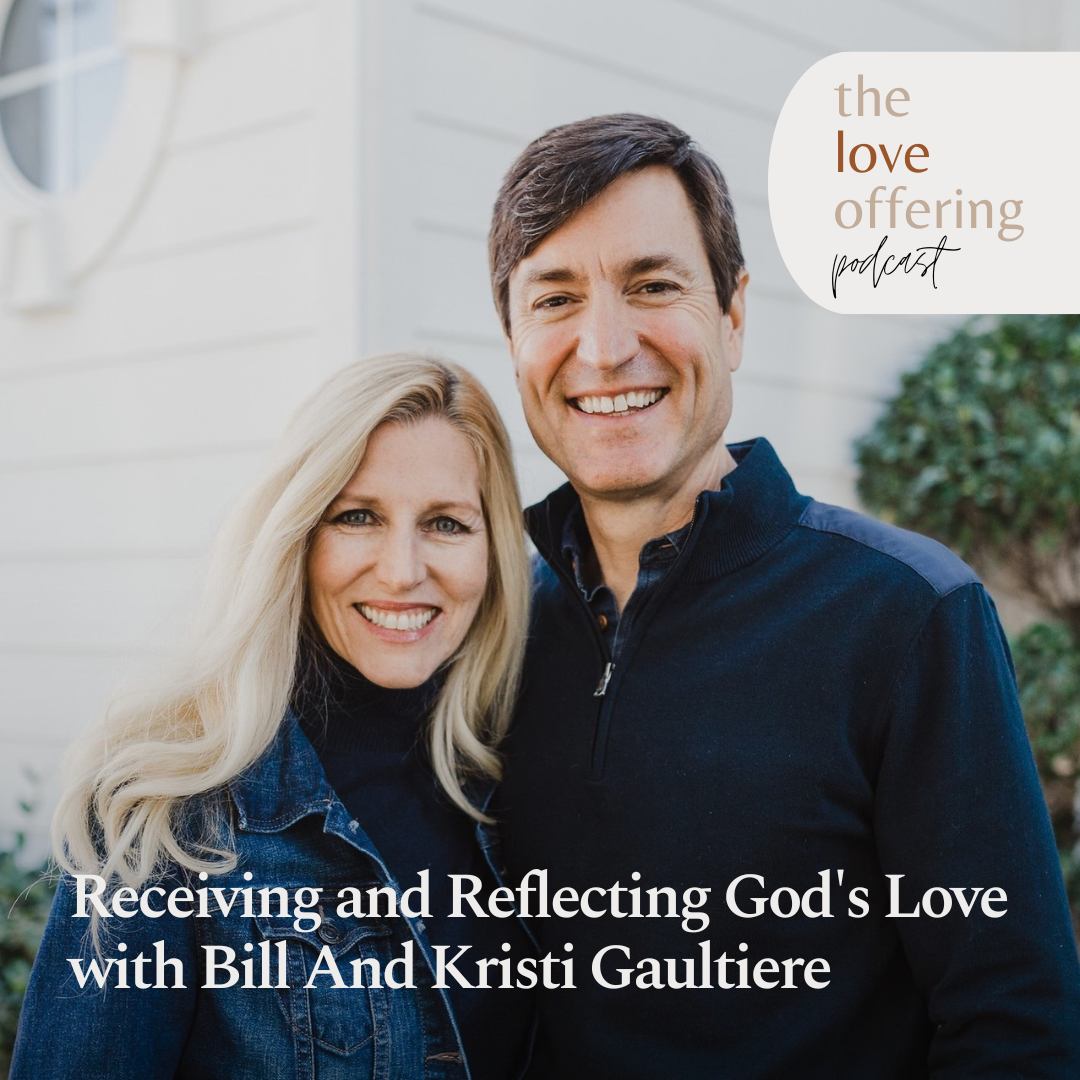
This week on The Love Offering Podcast, I’m joined by Drs. Bill and Kristi Gaultiere, co-founders of Soul Shepherding and authors of Deeply Loved: Receiving and Reflecting God’s Great Empathy for You.
In this powerful conversation, we discuss:
*How to trade self-judgment for God’s empathy and grace
*How empathy heals emotional wounds and helps us overcome distress
*The Four A’s of Empathy—and how to practice them with yourself and others
*How Jesus models empathy and invites you to experience His understanding and care
Empathy is not coddling. It’s not rescuing. True empathy respects God’s truth, empowers personal responsibility, and brings deep soul healing. I pray this conversation helps you feel deeply loved by God—and gives you the courage to offer that same love and empathy to others.
Summary
In this episode of the Love Offering Podcast, host Rachael Adams welcomes Bill and Kristi Gaultiere, co-founders of Soul Shepherding and authors of the book ‘Deeply Loved.’ They discuss the importance of empathy in understanding God’s love and how to cultivate deeper relationships. The conversation explores personal stories of feeling loved, the definition of true empathy, and practical tools for applying empathy in everyday life. The Gaultiere share insights on the four A’s of empathy, the role of the Holy Spirit, and how to avoid burnout while caring for others. This episode encourages listeners to embrace God’s love and extend it to others through empathetic relationships.
Chapters
00:00 Introduction to Love Offering Podcast
00:28 Meet Bill And Kristi Gaultiere
01:24 The Journey of Feeling Loved
05:01 Bill’s Contrasting Story
09:01 Moments of Realizing God’s Love
14:23 Defining True Empathy
16:37 Living in a Busy Culture
19:13 The Power of Empathy in Action
22:51 The Four A’s of Empathy
29:07 Trading Self-Judgment for God’s Grace
32:32 Avoiding Burnout in Empathy
35:44 Transforming Relationships through Empathy
41:03 The Role of the Holy Spirit in Empathy
46:31 Biblical Concepts of Love
48:18 Closing Thoughts and Prayer

Rachael Adams (00:01.622)
Welcome to the Love Offering Podcast. I’m your host, Rachel Adams, author of Everyday Prayers for Love, learning to love God, others, and even yourself. Each week we dive into meaningful conversations about how to live out the greatest commandment, loving God with all of our heart, soul, mind, and strength, and loving our neighbors as ourselves. Whether through inspiring stories, practical tips, or biblical truths, I hope to encourage you to love boldly, live faithfully, and reflect God’s love in your everyday life.
Today, I’m excited to welcome Bill and Kristi Gaultiere to the show. Kristi, alongside her husband Bill, co-founded Soul Shepherding, an international ministry dedicated to helping people thrive with Jesus in both life and leadership. Together, they are passionate about guiding people into deeper intimacy with Christ and healthier relationships with one another. Bill and Kristi are here today to talk about their new book, Deeply Loved receiving and reflecting God’s great empathy to you. This book shows us how to trade self judgment for God’s empathy and grace, release worry, comfort emotional wounds, overcome distress, and practice the four A’s of empathy to care for ourselves and others well. Well, hello Bill and Christy and welcome to the Love Offering Podcast. I’m so happy to have you both.
Bill And Kristi Gaultiere (01:20.319)
We’re delighted to be in conversation with you and all of your listeners, Rachel. Thank you, Rachel. It’s a joy.
Rachael Adams (01:27.102)
I was telling you all before I hit record, as soon as I received your book in the mail, I thought it was an immediate yes. I needed to have you all on the show because your heart aligns so much with the heart of this podcast. So thank you for joining me. And as we begin, I think is it safe to assume that maybe you all have not felt deeply loved your whole life or maybe you have. I’d love to hear kind of the backstory of, of, of how loved I suppose you have felt that maybe was the inspiration for this book.
Bill And Kristi Gaultiere (01:56.329)
Well, thank you. That’s an insightful question, Rachel. You are correct. When I was born, I had a condition that I would have died from if I hadn’t had a life-saving emergency. It was called pylorectinosis, and the opening to my stomach was closed off, and I was not able to receive nutrition. Thankfully, my mother did become aware of the issue after some days and took me to the hospital where I received that life-saving surgery. But in that day, she wasn’t able to stay with me.
She had two preschool kids at home. My dad was the president of U-Haul. He was flying all around the country working. She didn’t even have a car that could fit all three of us alone in. And so I was alone in the hospital during that time of surgery and recovery. I did have nurses and doctors, of course, that cared for me. But experiential to me and the infant, it was an abandonment. And as I got my doctorate in psychology and I began to understand human development and attachment, it began to make a whole lot of sense as to why I had such a hard time trusting that I was truly wanted, that I was truly loved. And as I began to unpack that and come to understand how I had projected that even unto God unconsciously, thankfully I was raised in the church and a great, a lot of people really pouring God’s love into my life through the time, but I wasn’t agreeing with it because always behind it was this question of but I wasn’t supposed to live and I had this condition and I’m not sure I am wanted and loved and does God really love me and is God really good and can I trust him? All the time I would try to shut down those feelings with believing the right things about God, believing in scriptural truths and trying to do the right things, trying to obey. My faith was all about believing and doing but it wasn’t impacting my emotions.
And it wasn’t impacting me to the point where I was able to do that without it being duty, without it being forced. And then it was reinforced in my family because my family, although they loved the Lord and they were wonderful people and thankfully they’ve grown and this is not true about them anymore. At the time I was born, they also were very strong thinkers, very focused on thinking and doing. They didn’t know what to do with my emotions. And I was a very sensitive child.
Bill And Kristi Gaultiere (04:16.802)
And so when I had emotions or needs manifest, my mom would tell me, Christy, snap out of it. And she would put me alone in my room in isolation until I could get control of my emotions and shut down my emotions and my needs. So I began then to treat myself the way I was treated and judge myself for having emotions, for having needs, judging myself as being too sensitive. Christy, why are you so emotional? You should be stronger in assuming that God judged me in the same way. So all of that led me to not feel deeply loved and certainly not to feel deeply known when it seemed like there was nobody that was interested to understand the pain in my life. Thankfully, that has changed and because God has used empathy in such a powerful way to help me to receive His love and other people’s love and agree with it, that’s part of why He called us to write this book because I’m a wounded healer.
Rachael Adams (05:15.67)
What about you, Bill? I’d love to hear your backstory as well.
Bill And Kristi Gaultiere (05:19.432)
Well, my story is very contrasting to Christie’s. So Christie was the youngest in her family. I was the oldest family of five kids and very much what we call a parentified child, lot of responsibility. I am a thinker and a doer. I’m type A. I’m not naturally a feeler. And so I push to achieve in sports and in school and as a Christian to be good, to be helpful in the house and I didn’t know what I felt as a kid growing up, even into college. I could tell you what other people felt, especially my mom, but I didn’t know what I felt. And so it was a journey for me to discover that I had emotions and learn the language of emotions. And as I began to become more self-aware in college, where I was studying Christian psychology, I began to realize that I grew up with actually a lot of anxiety. I didn’t have the words for it, but I’d internalized so much stress pressure and expectation. I had buried anger and frustration and resentment that was a part of that. So I had to learn how to name my emotions and talk about emotions and receive empathy. The way that happened was I volunteered to be the teacher’s aide for my favorite professor. Her name is Kara and she was not only a graduate degree psychology person that studied psychology and knew the textbooks and could teach from the research, but she was a Christian therapist. She was doing the work of caring for people. And so I really wanted to learn from her. That’s why I became her teacher’s aide. And so I got to meet with her every week. And so the first time I sat in her office and I met with her, said, Kara, I’m so excited to meet with you. Tell me about being a Christian therapist. I want to learn from you. And she says, Bill, we can get to that later. Let’s start with you.
Tell me about you. How are you? What are you feeling? It was a question that was foreign to me. was uncomfortable. It was disarming. I was like looking over my shoulder. Who’s she talking to? I don’t know how I feel. How do you feel? So she just told me, just tell me what’s going on. So I would talk to her about what I was thinking, about what I was doing. And then she would start to put words for what she could sense I might be feeling. She’d say, well, it sounds like you might feel stressed. And I go, well, yeah, I am. I’ve been pushing really hard. Well, tell me more about that. And she said, well, I’m hearing some worry. Maybe you feel anxious. I guess I do. I guess that’s what that’s called, is I’m feeling in my stomach right now. And so later what I realized was happening was she was giving me empathy, not just like, good listening skills, of course she had good listening skills and she had the techniques of empathy, but she was giving me the heart of empathy. She was feeling my emotions before I was and because she felt them, she could describe them and then I began to feel them. So my emotions came to life. I learned the language of emotions, I learned to be more vulnerable and to connect.
And thank God for the beginning of that journey, because that prepared me for so much in life, including dating Christie, because after that, that we started dating. And if I hadn’t been on this journey of becoming aware, I mean, you just heard her story. There’s no way she would have if I was just in my head all the time. So I’m so thankful for this journey of coming discover that I’m deeply loved. And at this time I was a Christian leader in school and
Bill And Kristi Gaultiere (08:58.813)
I could teach you the Bible studies on God’s grace and unconditional love and I truly believed that. It wasn’t that I didn’t have any experience of God’s love, I did, but it wasn’t really getting deep inside into my emotions and my deeper attitudes and how it was living. And it was through empathy that the love that we read about in the scriptures and that we pray about, through empathy in relationships, God’s empathy coming to me first through Kara, that’s how I really came to life.
Rachael Adams (09:27.694)
I love to hear the backstory and so thank you both for sharing that. helps us understand you a little bit more. And I think I’m almost a combination of you both. That’s interesting. And so both of your stories really hit home for me. And I can’t wait to continue today’s conversation, but we’re going to take a brief break to hear a word from today’s sponsor. And when we come back, we will talk about how sometimes we may be misunderstanding empathy.
Rachael Adams (09:56.289)
Welcome back. I’m talking with Bill and Kristi Gaultiere about their new book, Deeply Loved. So you all talked about, was there a moment that you really knew like, I’m loved by God. Like I know you talked about your experience with your professor, but was there another moment that was just like, I realize God’s love in a new and fresh way, kind of an epiphany moment for you all?
Bill And Kristi Gaultiere (10:22.397)
Well, one time for me was studying the book of Philippians when I was a senior in high school. you Philippians is a book of great joy and Paul just exudes with the joy of the Lord and loving the Philippian people, the people who had persecuted him, beat him, put him in jail, abused him and mistreated him. And yet he loved them. And so the joy that he exudes with there is something that I was so drawn to and that was a time in which there was a new understanding around the grace of Christ and the unconditional love of God and a longing. think that the way I felt it the most at that time was this longing for a deeper intimacy with God and to be, have the kind of relationship with God through Jesus that Paul had that could weather storms like this and trials and suffering and pain and still trust God, adore God, and find security and hope and strength in the Lord’s presence. I think there were many moments along the way that God’s love began to break through and I began to be able to receive it more and more. But one of those came as a result of my hitting a compassion fatigue. And as a therapist, as someone who was involved in ministry in the church, I was tired. had three young kids still at home. They were teenagers around this point. just all of the constant outflow and journeying with people who were suffering and in terrible pain and the demands of life and ministry and work, I had a compassion fatigue where I wasn’t able to continue to genuinely feel empathy for other people and trust for God and his love and his goodness. And the grace in that, hitting that wall, and we write about when we hit walls, there’s different kinds of walls we hit in our life, but we write about that in our other book, Journey of the Soul. But the grace about hitting that wall was I got emotionally honest with myself, with God, and with other safe people. And as I did, it opened my soul to be able to receive more of God’s love for me when I was no longer just functioning out of a false self out of trying my best, depending upon my willpower to do, to obey, to believe the right things, to be the responsible, good, loving servant of God, and actually stop and realize the Lord was saying, Christy, you have needs and I care about your needs. And I want to heal your soul too. And Bill and I have been so blessed to be mentored by Dallas and Jane Willard. And one of the things that Dallas and Jane taught us was the importance of memorizing whole chapters of scripture and the importance of taking time in solitude and silence, time’s away to really, like Jesus did, withdraw to be with the Father and to let Him love us. And one of the things that was getting in the way for me was all the busy ministry activity actually was causing me to focus so much around pleasing other people and in my efforts to love people. And it was as I took time and withdrew to be alone with God on retreat in some significant time of silence and solitude and meditating on 1 Corinthians 13 and actually recognizing those attributes of God’s love, I didn’t trust to be true for me. God, you’re not patient with me. No, you’re like my parents. They weren’t patient with me. You’re not patient with me, but being challenged, but your word says you are. So show me. Show me your patient love. And beginning to pray that and beginning to confess all the ways that I was having trouble trusting that and doing that with your love is kind. Show me your kindness, where am I missing your kind love? And over time, God continued to break through my resistances, my defense mechanisms, the things that were getting in the way there so that I actually could experience and agree with God’s love.
Rachael Adams (14:21.186)
This is not a shameless plug by any means, but Everyday Prayers for Love, the very first part is what is biblical love? And so each chapter or each devotion we walk through, each of those, love is patient, love is kind, doesn’t boast, et cetera. And so I had a similar journey as you too, to just see like, Lord, how is it that you are showing me showing your characteristic and your attributes in this way towards me. And then we love as he first loved us. And so how am I going to go and extend that to the world around me? And so I really relate to what you were sharing there. You know, I alluded to this earlier. We sometimes can misunderstand what empathy actually is. Sometimes we may think that it’s like weakness or coddling or maybe even rescuing. So how do you all define true empathy from a biblical perspective?
Bill And Kristi Gaultiere (15:09.936)
Well, in deeply loved, we define empathy as seeking to understand someone’s emotions and their thoughts and experiences to help them know that they really are deeply loved by God. And we say that empathy, empathy from God, empathy from a friend, we give empathy to others, empathy is helping us to know that we are deeply loved. That’s just a simple way of putting it by showing someone that you’re interested, that you’re curious, that you see them, you want to hear them, that your heart is soft to them, your eyes are soft, there’s a smile on your face, you want to understand, you care, you value them. It’s so powerful when we really listen and listen with our hearts to people. And one of the things we say about the scripture in John is that just like we love because God first loved us, we empathize because God first empathized with us. And it was really helpful for me to think about that and to realize that look at God’s empathy and love for us and being willing to become man. And Christ coming as a human to live, to experience all that we experience in our life, to suffer in every way we do, to be tempted in every way we do. And what a gift that God himself would empathize with us. And to see empathy throughout scriptures, we cite over a hundred empathy scriptures in our book, Deeply Loved. Empathy is all over God’s Word, and it’s all over His life with us.
Rachael Adams (16:51.8)
You know, after seven seasons of the Love Offering podcast, I don’t know that we’ve ever, you know, we’ve talked a lot about love, but I’ve never made the correlation with love and empathy. And so this is, this is very new and this is very good. And I think one of the things that you talked about, Bill, is like seeing other people and being able to empathize with other people. often in our busy culture, we’re overwhelmed and almost maybe self-focused a little bit. It’s hard to notice other people and we have our own pain, we have our own suffering and we kind of settle for really shallow relationships. So why do you think that we do this and then how does God’s empathy invite us to live differently?
Bill And Kristi Gaultiere (17:30.064)
You know, it’s been such a life-changing experience for me and the people that we help in Soul Shepherding. We help a lot of people who come on retreat with us, and we’d love to have anyone listening come join us in one of our Soul Shepherding retreats where you’re in a community that’s authentic, and you get to talk with a spiritual director. What we have learned is that it’s through receiving empathetic love from God, not only through the Bible and prayer, for sure that, but also through people in flesh people where we can be vulnerable and real as we receive empathy, we’re better able to give it. And that’s my story that even as a psychologist with a PhD who had lots of empathy skills, I wasn’t great at empathy yet until I went even deeper on that journey that I started as a senior in college and continuing my own vulnerability. And as I learned to really receive empathy into the broken places, the unmet needs, the hurts and the frustrations and stress points inside, as I took that risk and peeled back the layers of the onion in my soul and received the deeper love of God through empathy, that tuned me in to other people to notice them like you’re saying, Rachel, and to be considerate, to be sensitive, and to really listen and to draw people out. Not only in defined conversations as a therapist, spiritual director, teacher and so forth, but with my family and in life with friends and over coffee, just all the situations of life, even in prayer, some of the best ways we love other people is in secret empathy that we give through our prayers and offering prayers of faith for them. What we’ve learned is that empathy makes everything better. It’s central to emotional intelligence.
And the research shows that the most important thing for our success in life, and the best sense of that word success, is emotional intelligence. Even our faith in God, self-awareness, having the language of emotions, being empathetic for other people, having healthy motivations, being able to manage our emotions. This is all the realm of emotional intelligence that’s been researched. And this is what we’re writing about in Deeply Loved, how to be healthier in your emotions and in your relationships so that we can help other people experience what we’re experiencing, that they too are deeply loved by God.
Rachael Adams (19:50.859)
One of the things that I really appreciate about you all is that you blend scripture, so it’s biblically based, and then you have the psychology background, and then you have the true stories. And so I think having all three of those things just will really hit home with a lot of hearts and a lot of minds. So can you all share a favorite story or testimony that shows the power of empathy in action?
Bill And Kristi Gaultiere (20:12.837)
Yeah, I think there’s several of them. One personally that came to mind that we write about and deeply loved as Bill was talking is we were first married. We were both we were college pastors at a mega church. We were getting our doctorates in psychology and we were working another job additionally to try to put ourselves through school and newly married. I was 21 years old. We’re living at my grandparents to save money and we went into the bedroom where we were living and I said, Bill, I need to talk.
And so I’m sitting on the floor and I just began to share some of the overwhelm that I was feeling in my life at that time. Bill at this time is already starting to see clients. He’s through his master’s program. People are paying him to learn his wisdom and glean from him. And he begins to tell me what I should do with how overwhelmed I’m feeling. And I just cut him off and I said, I don’t want you to fix me. I know what to do. In fact, I feel insulted that you’re telling me what to do. I know what I need to do. I just need to know that you care. I need to know I’m not alone in this. And thankfully, Bill responded, and he was like, yes, of course. Because the reality is we don’t care what you know if we don’t know you care. And so that clicked for him, and he began to listen to me with empathy and tune in to me and to respond to me back with affirming that he was understanding and telling me in his own words what he thought I was saying.
And I so appreciated that he was beginning to listen to me and show me empathy. And then that gave me the strength to get up and do what I needed to do. Oftentimes we think empathy is like coddling. It’s like self-pity. No, self-pity is swirling down and stirring up negative emotions and playing the victim. That’s not what empathy is. Empathy is just asking somebody to really understand what you’re experiencing, inviting them into that, and then agreeing with their empathetic love and grace. One of the things we write about in Deeply Loved is we say, will get help when you and I join God in caring for you. We call this three-way empathy. We receive empathy from God, we receive empathy from another, and we agree with God’s love and grace, and that’s self-empathy.
Bill And Kristi Gaultiere (22:35.673)
It’s not a self-help thing where we’re like depending upon our own power to help ourselves or we’re trying to hug ourselves. No, it’s actually agreeing with God’s grace and His love for us and His presence that as He shows us in scripture, He really is attuned to our emotions. God created us with mirroring neurons that really help us to be able to empathize with each other and connect with each other. And when we experience empathy, we do feel safe. We do feel seen and heard and love, but when we don’t experience empathy and we’re sharing our pain or our need or our grief, our emotions, neurobiological studies show that it’s actually the shame centers in our brain that light up, when we share vulnerably and we’re not responded to with empathy.
Rachael Adams (23:22.474)
I’ve had a similar conversation with my husband Brian a lot over our married year, over the last 20 years, because I think this may be wrong, but most men, it’s like, or most people, we want to fix it. There’s a problem, let me fix it. And a lot of times we’re like, I just want you to listen. I just want you to listen. that has certainly happened to me. So there’s four A’s right to empathy. Is that a thing in your book? Okay. All right. That’s where I’m going with this next question. So can you walk us through the four A’s of empathy and how we can begin practicing them to care for ourselves and others?
Bill And Kristi Gaultiere (24:03.727)
Yeah, these are four practical ways that we can give empathy to others and also that we can ask for the empathy that we need from safe people. So the first A is you ask someone, how are you feeling? Tell me what’s going on in your life. I want to understand. And so that is a powerful expression of heartfelt care when we show interest, when we’re curious, when our heart is soft and we listen. The second A is a tuning to the emotions. So as we listen to someone share, we’re paying attention to their body language and to their tone of voice and to their face and we’re listening for the emotions that are under the surface that they might be experiencing and then we put words to that, we’re tuning in, we’re connecting, we’re hopefully bonding and comforting that emotional place that’s underneath the thoughts. And then the third A is we’re acknowledging the significance of the experience because when you’re sharing with a friend over coffee, you’re listening, and they’re talking about their personal life is very significant to them, probably more significant, more deep and more complex, more important to them than they feel like they’re able to express. So you want to really listen for that deeper level. And then you want to say things like, I can see this is significant for you. I want to understand this better. Tell me more.
Go back to what you were saying about this because that sounded like it was really stressful for you or it seemed that was really hurtful for you. Tell me more about that. And so we’re validating the significance, the size, the magnitude of the experience for someone. And then the fourth A is affirming the strengths. So when someone is vulnerable and shares with you, that takes courage to do that. And so we want to validate that. We want to affirm that by saying, I really admire it. I respect your vulnerability or your courage or your faith is persevering through a difficult time. I can tell this was difficult for you to share, but you took initiative and you did it anyway and I’m really honored that you shared with me. And so when we offer these sorts of affirmations when someone’s been vulnerable, it really builds people up. Now a caution is that some of us have the gift of encouragement, we love to affirm people, maybe share scriptures with them, lift their spirits.
Bill And Kristi Gaultiere (26:15.288)
And so when we do that as a first response to someone that is hurting or struggling or stressed or frustrated, it’s not actually that helpful because it just actually shuts down their emotions. And so that’s why this is the fourth A of empathy, not the first one. Because if you lead off with that, it’s actually not going to be empathetic.
Rachael Adams (26:35.982)
So, okay, so ask, attune, acknowledge, and affirm. Those are the four? Okay, yeah, no, that’s really good. And I’m just thinking about this goes for, I imagine, every single relationship in our lives. I’m thinking about me as a mother, you know, when my kids come home from school and they’ve had things going on, or my husband when he comes home from work, or whoever it may be in your life, you know, if we don’t have a patient necessarily that we’re talking with, that we all have relationships. And so this is something that we can easily institute in our everyday ordinary lives, right?
Bill And Kristi Gaultiere (27:08.196)
That’s right. And something that I would add is that it’s important for us to learn to ask directly for empathy. So I have learned that I will go to Bill at times and I’ll say, know, I’ve noticed I’m having some, some painful emotions. Like right now, my brother has stage four pancreatic cancer and I’m journeying with him and my sister through this. And so there are times when I will go to Bill and I’ll say, you know, I’m having some feelings. It’s triggering grief for me you know, my mom died of cancer two years ago and would you have it to listen to me a little bit, process my emotions out loud and give me empathy? And that really is loving and respectful of Bill because then he can actually tune in to say, okay, I know what Christie needs now and he can respond and if he can’t do it, then he’ll say, you know, I care about what you’re feeling and this is really important and I want this for you. I just can’t, I’m not at a place where I can give it to you under a really tight deadline or I’m just too tired right now, can we do this later tonight or tomorrow? But at least he can acknowledge that he’s heard me and he knows exactly what I need. I’m taking responsibility for myself in that. And then the other thing is when he does listen to me with empathy, I need to agree with it.
Early on when we were learning empathy with each other and practicing it with each other, there would be times that he would be listening to me with empathy. But inside I wasn’t agreeing with it because inside were those old records playing, Christy you’re just too sensitive. Why can’t you just get over this? Why are you so emotional? Why do you need his time and attention right now? He’s got more important things to do. Do you see all that shame I was putting on myself was blocking me from receiving and agreeing with the love of God and the grace of God that was coming through Bill Toomey. So when we do have someone who’s listening to us with empathy, we want to make sure we’re agreeing with that and receiving it and thanking God for it as well as the person who’s the ambassador of his love to us in that moment. So we write in deeply loved that actually grace or empathy plus truth plus responsibility.
Bill And Kristi Gaultiere (29:23.35)
equals growth. So you can see I’m asking for the empathy. That’s taking responsibility. The truth, I’m speaking the truth about what I’m feeling, what I’m needing. I’m asking directly for that with responsibility. And then I’m receiving and agreeing with empathy. And those things just are so helpful to me in growing in my love, in my faith, in my ability to receive and agree with and overflow then God’s love to others.
Rachael Adams (29:51.257)
This is such a lesson in communication, really, to be truly honest and vulnerable in our authentic selves. It’s a challenge to do and to trust that you’re still going to be loved even when you show your true heart. And so I’m so thankful we’re having this conversation. I can’t wait to continue it, but we’re going to take a brief break and hear a word from today’s sponsor.
Rachael Adams (30:16.552)
Welcome back. I’m talking with Bill and Kristi Gaultiere about their new book, Deeply Loved. So for the person listening right now who maybe is very self-critical, we’ve talked a little bit about that. How can they begin to trade self-judgment for God’s empathy and grace today?
Bill And Kristi Gaultiere (30:33.283)
Well, that’s me. struggle with being self-critical. There was a time when I was younger and I really didn’t understand that. So I just tended to be buried in unconscious self-criticism, self-judgment and shame. I suffered a lot with that. I’ve come to understand that I have that tendency and that weakness. So what really helps me, Rachel, is when I go to God go to scripture, I go into prayer, and I’m authentic about where I’m at. And I can put words to the pressure that I’m feeling, the judgment that I’m under, maybe the shame that I’m even feeling. Even though in my mind I might know it’s not like I’ve sinned, there isn’t a reason for me to have this shame. It’s an emotion. It’s not like rational, it’s not like biblical. It’s not like actually, but it’s what I’m going through within my personality. And when I receive empathy, perhaps from a psalm, I received empathy from Christie or from a friend just this morning. I took a walk with a friend that I get together every week and we listen to each other and we pray for each other. We’ve built that relationship over some years and I was vulnerable with him. I share with him about some stress I had just yesterday that came out in a time with Christie and she gave me great empathy as I was venting some frustrations about a difficult project that I was working on and then my self-critic started to come against me in that time because I had so much frustration and I wasn’t like angry at Christie, but I was angry about the situation and as I was processing it, I didn’t like myself. I didn’t like that I felt this way because I was expecting that I should trust God more, have more peace and this kind of a thing. And even though what I teach is that by being vulnerable, that is trusting God. But in that moment, I wasn’t feeling. And so I was struggling with the shame, but as Christie gave me empathy, and then even as I impacted with my friend, and he gave me empathy, it helped me to get the Lord’s perspective on that situation, something I knew in my thoughts, but to have it to sink into my emotions, even into my heart, I needed it in flesh. I needed to work it out. I needed to process through all the stuff that I knew it was true of what I felt, but it wasn’t true of what.
Bill And Kristi Gaultiere (32:50.947)
God believed about me and it wasn’t true of my character. so integrating my emotions with scripture, that’s more than the way we typically talk about that is in a very heady sort of way. What I’m talking about is a vulnerable process that’s working through all the unknown and messy emotions. And some of that sometimes feels like gunk that I’m struggling with. But yet in that is me and I need to be known and understood in love. And I’m not able to just do all that for myself, hugging myself, and even quoting scriptures to myself. Sometimes I just need somebody to enter into the mess of that and love me right there. And that helps me really know deep inside I’m deeply loved by God.
Rachael Adams (33:36.447)
Yeah, I just, I was thinking about how Christie earlier said that sometimes we can almost have a compassion fatigue, I think is how you said that earlier. And I think that even maybe with, with empathy, if we’re constantly feeling on this emotional level with people that can be exhausting too, right? Writing the highs and lows, not just with ourselves, but with other people. So how do we protect ourselves from like getting burnt out or even becoming codependent with people?
Bill And Kristi Gaultiere (34:06.938)
So important so we dedicate a whole chapter in our book deeply loved on caring for others without getting drained and one of the things we include in there is an example from Jesus life and how Jesus learned to care for other people without getting drained he had healthy soul care Jesus set healthy boundaries in his life he took time away to be with his father to receive from others and we talk about the ways Jesus received empathy We also have a really helpful chart that we put in the book where we compare the difference between empathy and codependency. So an example of this would be codependency would be feeling someone’s problems as your own problems versus empathy would be putting into words what someone else feels. Or another example from this chart would be codependency would be being controlled by other people’s needs.
Whereas empathy would be letting others be responsible for their life. Or another one, rescuing people from their problems is codependent. But empathy shows tender concern for their problems without taking them on as our own. When we’re codependent, we tend to do too much to help people. But when we are with empathy responding, we’re respecting our own limits and we’re setting boundaries that we need to be helpful. Those are just some of the things that we include in that chart comparing the difference and it’s important for us to be intentional about that because of course we have an enemy who wants to distort and bring us off track and derail us and take us out and we’re called to follow Jesus’s way which is sustainable, which actually we’re loving our neighbors as ourselves, Jesus teaches. Too often we hear that in our mind and we think it’s no, I’m supposed to love my neighbor instead of myself. But that’s not what Jesus is teaching there in his greatest command. He’s teaching that we’re loving God with all our heart, soul, mind and strength, which also involves receiving his love. It’s mutual. And then we’re loving our neighbor again as ourselves. It’s that three-way empathy again, three-way love. We also call this living in the overflow. The overflow of God’s empathetic love for me, now I’m sharing with others. That’s how we live from a place of being deeply loved and we help other people join us in.
Rachael Adams (36:36.77)
I am just thinking about how this takes practice. We’re not gonna get this right immediately. We’re not always gonna get it right even when we do have all the tools and the tricks and everything that you’re sharing us. And so I don’t want anybody to leave being discouraged, but being encouraged that this is something that you can do and it’s gonna maybe get better over time. And so I would love to hear as you all have practiced, these tools and these, I’m sorry, I’m gonna have to edit that again too. But as you all have practiced this concept and brought it to life in your own relationship, as you have taught other people how to, how have you seen it transform relationships, whether it’s in marriages or in parenting or friendship or even in leadership?
Bill And Kristi Gaultiere (37:26.787)
Well, you’re right, Rachel. We need not only the general concept, we do need general concepts, but we need specific concrete practices that we can implement. so in Deeply Loved, we have 10 different empathy practices in addition to the four A’s of empathy that we teach throughout the book. We have 10 additional empathy practices that are simple ways of meditating on scripture, journaling and praying, or guided conversations that we can have with some that really enfleshed this. So one of my favorites is connecting with Jesus’s emotions. And so we go through in a Bible study and we identify 39 different emotions that Jesus experienced using the Greek words that are in the New Testament for his emotions. so, and then seeing these different gospel stories where Jesus is struggling, because we know from Hebrews 415 that tells us that we do not have a high priest who is unable to empathize with our weaknesses. But we have one who has been tested and tried and suffered in every way that we have. He’s experienced what we have experienced. He’s felt what we have felt. And so now he feels for us. And so that’s his empathy. And the Greek word for empathy is fellow feeling. Jesus is a fellow feeler. And so when I see stories in the gospel where Jesus is anxious or angry or he feels forsaken, rejected, he’s grieving. Also when he’s experiencing love and joy and peace there’s a whole realm of different emotions that Jesus experiences and these are mirrors for me that they can help me get more of the language of emotions in a very biblical Christ-centered way obviously but also can help validate my emotions because if Jesus the Son of God is a perfect human being, a perfect faith in God as Father, if he struggles and has trials and he experiences emotions that don’t always look nice and pretty and maybe don’t even seem loving. And we know Jesus was always loving, but there were sometimes probably people when Jesus had a boundary or when he’s confronting the Pharisees, they might not have felt loved at those times. And so in his humanity, we can relate to Jesus and that is so powerful, those stories. So those are really simple ways to study, but then also to reflect and to feel and then to pray and talk to God, talk to somebody safe about how I’m feeling.
Bill And Kristi Gaultiere (39:53.089)
And I would also like to just respond, Rachel, that yes, you’re going to miss at empathy. You’re going to make mistakes. I do. Sometimes I still miss at empathy. And I tell you where I am most prone to do that is with my children. Because I get so entangled with what I want for them. want so much good for them. And I’m so aware of what I think they don’t yet know that I know that I want them to know. And so I always am constantly having to remind myself to hold my tongue and to pray, you Jesus, how can I help you with what you’re doing, your action, cooperate with your love and your empathy for them and to be a safe place for them, to be able to share and not to just slip right back into that mama role where mama will make it better. And then the other thing is sometimes with those that we are the closest to, their pain touches us so deeply that sometimes we will want to protect ourselves from it. We don’t want to feel the pain with them. So that’s where I can be prone to defend against it instead of going to empathy. I’ll cheerlead them or I’ll rest to that encouragement of, you you’re so gifted. You’re so smart. You’re going to do well. You shouldn’t be scared. You know, because I don’t want to, I don’t want to feel their anxiety that they’re feeling and I defend against it. And so I think again, to give ourselves grace when we do fail at empathy, when we forget empathy.
Bill And Kristi Gaultiere (41:19.896)
There’s many times I’ll go to Bill and I say, I’m sorry. I didn’t listen to you with empathy. I reacted because what you said touched off an emotion in me. Could I have another chance? I really care and I would really like to understand what you’re feeling. Would you give me another chance? And thankfully you do give me another chance. And that’s one of the things that’s so beautiful about empathy is it’s very bonding. It’s very intimacy building both with people but also with God. Empathy has helped me so much in my intimacy with Jesus and my feeling that he is right here, present with me. then empathy also is very helpful in conflict resolution. Oftentimes many of the things we have conflict about are because we’re not truly understanding the other person or we’re not being understood. We’re projecting our own experiences onto them. And empathy is so helpful in giving and receiving forgiveness.
Bill And Kristi Gaultiere (42:18.676)
Many times when somebody hurts me, I am able to go to God and say, show me where you experienced this, how I have done this very same thing to you. God will show me and help me to empathize with him and it’ll just totally free me to appreciate his forgiveness and be able to extend it to the person that has hurt me as I’m able to then have empathy with them. As Bill mentioned, it is a key component to emotional intelligence and empathy gives me grit to endure my trials and really keep trusting God knowing that he suffered in the same way.
Rachael Adams (42:54.702)
I imagine, you know, we can’t do this well on our own. It’s got to be the Holy Spirit that is in and working through us to tell us to be quiet when we need to be quiet and speak when we need to speak and to guide and counsel us. You know, He is the best counselor that we can have. And so to really just be in tune with Him and to hear His voice and obey His voice. Does that evoke any thought in you, the role of the Holy Spirit?
Bill And Kristi Gaultiere (43:20.988)
Yes, a beautiful thing about the Holy Spirit that most people don’t know is that the Greek name, Parakleet, means the empathizer. It’s commonly interpreted as maybe the advocate, the counselor, the comforter, and comforter gets pretty close to empathy, but it can also be translated as the empathizer. And it’s because the Holy Spirit feels with us and for us that we’re able to receive the comfort, the encouragement, the strength, and his advocacy.
Bill And Kristi Gaultiere (43:49.122)
That’s a beautiful thing about the Holy Spirit. And you know, Jesus said, when two or more of you are gathered in my name, I will be there. That’s the Holy Spirit, the Spirit of Jesus, he’s called, will be there in our midst. And so that’s the power of our relationships with one another as brothers and sisters in Christ, as we listen to each other, as we pray for each other. And so that’s a great way to get started with growing in this journey of being deeply loved and helping others know that they’re deeply loved. Would be like to read this book with a friend, go through the soul talk questions together, process your experiences, your emotions, your memories and practice it, listen to each other or come into a coffee with a friend and say, you know, I just love to connect with you and then take the conversation a little deeper, apply the things that we’re talking about, that we write about and use the forays of empathy and you know, we probably all would say, well, gee, I want a more empathetic friend. Oftentimes that starts with praying for one and then trying to be one with somebody. And trusting God to help us find someone that is, and we write about, well, what are the characteristics of an empathetic friend? How would I find a soul friend? And that’s what our podcast is called, Soul Talks. Because in every podcast that we do, Soul Talks with Bill and Christie, we have a conversation with each other and then we invite you who are listening into that. And then we encourage you, now go out and practice, have your own soul talk with your spouse or with a friend because we’re all longing for these relationships of authenticity and realness that we can know and share with others that were deeply loved by God.
Rachael Adams (45:27.344)
Absolutely. Well, I’m just mindful of the person listening today that does not feel deeply loved. By the people in her life were by the Lord. And so what encouragement would you give her today?
Bill And Kristi Gaultiere (45:41.153)
Well, thank you for your empathy for her and I have empathy for you as well because I’ve walked in that place and it’s painful. And the good news is it is not true. And so my prayer for you today is that God will enable you by his spirit with you to respond to his love and that he will send people to show you his great and deep love for you that he really does.
want to tune to your emotions and want you to be emotionally honest with him like the Psalmist is and that he responds and that those are prayers. God hears our cry. It’s like we read about in the Old Testament with Hagar out in the desert sent away with Ishmael and the Genesis 16 13 says the Lord talked to Hagar. She began to use a new name for God. She said, you are the God who sees me.
She said this because she thought, see that even in this place, God sees me and cares for me. And in Psalm 56a, God says, you’ve collected all my tears in your bottle. And in Jeremiah 8, 19, listen to the weeping of my people. can be heard all across the land. I hurt with the hurt of my people. This is God’s empathy for you. And so trust his empathy, respond to his empathy, agree with his empathy. And also we want you to know that at Soul Shepherding, we know that there are people like you that don’t have a safe place, to be emotionally honest. And so we’ve raised up spiritual directors that we’ve trained through a two-year training in certificate and spiritual direction training. And you can go online to soulshepherding.org right now and book an appointment to meet with them over Zoom. And they will listen to you with empathy and pray for you.
And we want that for you. And many of you might be called to a ministry of spiritual direction. So we invite you at socialpity.org. You can learn about our training and earning a certificate in spiritual direction as well. But don’t believe the lie of the enemy that you are not loved and that you are alone and that nobody cares about you. That’s the lie that even Elijah fell into, right? cried out and said, you know, I’m all alone and Jezebel’s hunting me down and I’ve been so faithful to you God and here I am and he was depressed and he was suicidal. But God showed up for him and said, you are not alone. There are 7,000 other people alive right now, faithful to me right now. So I’m praying that God will reveal to you who those others are in your life and send you an ambassador of his love, grace and empathy.
Rachael Adams (48:24.654)
That’s beautiful. Well, I will include that in the show notes as well.
Rachael Adams (48:39.874)
So is there a biblical concept of love that you think applies to this topic today?
Bill And Kristi Gaultiere (48:49.717)
I love the verse Colossians 312. I’ve been meditating on and even in the situation I shared earlier where I was venting with Christy and judging myself for all of my frustration and discouragement that I was having. Turning to this verse afterwards after Christy listened to me and gave me empathy, I was in some quiet prayer and meditation. In Colossians 312, clothe yourselves with compassion, kindness, humility, gentleness and patience. And we normally think about that as traits for us to have for other people and that is certainly true and that is certainly in Paul’s intent. But think about being clothed in compassion and kindness, humility, gentleness and patience. Being wrapped, we’re being wrapped in Jesus. Jesus is compassion, kindness, humility, gentleness and patience. And so I need to receive that in order to then now give it to other people. And so in my time of need, that scripture is very encouraging to me and I can pray that and I can picture the face of Jesus. And then having a friend, in this case it was Christie and then it was my other friend Lance, listening to me and embodying that for me, that helps me to know that I am deeply loved and then to live into that ministry to other people.
Rachael Adams (50:17.836)
Yeah, we really are God’s hands and feet and ears and mouthpieces and he really does use us to help encourage other people. So I’d love to, as we start to come to a close, to hear something that you all are loving right now. This can be anything. There’s no rules to this.
Bill And Kristi Gaultiere (50:33.418)
We’re loving the opportunity God’s given us to be able to have these conversations about how He truly, deeply loves us and to be able to be His vessels and to just overflow all that God’s given us. He’s done a great work of healing and strengthening in each of our lives and through our relationship and ministry. so we are just excited to be overflowing it and sharing it with others. And I’m really enjoying that season. Something I’m loving that I delight in, in addition to what Christy said, is being out in nature. So we live near a couple of lakes and have parks nearby and along the lakes a lot of trees and green grass and I just love to be out in nature. uses it to wash my soul. Christy and I enjoy taking walks together often in the evening. Every morning I go out for a run or a walk with a friend like this morning and just breathing in the fresh air and meditating on scriptures that I’ve memorized and praying to the Lord and praying for people that I love really rejuvenates me and puts my day in the right place.
Rachael Adams (51:42.083)
Yeah, me too, to both of you. Those are both things that I love as well. And so I know I want to stay connected with you both. I’m sure that listeners are going to want to, you’re going to want to get involved with your soul shepherding by a copy of deeply loved, listen to your podcast. So tell us how we can do those things.
Bill And Kristi Gaultiere (52:00.865)
Well, to learn more about the book, Deeply Loved, simply go to soulshepherding.org, deeplylovedbook. So soulshepherding.org slash deeplylovedbook, you’ll learn all about it. You can get it wherever books are sold. Come to soulshepherding.org and you can learn about how to come on retreat with us. We’d love to have you in one of our retreat communities. We lead eight of these a year across America all throughout the year. You can as Christy said, you can earn a certificate in spiritual direction with us if you want to do the two-year program. You can talk with a spiritual director. You can check us out on our podcast or our social media. Just look for Soul Shepherding. We love to have you in our community.
Rachael Adams (52:42.998)
Perfect. Well, would you all pray for us as we close today?
Bill And Kristi Gaultiere (52:48.33)
Jesus, how we praise you and thank you for your willingness, your humility to become human. And thank you for your empathy for us, for showing us God’s empathy, the Father’s empathy. Thank you for your empathy to bear our sins and to forgive us. Lord, thank you for my friends here who love you and are seeking to be able to receive your love deeper into their soul. And I ask that you would strengthen them with power through your spirit in their innermost being so that they will be able to know how wide and deep and long and high is your love. Amen. Amen.
Rachael Adams (53:33.746)
Amen. Thank you all for joining me today. I feel loved by you all and so encouraged and ready to put some of these tools to practice. So thank you for being here today.
Bill And Kristi Gaultiere (53:43.986)
Thank you and thank all of you who are listening and participating in the love offering.
Rachael Adams (53:49.731)
Thank you so much for listening to the Love Offering Podcast. I hope today’s conversation encouraged and inspired you to love God, love others, and even love yourself a little more. If you enjoyed this episode, please share it with a friend and leave a review. It helps others find the show and spreads the message of love even further. To connect with me, visit me on my website at rachellekadams.com. While you’re there, be sure to download the Love Offering Calendar, a free resource filled with simple daily ways to love those around you.
Don’t forget to pick up a copy of my book, Everyday Prayers for Love and Christian Bills book, Deeply Loved. A special thank you to Life Audio for supporting this podcast and making it possible to find more great podcasts. lifeaudio.com. Thanks again for joining us today. Until next time, let’s make our lives an offering of love.