My transition to motherhood was a rough one. At twenty-four years old, I didn’t know enough about myself or motherhood to know that it wasn’t going to be a seamless transition. I didn’t know what postpartum depression was. I didn’t know what anxiety was. I didn’t know that my stomach wouldn’t disappear the moment I delivered my baby. I didn’t know that breastfeeding would hurt. I didn’t know that I could be so tired, lonely, and sad. The only examples of motherhood I’d had up to that point were women who seemed to love it and thrive in it. I did not. I was miserable.
I hated every second of being pregnant. I threw up the whole time. I didn’t live near family and had no close friends to help me during those first few years of motherhood, so I just wallowed. Then I had another baby, and by the time the third one came, I was a fraction of the person I’d been before. I started having panic attacks, night terrors, disassociation, and sleep paralysis. I had no friends, no groups, no support. I kept everything I was feeling bottled inside for one simple reason: I thought it was my fault.
When you internalize the belief that the core of who you are is inescapably bad, that becomes the framework for every shortcoming or struggle you have. When you believe every problem has a spiritual solution, you only have yourself to blame when things don’t go as you prayed they would. If you believe every problem in your life can be traced back to a spiritual cause, it leaves little room for practical solutions or leaning on your community or seeking answers outside your own spiritual strength. When your most dominant identifier is broken, it’s difficult for joy and peace to cohabitate in your heart.
Having small children meant I could no longer serve in full-time ministry with my husband, Zach. Being on a small salary meant we only had one car that I didn’t have access to because he used it to go to work. Not being able to work or do ministry or go anywhere left me with one job and one identifier: mom.
I wanted to believe that that was my highest calling, so I tried to fully commit myself to it. And I did. But I was suffering. And because I believed my “highest calling” was something I was failing at miserably, I felt like a shell of a human. Motherhood was all I had, and I wasn’t good at it, so I felt worthless. Worthless to my kids, to my husband, to my church, and to God himself.
When we shake hands with the belief that God views us as worthless, we fracture the most crucial part of our identity: that we’re loved by our Creator. When we believe that God doesn’t value us, we believe the same lie the snake in the garden of Eden told Adam and Eve: that God is against us. If we’re reflections of God and we’re made in his image, what happens to our sense of self and our sense of belonging when we believe we aren’t loved and valued by him?
Often, our entire belief framework falls to pieces. Our sadness turns to anger. Anger turns to resentment. Resentment turns to bitterness. All the things that drew us to Christ become ammo in the battle to prove that God has betrayed us.
Why would God make me in his image just to make me a failure? Why would he give everyone else the ability to be a good mother, to have fully balanced chemicals in their brain, to have the right gifts of the Spirit, to move through life effortlessly and with great spiritual power, just to leave me struggling, fumbling, and never measuring up?
The way we view ourselves becomes the lens through which we see God, and when we feel like we’re broken, we blame him for not fixing that brokenness. Self-hatred eventually just becomes hatred. It’s a poison that we pass down to our children and that gets projected onto our relationships. We withdraw from good things and indulge in harmful ones because we believe that’s what we deserve. We reject intimacy with God, because the closer we get to him, the worse we feel about ourselves. We may go through the motions of faith, but we don’t let it internalize and take root because we hate ourselves too much to go any deeper.
God never intended for us to live bound by falsehoods that distort his character or our own. When Jesus said, “The truth will set you free” (John 8:32), he wasn’t talking about a belief system. He was talking about himself.
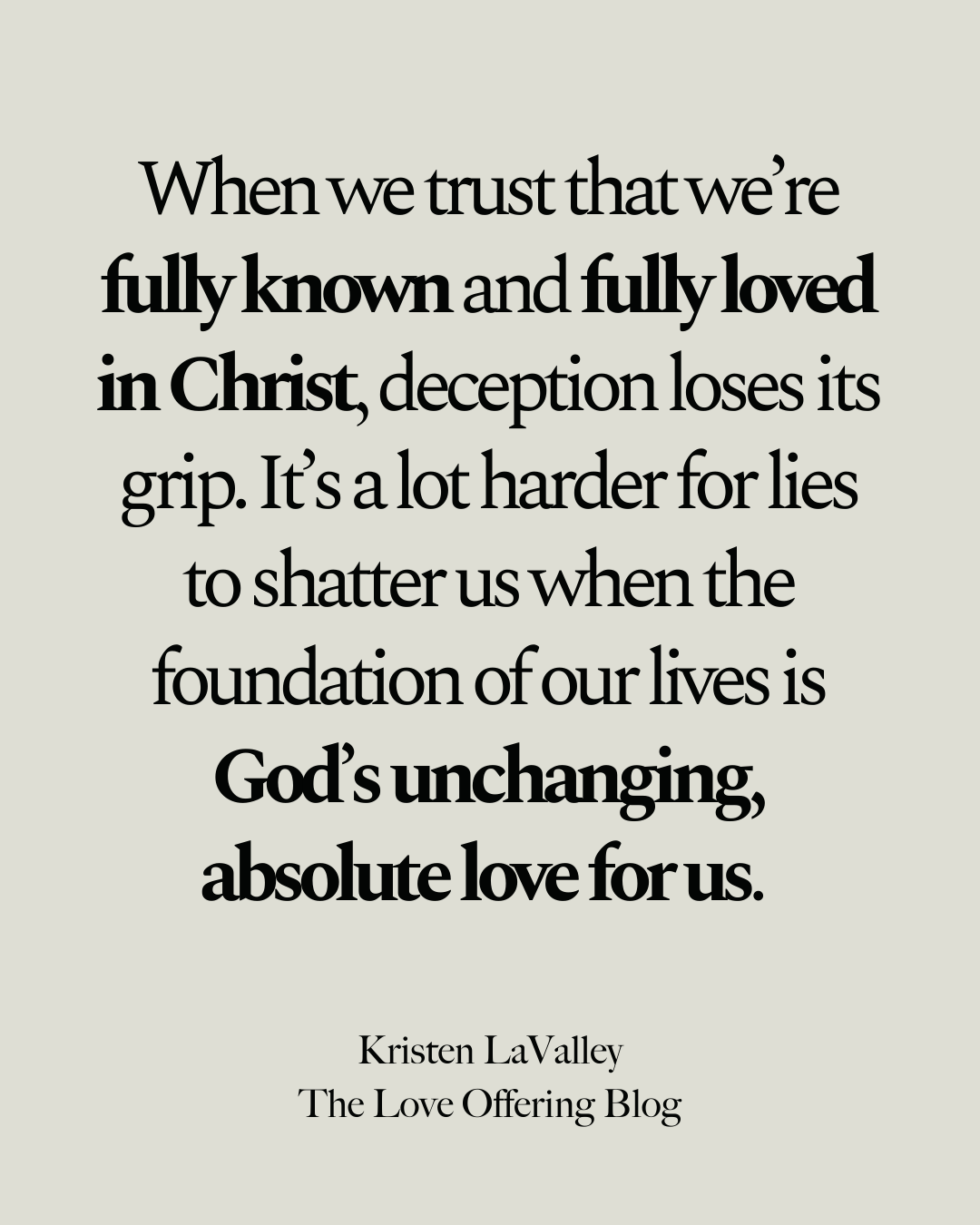
When we trust that we’re fully known and fully loved in Christ, deception loses its grip. It’s a lot harder for lies to shatter us when the foundation of our lives is God’s unchanging, absolute love for us. Healing comes not just from unlearning lies but from anchoring ourselves in what has always been true: that we belong to him and that he is making us whole.
When our confidence in Christ metabolizes into our entire system of thinking and being, it brings confidence in ourselves, too. Not in a self-serving, self-focused kind of way, but in the way of children who know they’re loved. We can hold our heads higher because we know we were created by a God who believes our head deserves a crown. We speak clearer because we’re loved by a God who gave us a voice and is proud when we use it. We love deeper because we know what it means to be loved. We give more freely because we know that our Father will never leave us lacking.
God doesn’t identify us the way we identify ourselves or the way other people have identified us. He doesn’t shame us as sinners or failures, and he isn’t shaking his head in disappointment at us. He calls us beloved.
He delights in us. (Zephaniah 3:17)
He defines us by who we are now, not who we once were. (2 Corinthians 5:17)
He sees us as redeemed, chosen, and deeply loved. (Ephesians 1:4-5)
He hasn’t rejected or abandoned us. (Deuteronomy 31:8; Joshua 1:9)
There are no caveats to his love. He just does. He’s with you. He enjoys you. Let the truth of those words sink into your bones, and let yourself be redefined by them.
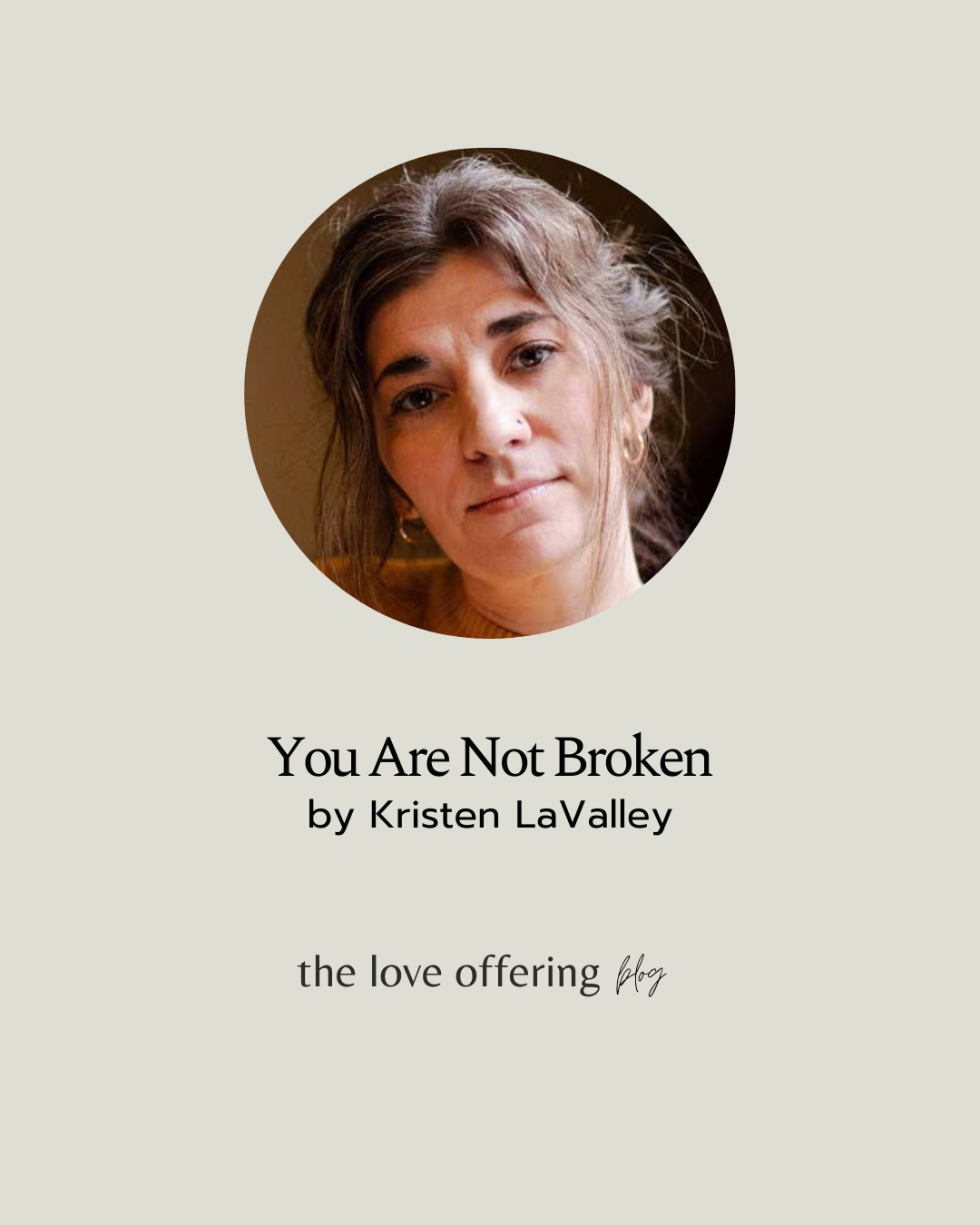
Adapted from Growing Up Saved: When Loving God Feels Like Losing Yourself by Kristen LaValley. Copyright © 2026. Used by permission of Tyndale House Publishers, a Division of Tyndale House Ministries. All rights reserved.

{If you enjoyed this blog post, you might also like this episode of The Love Offering Podcast, where Rachael chats with Hannah Keeley, America’s top Christian mom coach, about her book Mom Fog: 8 Steps to Overcoming Mom Fatigue Syndrome. If you’ve ever felt stuck in a cycle of exhaustion, distraction, and overwhelm, this conversation is for you! You can listen to the episode here.}
About the Author:
Kristen LaValley is a writer and storyteller whose words offer a refreshing perspective on faith and spirituality and resonate with those who carry tension in their faith. She offers insights that intersect doubt and belief, hope and suffering, beauty and heartache. With a deep love for the Christian faith and a willingness to explore its complexities, Kristen’s writing offers nuanced conversations that challenge readers to think deeply and wrestle with important questions. Kristen lives in Massachusetts with her husband, Zach, and their five children.