Rest is when we cease from striving. Our hearts are restless until they rest in God our Savior and Sustainer. Living his way renews us physically and spiritually, and provides a foretaste of eternal peace.
It seems as if everyone wants a break these days, some way of finding rest in a supercharged world of frenetic activity. Our obsession with screens, diversions, distractions, and our demand for variety in food, drink, and apparel often leave us uneasy. From pot to propranolol, psychic practices, Prozac, and pinot grigio, we are trying to cope. For many, rest is reduced to the absence of activity or a break from work. For some, rest is viewed as a commodity to be consumed rather than a state of being to be cultivated. For others, the word implies laziness, idleness, and pursuing pleasure at all costs. At the end of all our work and all our rest, there remains a deep restlessness in the human heart.
Christianity provides a deeper and richer understanding of rest—a patterned dependence on God that leads us to cease from striving. Rest goes deeper than taking time off from work; it is about orienting our lives around God’s will and finding our ultimate rest and fulfillment in him. In a culture that values busyness and productivity, we are called to rest in God our Savior and Sustainer, allowing him to renew us physically and spiritually.
In the first book of the Bible, God himself models rest. God rested on the seventh day after creating the universe (Genesis 2:2). This is significant because it shows us that resting is one of the ways we reflect God. He created us with the need for rest and has provided us with opportunities to demonstrate our dependence on him.
As the Bible’s storyline unfolds, we increasingly see rest as a form of worship. The Sabbath was set apart for worship and rest in the presence of God (Exodus 20:8-11), a weekly reminder of God’s goodness, faithfulness, and provision. Rest is also a means of renewal. Jesus invites all those who are weary and burdened to come to him for rest (Matthew 11:28-29). He holds out to us a life characterized by his Way. Rest is not only a temporary break from the demands of life, but also a deep and abiding peace that comes from being in relationship with Jesus.
In today’s world, practicing rest is countercultural. Our vision of rest is rooted in God and points forward to the future. We believe we will one day rest in the peace God has prepared for his people (Revelation 21:1-4). And even now, we can experience a deep and abiding peace that transcends our present circumstances and points us toward the ultimate rest and peace that is promised us. Our current experience of rest is a foretaste of this future reality as we find temporary respite from the burdens of life in the presence of God. Resting is a radical act of resistance, a practice that sets us apart from the world and reminds us that our worth comes not from our productivity but from the blessing of God.
REFLECTION QUESTIONS
- What common ideas about rest most resonate with you? How can you align your understanding of rest with a biblical vision that emphasizes your dependence on God? Reflect on how you perceive rest in your daily life. Consider whether you see it as mere escapism, productivity, self-care, or a luxury, and how these views compare to the biblical understanding of rest.
- What parts of your life are marked by an experience of restlessness? Identify areas where you feel restless or uneasy. Contemplate what these areas of angst tell you about your life—your hopes and dreams and desires.
- What practices of rest can help you increase your dependence on God and reorient your heart to his purposes? Consider practical steps you can take to align your life with God’s rhythm of work and rest. What changes could you make to ensure your rest contains both physical and spiritual elements intended to deepen your relationship with God?
SCRIPTURE REFERENCES
- Genesis 2:2-3
- Exodus 20:8-11
- Psalm 4:8
- Psalm 23:1-3
- Psalm 62:1
- Isaiah 40:29-31
- Jeremiah 6:16
- Matthew 11:28-30
- Mark 6:31
- Philippians 4:6-7
- Hebrews 4:3, 9-11
- Revelation 14:13
About the Authors:
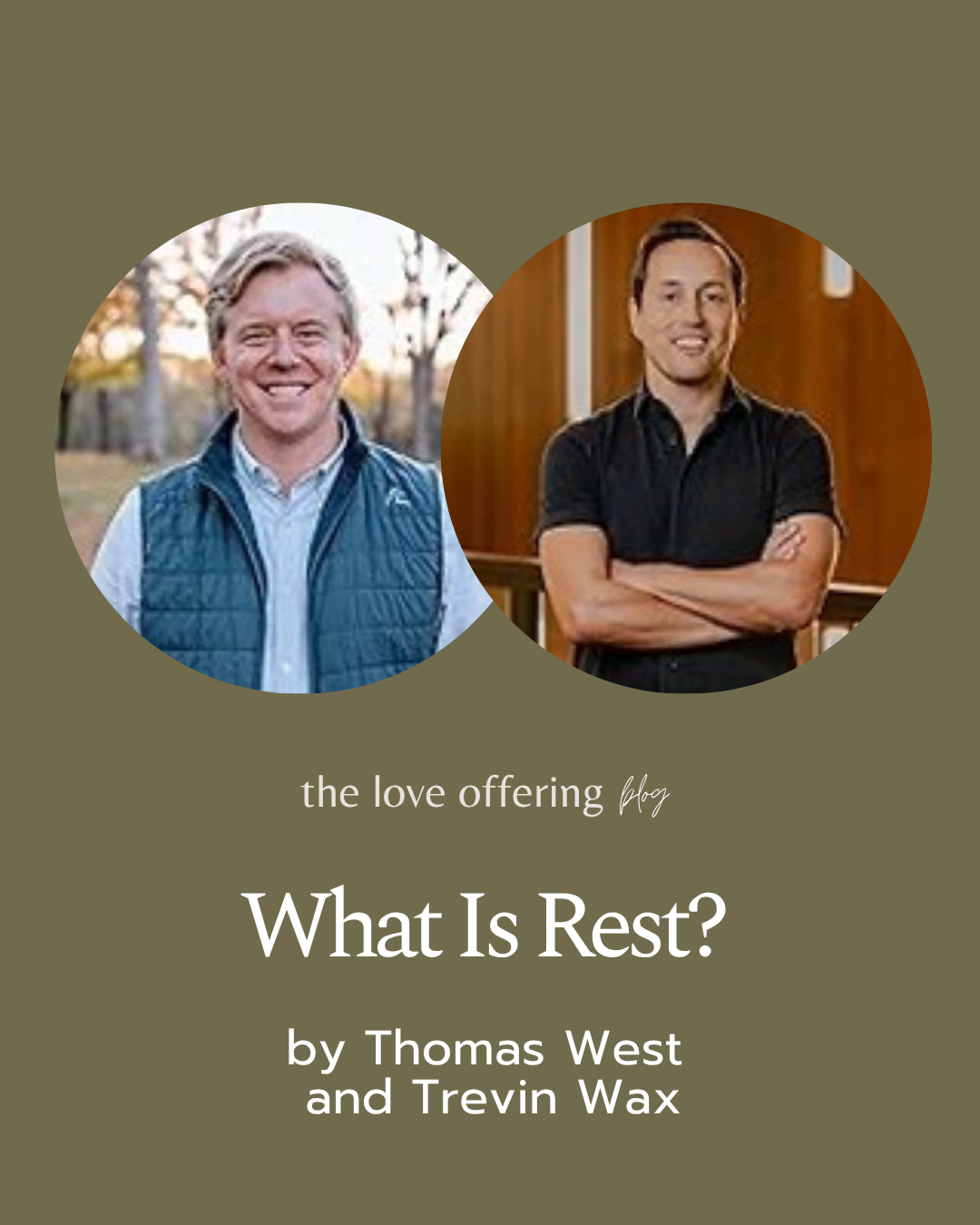
Trevin Wax is vice president of research and resource development at the North American Mission Board and a visiting professor at Cedarville University. A former missionary to Romania, Trevin is a regular columnist at The Gospel Coalition and has lectured on Christianity and culture at Oxford University. His new book is The Gospel Way Catechism.
Thomas West is the pastor of Nashville First Baptist Church and the founder and former pastor of Redeemer Queen’s Park in London, England. A two-time graduate of Southeastern Seminary in Wake Forest, North Carolina, Thomas’s ministry and research are driven by exploring the intersection of theology, culture, and mission in Western culture. His new book is The Gospel Way Catechism.
Connect with Trevin and Thomas:
Blog: www.thegospelcoalition.org/blogs/trevin-wax
X: @trevinwax
Instagram: @trevinwax
Facebook: @trevinwax
Substack: @westswords
X: @tweetingthomas_
Instagram: @thomaswest
Facebook: @thomasandrewwest