

You know what’s not a good sign? When, on a Sunday morning as the fam pours breakfast cereal and looks for the other shoe in preparation for church, water begins dripping from the light fixture in your downstairs bathroom. The one underneath the upstairs shower.
Oy vey.
You know what I would love? I would love it if mopping up the water in the lower bathroom were to solve my little (or not-so-little) problem.
But alas. Here we are, residing anywhere but a fairy tale.
So, with my scads of excess energy from working and parenting, my task was to unscrew the light fixture and peel down the ceiling tiles in the lower bathroom, then the drywall above that, to locate the source of this little leak blooming in the dark interiors of my home.
And I wish this wasn’t a metaphor for anger.
Because my kids’ behavioral problems (or, ahem, mine) rarely just go away by addressing the exterior drips, so to speak.
As humans, our hearts tend to leak like a mother of eight jumping on the trampoline. Sometimes, “That’s not who I really am” is just a thinly veiled excuse—a classy ceiling tile concealing a rotten problem.
Parenting and the realities of my own heart find me wobbling between courage (Charge the hill!) and defeat. Sometimes I wish I could spend a few days at the beach, alone, parts of my body buried in the sand. Specifically, my head.
God has reminded me of the utter blindness sin bestows on us toward our own junk. Of course there’s a scriptural pattern of God covering, lifting, and making short work of shame. Weakness. Dysfunction. But I have yet to think of an example where God didn’t tell the truth.
Nowhere do I see God showing us that we should bypass discernment. His people worship “in spirit and truth” (John 4:32). And I love David’s words on this: “Behold, you delight in truth in the inward being, and you teach me wisdom in the secret heart” (Psalm 51:6). After two heinous sins, David aimed to have no place within him where God’s healing light wasn’t allowed.
As mentioned earlier, my motherhood puts my inner world on speakerphone. Parker Palmer reminds me, “A leader is a person who must take special responsibility for what’s going on inside him or her self, inside his or her consciousness, lest the act of leadership create more harm than good.”
With each mom I’ve spoken with, the unique DNA of her anger does replicate itself throughout her home like paper dolls— or at least resonate in her kids.
So let’s dig further into more of the whys of your own anger. To do this most effectively, think about three to five angry outbursts you’ve had; maybe even make a note on your phone. Maybe about those moments when you thought, This is why some insects eat their young. Or when you considered grounding your child until they either turn twenty- six or Halley’s Comet reappears.
Let’s get curious.
I’m just gonna come out and say each of my kids has made some crash-and-burn decisions that shriveled my innards like a Styrofoam cup in a campfire. It was not pretty. And to save their dignity, I won’t disperse very many. (You’re welcome, kids. One less therapy appointment in your future.)
Shame forms one trigger for my own mom-anger DNA. Say the school calls, letting me know of something my child did— like that time when my youngest, Jack, thought it would be amusing to all his friends if he literally jumped out the window at the end of class. (Interestingly, no one who knows Jack seems to bat an eye when I relay this story.) Can you smell the embarrassment triggering my brain stem? Trust me. It took a lot of courage to type that reality for you.
I assumed certain things about my parenting from that call. (What kind of kid jumps out a window in the middle of school? Have we taught him nothing about authority? Appropriateness? Leadership? I sent you there to be a blessing, Peter Parker.) At that moment, perhaps you’ll have no problem believing I 100 percent wanted to shame my son more than I wanted to shepherd his heart.
But gospel- soaked discipline doesn’t seek image management or even sin management of our kids. We’re not looking for halo polishers. We’re looking for holistic heart change and knowledge of God’s ways. This brand of discipline pursues the heart of the child, through exposure of guilt, rather than shaming the child.
Parenting with shame seems to say, You are unacceptable to me right now. It’s that gross feeling of not being “enough,” of failing to feel worthy of connection and powerless to change yourself or your circumstances. And when anger burns white hot, not integrated with the part of us making wise, loving decisions, shame may feel like the quickest tool to create change.
But God says, “Accept one another, then, just as Christ accepted you” (Romans 15:7, NIV). And just like he accepted us, that’s despite— and perhaps especially in the midst of— our failure.
See, shame can also serve as a branding iron. Shameful memories form some of our most permanent, visible, and raised moments of childhood or adulthood. Regular, intense shame, triggering a repeated stress response, can even change kids’ brains. Shame primarily occurs in the limbic system and triggers fight/flight/freeze because we feel threatened. A self-conscious, self- attentive response, shame— like that Styrofoam cup in the fire— often makes us physically “shrink” into ourselves and withdraw from others.
In contrast, parenting for guilt awareness seems to say, I accept you. But I care about you enough to come alongside you for change. It’s the difference between “God’s kindness is meant to lead you to repentance” (Romans 2:4) and the heat of fear curling us inside, hardening us into conformity.
As I peer into my mom-anger DNA and allow God to speak, I see that he models this kindness-toward-repentance brand of parenting. In his role as a convicter of sin, the Holy Spirit doesn’t condemn those of us who belong to God as his kids (John 16:8; Romans 8:1). His goal is reconciliation; we’re told explicitly that nothing can separate us from God’s love (2 Corinthians 5:18–19; Romans 8:35, 38–39). Because of Jesus, we are always brought near, always worthy of connecting with him (Corinthians 5:21; Ephesians 2:13).
I’ve seen the following thought on social media: Religion says, “I messed up. Dad’s gonna kill me.” But identifying as God’s child says, “I messed up. I need to call Dad.”
So we can teach kids to lean into the Holy Spirit’s beautiful conviction of our hearts, which signals the cancer of sin that gets in the way of our relationship with God (Ephesians 4:30). We can choose to be fully known and fully loved, moving toward God and each other in truth (John 4:23).
Contrasting shame’s blistering messages, pastor and author Rob Flood points out an idea I love: We can convey hope rather than hopelessness to our kids when we’re disciplining and correcting them. He says, “In Christ, your children can die to their sin and live in righteousness (1 Peter 2:24). In Christ, they need not be slaves to their sin any longer (Romans 6:17–18). In Christ, the reality of the cross can come to life in their lives. This is profound. This is incredible. This is the gospel.”
Discipline doesn’t have to be an alienating, relationship- breaking experience with your kids that leaves you metaphorically mopping up and tossing out what’s rotten.
It can show them Jesus.

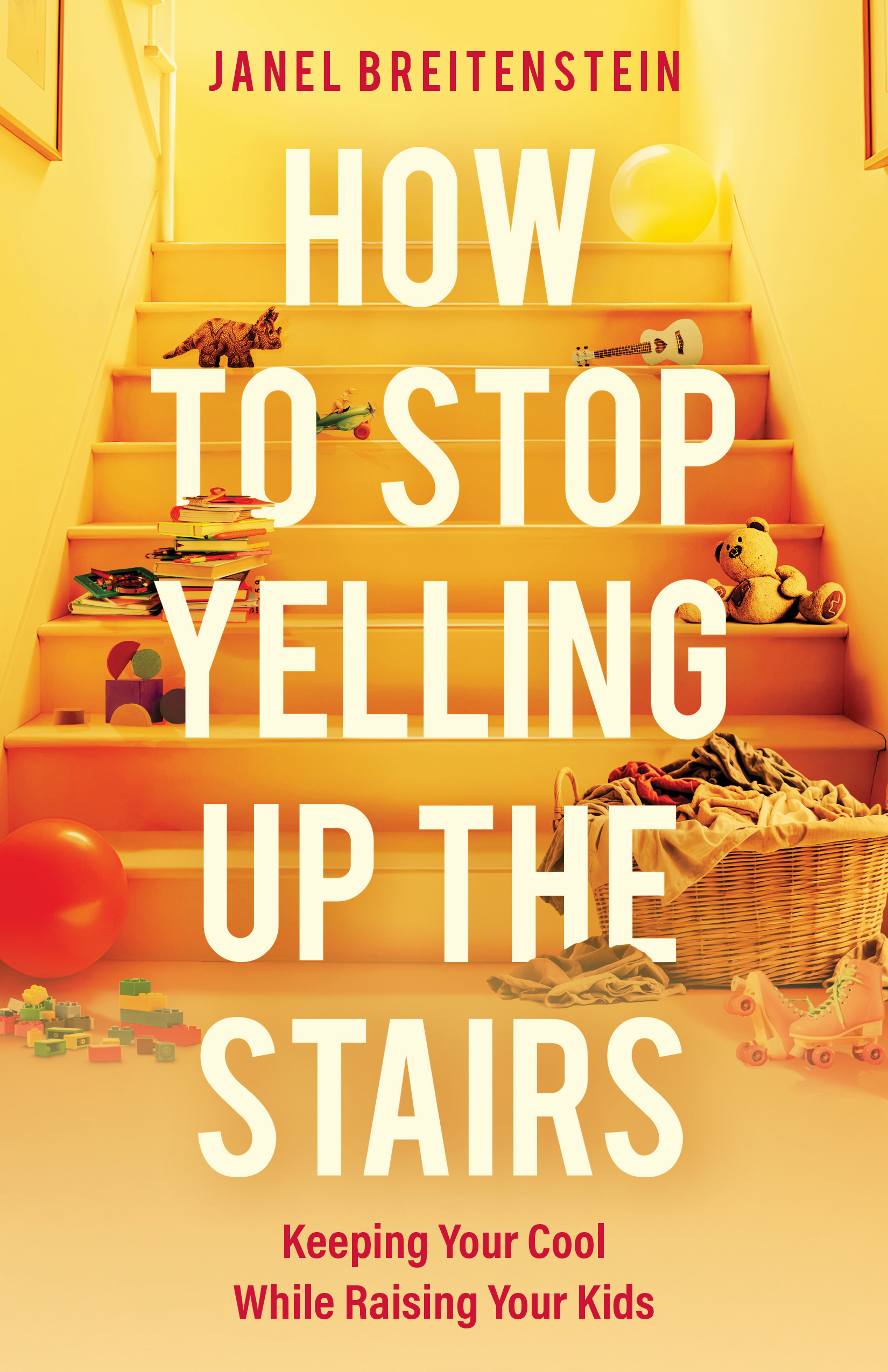
Excerpted from “How to Stop Yelling Up the Stairs: Keeping Your Cool While Raising Your Kids”
{If you enjoyed this blog post, you might also like this episode of The Love Offering Podcast, where Rachael chats with Kirby Kelly about how God has been faithfully stitching together the threads of her own story—through unexpected love, deep grief after the sudden loss of her mom, seasons of doubt, family struggles, and betrayal. And through it all, she’s discovered something powerful: God wastes nothing. Friend, if you are in a season that feels confusing, heavy, or unfinished, we pray this conversation reminds you that God is still working. You can listen to the episode here.}
About the Author:
Janel Breitenstein, known as The Awkward Mom, writes for Focus on the Family and FamilyLife and has been featured on both podcasts. Her path includes twenty-six years in ministry, thirteen years in missions, more than a decade of publishing and marketing experience, and fifteen years writing and speaking to parents. She has over twenty published works and is the author of “Permanent Markers” and “Deliver Us from Meltdowns,” as well as “How to Stop Yelling up the Stairs.”